

NASA has published a new image taken by the LRO spacecraft orbiting the Moon. It demonstrates a structure somewhat reminiscent of a road fork.
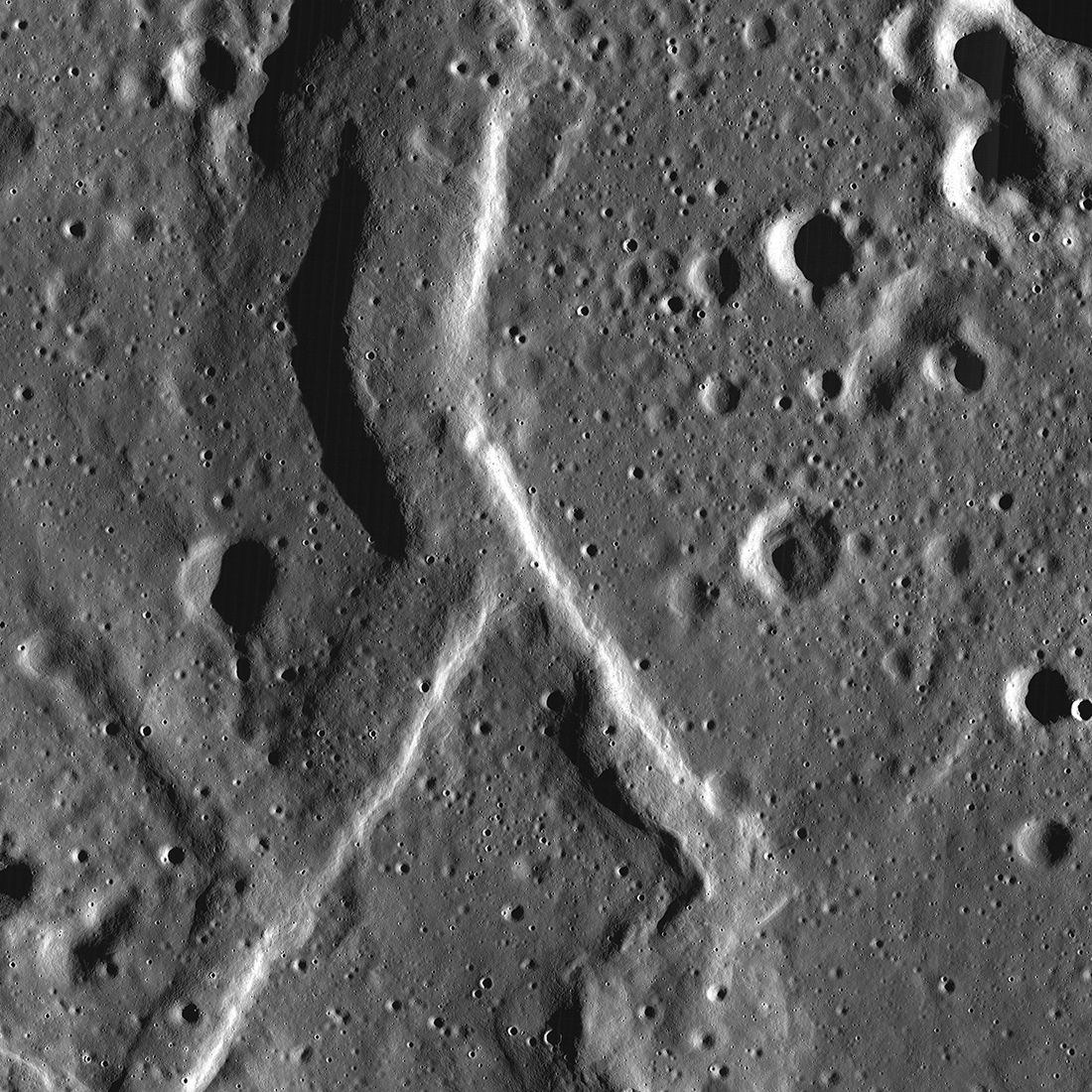
The formation photographed by LRO is located on the visible side of the Moon, southeast of the Copernicus crater. It is a so-called wrinkled ridge. This is a common form of lunar relief found exclusively in basalt seas.
The mechanism behind the formation of wrinkled ridges is as follows. When the dense lava cooled, its weight caused the terrain to sink and the buried structures to become visible. Such formations are sometimes also called veins because of their similarity to veins protruding from under the skin. In this case, the ridges were formed by faults that extended to a depth of several hundred meters to several kilometers.
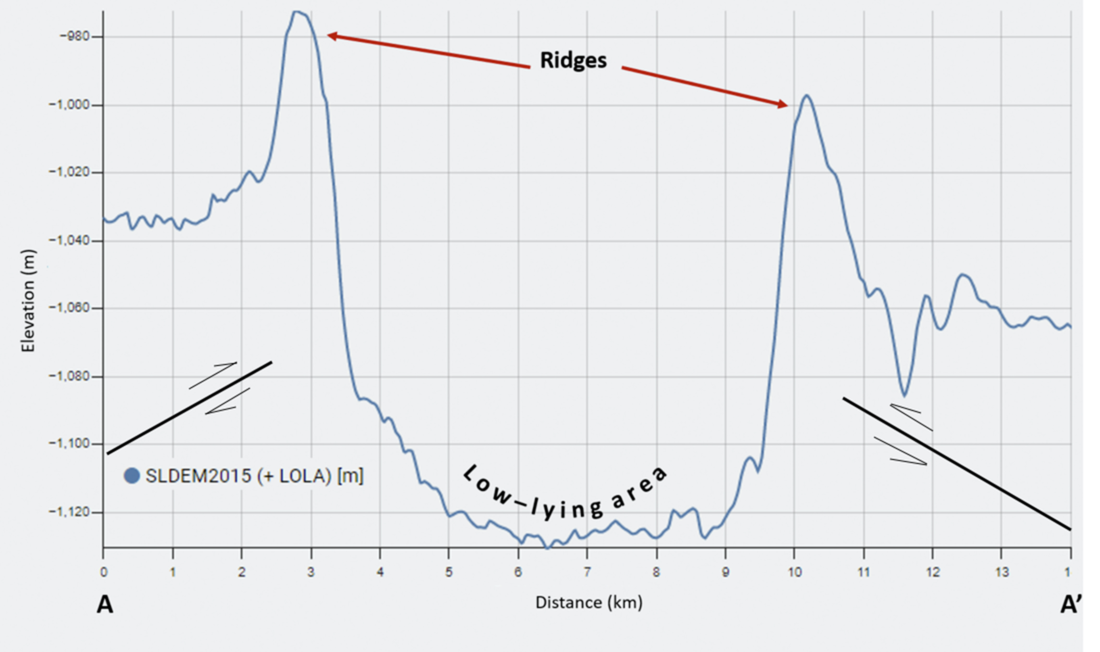
The ridge photographed by LRO is divided into two separate segments. Their unusual morphology indicates that the underlying fault or faults displaced the overlying basalt layers.
Planetary scientists are keenly interested in why the wrinkled ridges on the Moon have such diverse surface morphology. During the next extended scientific mission of the LRO, they will be studied in greater detail, which will provide a better understanding of the mechanism of their formation.
Earlier, we reported on how LRO photographed a frozen lava flow in Mare Crisium.
According to LROC

