

Lunar space could become just as much of a strategic vulnerability for humanity as the Strait of Hormuz is for global oil trade. This is the conclusion reached by American space security experts after Iran blocked one of the world’s most vital maritime routes.
A parallel that is hard to ignore
Marc Feldman, executive director of the Center for the Study of Space Crime, Piracy & Governance, drew a parallel between two events that coincided in time: NASA’s announcement of plans for a permanent human presence on the Moon—and Iran’s blockade of the Strait of Hormuz, which immediately impacted global energy markets.
“Sometimes a series of events contains a warning—if you’re able to see it,” he wrote alongside his colleague Hugh Taylor. Both are co-authors of the book Space Piracy: Preparing for a Criminal Crisis in Orbit (2025).
Future economy at risk
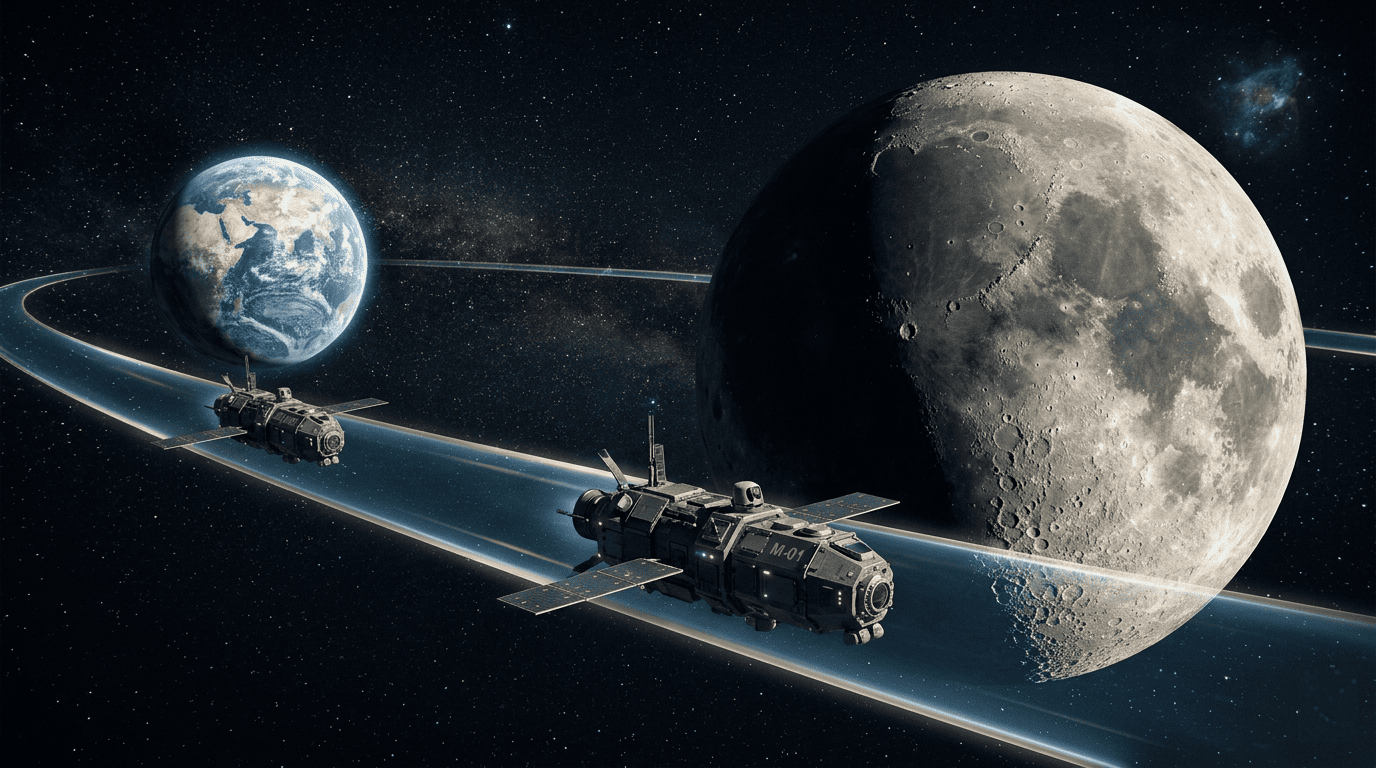
The cislunar space—the region between Earth and the Moon—seems boundless. However, as Feldman and Taylor explain, it actually contains several unique transit points through which all routes to the lunar surface pass. If these key points fall under foreign control, all initiatives—both government missions and private enterprises—could effectively be blocked.
Peter Garretson, a senior fellow in defense studies at the American Foreign Policy Council, explains: The Moon’s actual value is still modest, but its expected value is enormous.
He gives an example: if a significant portion of orbital power plants, data centers, and space factories are built using lunar raw materials, the global economy will become dependent on the reliability of this supply chain. Any disruption—whether in production, processing, or logistics—has the potential to undermine entire industries.
Military already responding
The U.S. Space Force is already establishing a separate unit to assess the strategic importance of cislunar space. The U.S. Air Force Research Laboratory is developing the CHPS (Cislunar Highway Patrol System)—a network of satellites designed to track objects in this region.
Not all of the lunar environment is equally valuable, Garretson notes: there are strategically important areas near the poles, at the equator, in regions rich in minerals, as well as in key orbits and Lagrange points—special locations in space where the gravitational forces of multiple bodies balance each other out.
According to space.com

