

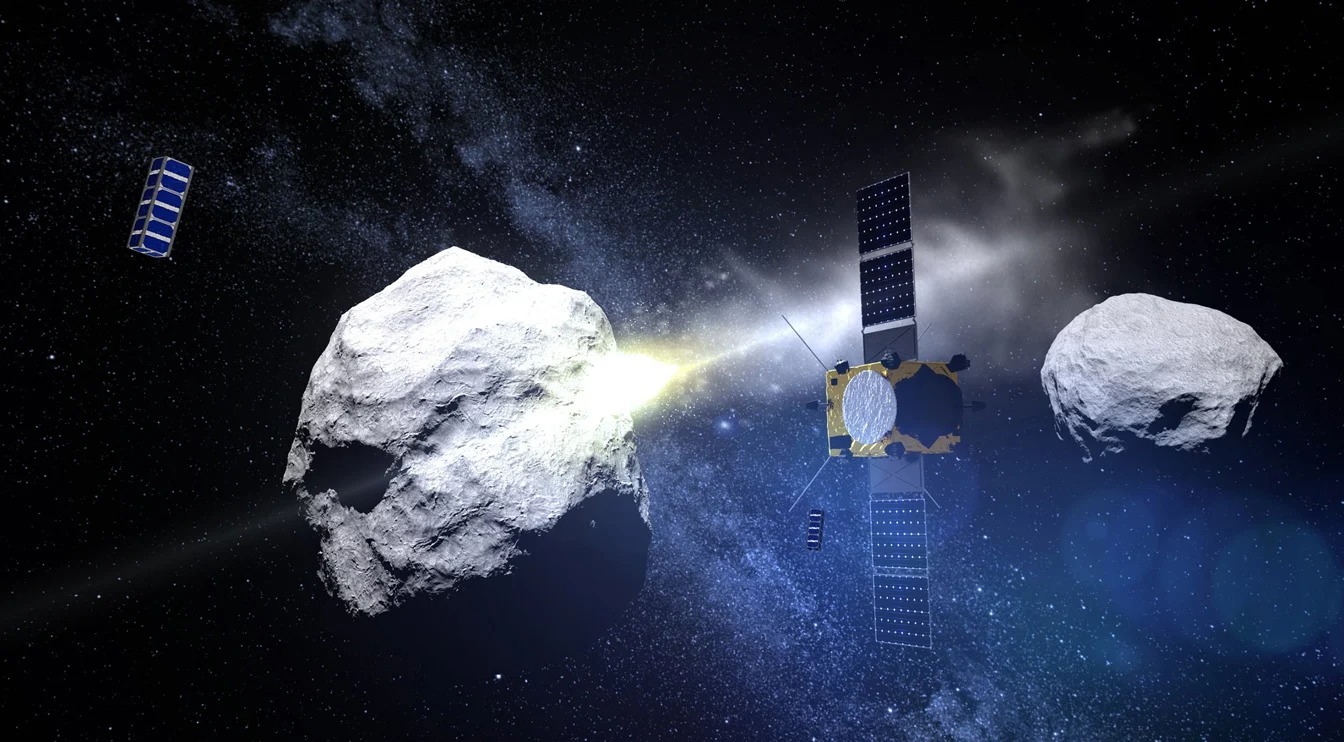
The end of 2022 was a triumph for NASA: the DART (Double Asteroid Redirection Test) mission successfully collided with Didymos’s moon, Dimorphos, at a breakneck speed of 22,500 km/h. The goal — to shift the orbit of the celestial body — was achieved. It was the world’s first test of planetary defense technology, which was supposed to prove the potential of humanity to deflect an asteroid threatening to collide with Earth.
Unpredictable billiards in space
However, three years later, astronomers from the University of Maryland (USA) revealed a surprising and disturbing detail. Analyzing data and images from the Italian satellite LICIACube, which recorded the collision, they discovered that the DART impact not only displaced Dimorphos, but also ejected a huge number of boulders into space. There were more than a hundred of them, and they were several meters in size. The most surprising thing is that these fragments gained enormous kinetic energy, which was three times greater than the energy of the collision. The results of the study were published in the Planetary Science Journal.
“We changed the orbit. Our research shows that while the direct impact of the DART spacecraft caused this change, the boulders ejected gave an additional kick that was almost as big,” explains Tony Farnham, head of the research.
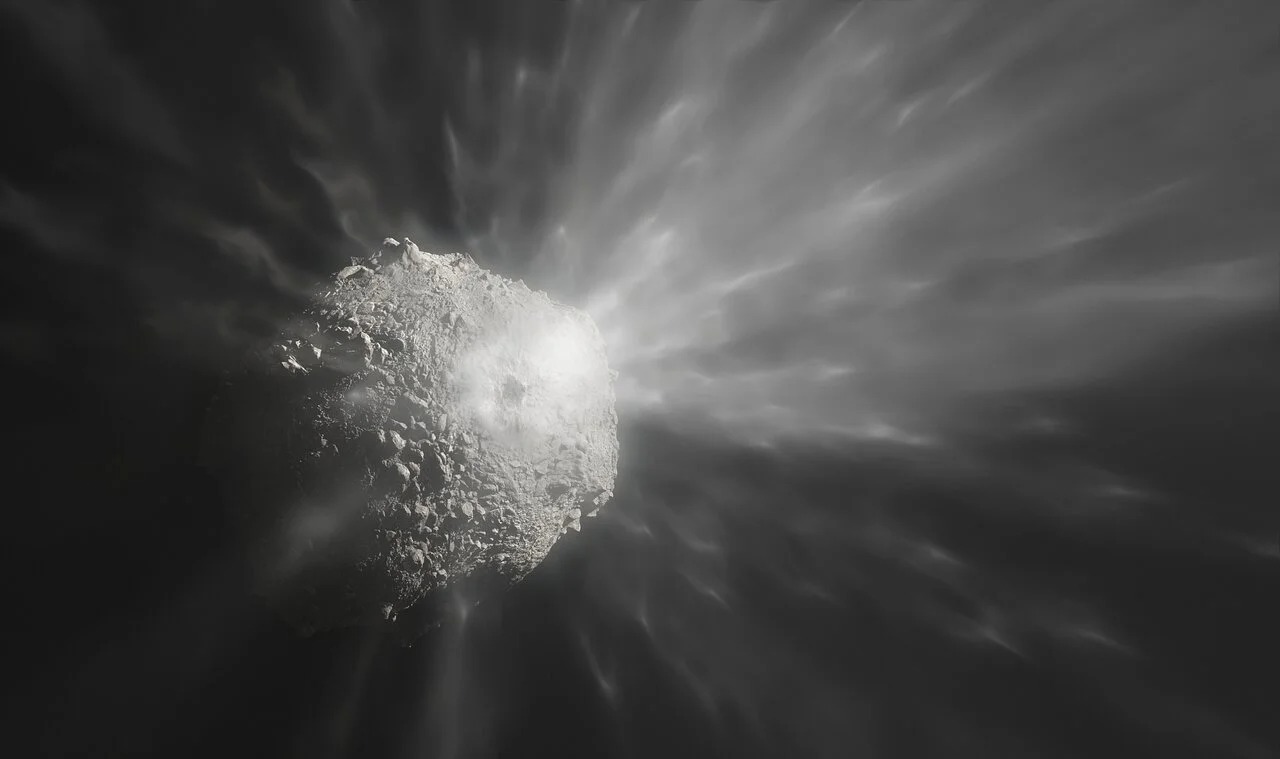
This means that when planning future “rescue ram” missions, it is necessary to take into account the “rebound” effect from ejected debris, similar to a game of space billiards.
Another mystery was posed by the location of the boulders: they did not scatter randomly, but formed two distinct groups. Scientists think that DART’s solar panels hit two big boulders right before the main impact.
Future of planetary defense
These details become crucial if a real asteroid is headed toward Earth. We can even inadvertently make the situation worse. “We might miss the pocket if we don’t consider all the variables,” notes Professor Jessica Sunshine, co-author of the study.
Fortunately, next year the European Hera mission will arrive in the Didymos-Dimorphos system. It will study the consequences of the historic DART collision in detail, providing invaluable data for improving strategies to protect our planet. This study reminds us that protecting against asteroids is a complex cosmic game where even every single rock has to be taken into account.
Earlier, we reported on how the age of the asteroids Didymos and Dimorphos came as a surprise to scientists.
According to phys.org

