

The clay deposits in the area where the Mars rover is set to land are much more extensive than previously thought. They stretch for hundreds of kilometers and likely formed in a vast ocean about four billion years ago. Oxia Planum may once have been the seafloor.
Connection between the two regions
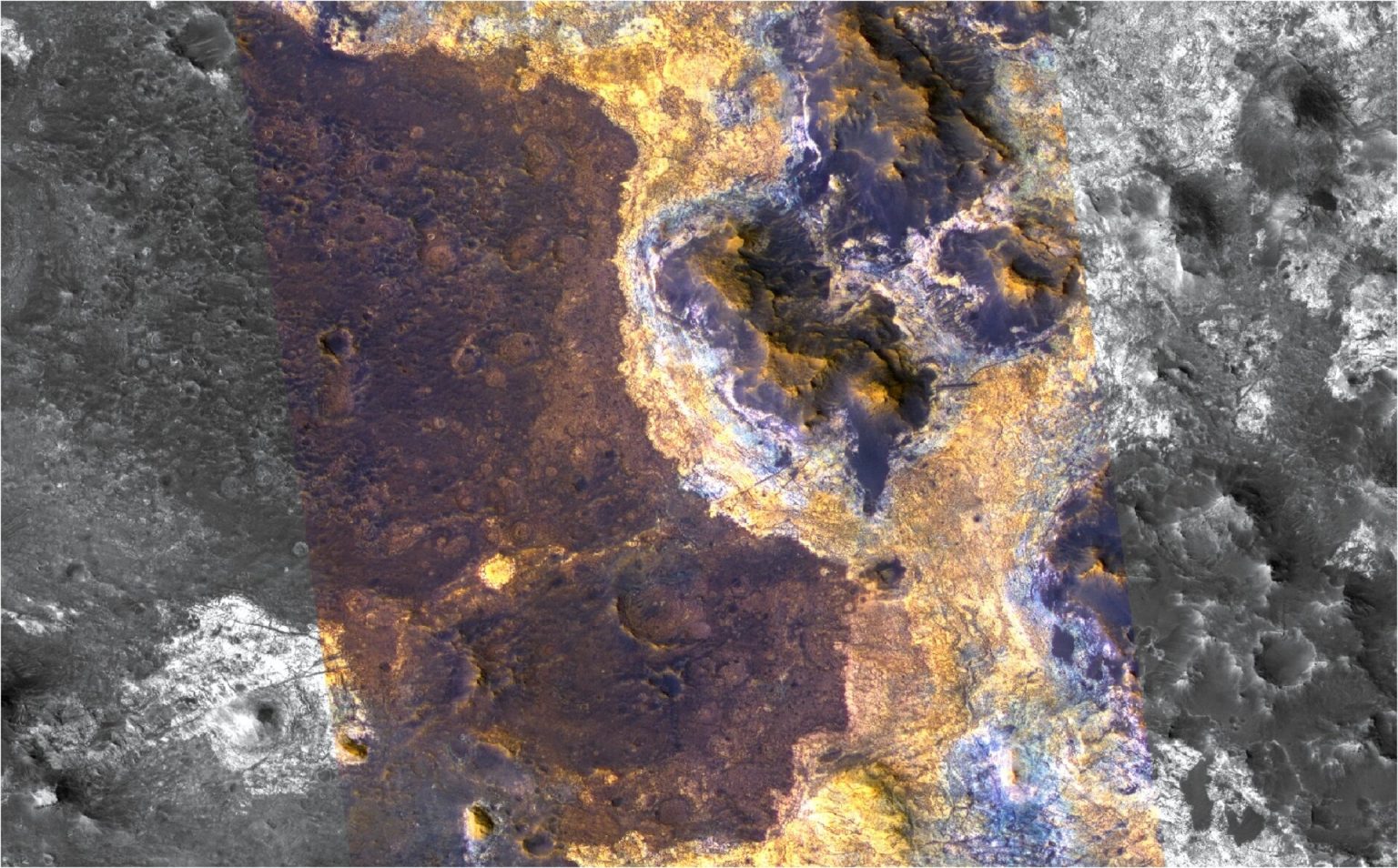
A team of researchers led by Inés Torres Aure of the University of Lyon analyzed the mineralogy of the area between Oxia Planum and Mawrth Vallis. The two sites are separated by approximately 300 kilometers. The clay deposits extend about 600 kilometers in width and reach a height of over one kilometer.
Two orbiters were used for this study. The OMEGA instrument aboard ESA’s Mars Express and the CRISM instrument aboard NASA’s Mars Reconnaissance Orbiter analyzed the composition of the rocks and helped reconstruct the sequence of layers.
Ancient Ocean
Oxia Planum is located in an open basin, so scientists speculate that the clay deposits may have been formed by a massive body of water several kilometers deep. Under this scenario, the shorelines would have been among the highest ever predicted for Mars.
There is also an alternative possibility. Large volumes of water could have risen to the surface from underground reservoirs, flooding vast plains. Which of the two scenarios is closer to the truth is something the rover will have to determine after landing.
“We’re not talking about a local phenomenon, but rather a regional or global process that was only possible because of the presence of vast amounts of water,” explains Jorge Vago, scientific lead of the ExoMars project.
Changes in water chemistry
The analysis also revealed an ancient surface at the boundary between two major layers of clay-rich rock. It is heavily cratered and covered by younger deposits.
This surface captured the moment when sedimentation ceased and the chemical composition of the water subsequently changed simultaneously in both regions. “We detected a pause in sedimentation, as this indicates a period of minimal surface activity, barring meteorite bombardment,” notes Inés Torres Aure. The results are consistent with recent studies suggesting that the climate of early Mars was wet only intermittently.
Tools for researching early life
Cameras, spectrometers, a subsurface radar, and an analytical laboratory will enable scientists to study the region’s geological context. The rover’s drill can collect samples from depths of up to two meters below the surface.
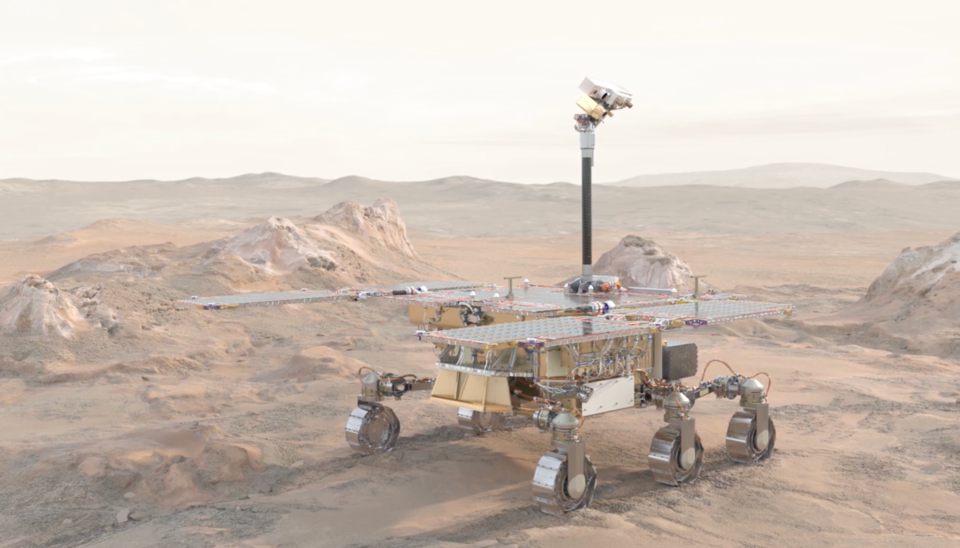
“Heat and nutrients on the ancient Martian seafloor could have created environments suitable for early life,” says Elliot Sefton-Nash, deputy science lead for the ExoMars project.
The onboard laboratory will conduct a detailed analysis of the samples to detect traces of biological origin. Scientists also plan to map the entire extent of the clay layers and determine any other breaks in their formation before the rover begins its work.
According to esa.int

