

“For All Mankind” is an American science fiction series that tells an alternate history in which space exploration did not stall in the early 1970s, and humanity had already built cities on the Moon and Mars by the early 21st century. So what can we expect from the new, fifth season?

Source: www.space.com
For All Mankind
On March 27, the first episode of the fifth season of the series “For All Mankind” premiered on the Apple TV+ streaming service. This franchise has undoubtedly become one of the major phenomena in modern science fiction in recent years. And the reason for this is that it gives fans of the genre exactly what they have been asking for.
What they are really asking for is hard science fiction. This is actually one of the main topics that has been debated for several decades. That’s because TV shows in this genre are usually flashy but nonsensical from the perspective of people who actually know something about space and its exploration.
And so, a few years ago, the creators of “For All Mankind” fulfilled those wishes. They took the very real history of space exploration in the 20th century and made just one assumption: What if, in 1969, it had been the USSR – not the United States – that landed on the Moon first?
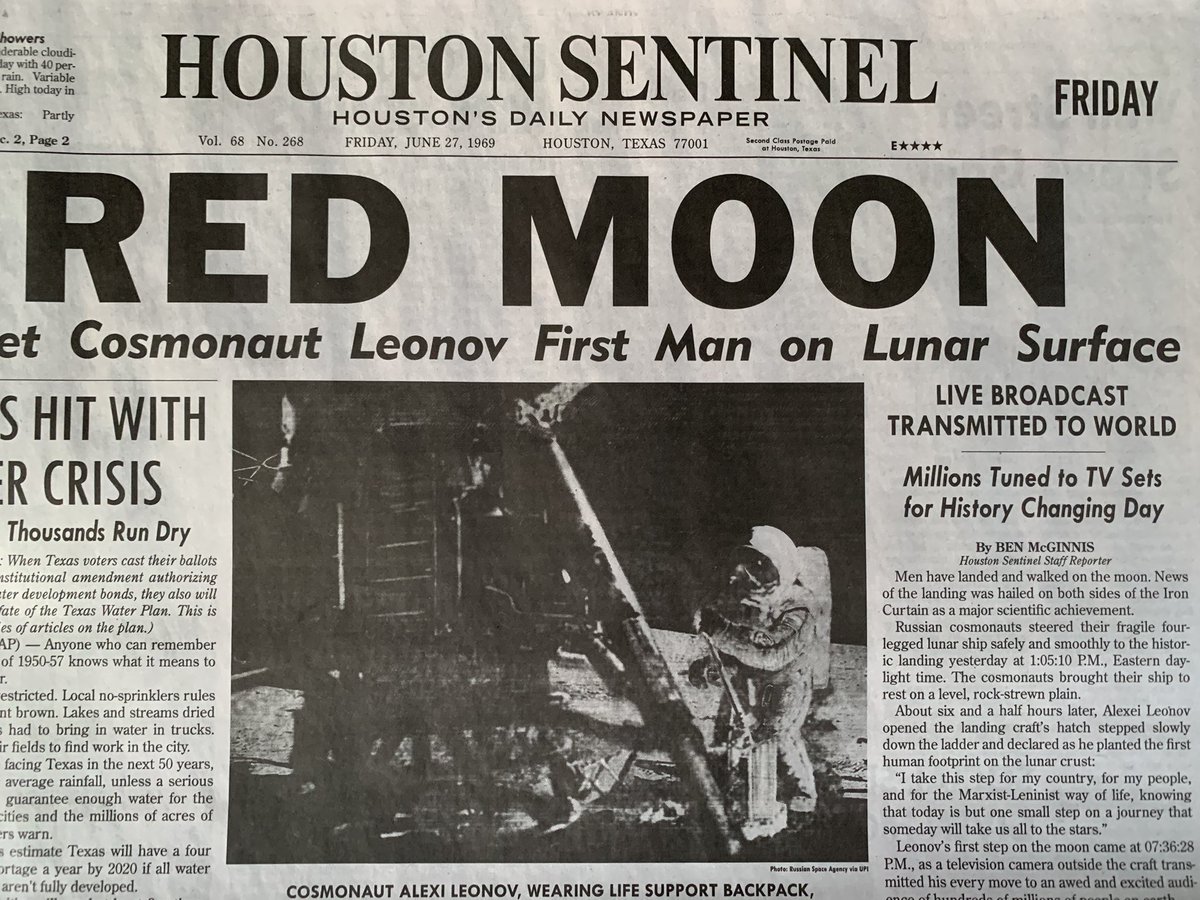
From this starting point, the show’s creators developed a logical storyline. The phrase “We came in peace for all mankind,” which in reality adorns the plaque on the Apollo 11 lunar module, remained unknown to anyone, yet by the early 1970s, a base had already appeared on our planet’s satellite – a base that is actually only planned to be built in the early 2030s.
And, of course, this sparked a new wave of tension. In the world of “For All Mankind,” the space race has been going on for 50 years, and while it has led to far greater progress than we have seen here, it has also caused countless deaths. In the second season, which depicts events in an alternate 1980s on the Moon, a war practically broke out that nearly escalated into World War III.
The main feature of the series is that the creators have managed to maintain a high standard of realism throughout all four seasons. Whenever we were shown a space-related achievement that has not actually happened yet, it is either based on technologies that emerged later or exists only as a concept, but it is always well-grounded.

Source: for-all-mankind.fandom.com
Whenever a political event occurs in the world of “For All Mankind,” it has a real-life counterpart. For example, in the third season, when a scandal erupts that the husband of the U.S. President and a former astronaut was cheating on his wife, this is an allusion to the famous scandal involving Bill Clinton and Monica Lewinsky.
And so, at this pace, over the course of four seasons, the show’s creators managed to land people not only on Earth but also on Mars, capture an asteroid composed of precious minerals there, steal it, and start selling it piece by piece back to the very same Earth they had stolen it from. Just like in real life.
The characters of the series
By the start of the fifth season of “For All Mankind,” the events in the series have been unfolding for 43 years. And, of course, most of the characters around whom the events of the first season revolved have, in one way or another, left the show during that time. In fact, of those who were there at the start, only Ed Baldwin, played by Joel Kinnaman, remains.

To some extent, he is the series’ main character and embodies its “space” aspect. In the first season, he was one of those young military pilots who decided to become the first astronauts; then, over the course of four seasons, we see him fly first to the moon, then to Mars.
By the fourth season, he is an old man living out his final years on Mars, a place that has become his home. Humanity’s greatest space hero, its greatest space criminal (he was the one who orchestrated the asteroid heist), and just a cool old guy who grows the best weed on the Red Planet.
By the way, he is quite an authentic figure. John Young, who most closely resembles his fictional counterpart, managed to fly on the Gemini mission first, then fly to the moon, then become a shuttle commander, and at the end of his life, already in the 21st century, he saw off the space shuttle on its final flight.

The second character to appear in all five seasons is Margo Madison, played by Wrenn Schmidt. Over the course of the series, she rose from a rank-and-file NASA employee to its administrator, unsuccessfully attempted to make contact with the russians, and betrayed the United States.
At the start of the fifth season, she is serving a life sentence for all her crimes, but even from prison, she manages to mentor the current NASA administrator and her former student.
There are also quite a few characters from later seasons still around. For example, Ed Baldwin’s adopted daughter, Kelly, who appeared in the second season, has been digging through ice on Mars for years in search of extraterrestrial life. Or what about the dark-skinned version of Elon Musk, Dev Ayesa, who joined the show in the third season? He was the one who initiated the theft of the asteroid, and now he’s gradually selling materials from it to Earth.

However, the fifth season also introduced new characters, such as the young people who grew up on Mars. And in many ways, the events of the new season revolve around them.
Freedom for Mars!
Generally speaking, judging by the trailers and the first episode, the events of the fifth season will revolve around the conflict between Earth and Mars that began back in the fourth season. Settlements on the Red Planet are growing at an incredible rate, and with them, so are the problems.
Mars and Earth are interdependent: the former still cannot produce everything necessary for life, while the latter has become heavily reliant on iridium and other rare-earth materials from the asteroid. At the same time, calls to “stop feeding them” are growing louder on both sides of the conflict.
The main conflict in the new season will revolve around this confrontation and Mars’s potential independence as its logical outcome. And in this regard, fans of the series, half-jokingly, half-seriously refer to it as a prequel to another franchise renowned for its space realism: “Expanse.”

The plot also centers on the conflict between Earth and other planets, with Mars standing out in particular. Of course, the creators of these projects are completely different, but the parallels are obvious.
However, the fact is that the creators of “Expanse,” or more precisely, the book series on which it is based, did not invent the idea of freedom-loving Mars fighting against Earth’s tyranny. It has existed in science fiction since at least the 1960s and, to some extent, is even a tradition.
On the other hand, Mars’s independence in the future is highly likely. After all, because Venus has a very hot and acid-filled atmosphere, Mars remains the largest body in the Solar System – apart from Earth – that has a normal solid surface. Moreover, in terms of surface conditions, it is the one that most closely resembles humanity’s home planet.
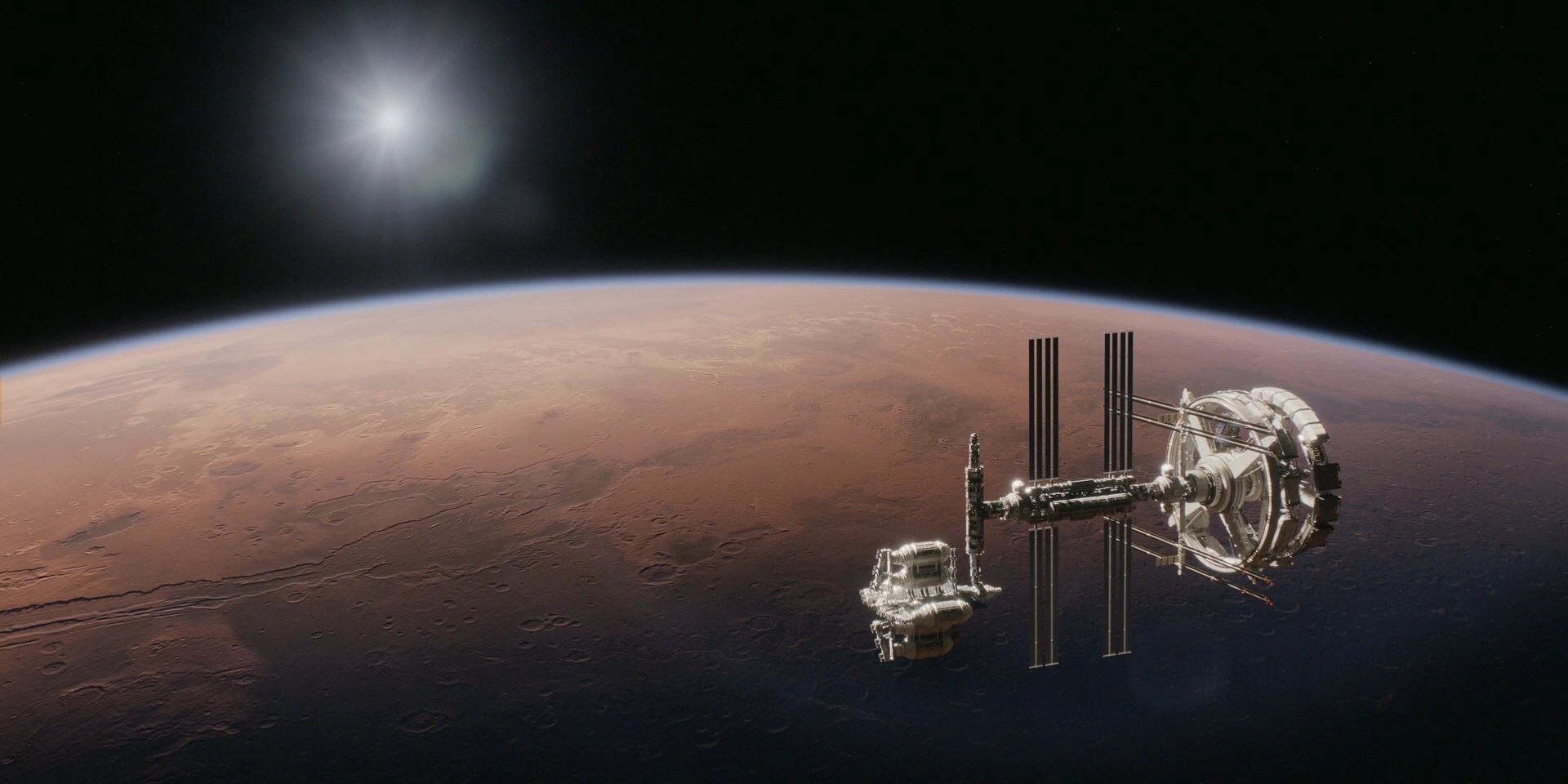
No matter how you look at it, Mars will remain dependent on Earth until it establishes its own production capabilities; after that, it has no choice but to move toward independence. After all, delivering political decisions, goods, and – especially – troops to Mars is far more difficult than to any point on Earth’s surface or to the Moon.
In other words, the very fact that Mars and Earth are at odds in the fifth season of “For All Mankind” is beyond doubt. The real question is: how will they portray it? Because the series has set the bar incredibly high, both in terms of its technical and political aspects. In the fourth season, we already saw Martian rebels who would either fight among themselves, strike a deal with Earth, or just think only of themselves – and because of this, the plan almost fails; or the rebels achieve their goal, but Earth retains control over Mars.
The story takes place in an alternate 2012. Children who have never seen Earth have not yet been born or grown up on Mars, but those who left Earth as children and barely remember it have now become adults – and this is yet another factor contributing to the escalation of the conflict.
So it will be very interesting to watch all these political events, corporate intrigues, and small-scale human dramas unfold against the backdrop of fictional – yet so reminiscent of real-historical events.

