

NASA has published a new image transmitted to Earth by the MRO mission. It is symbolic as it is the 100,000th image taken by the spacecraft during its operation.
The most effective Mars explorer
MRO was launched in August 2005. Since then, it has gone down in history as one of the most productive Mars spacecraft. MRO has transmitted hundreds of terabytes of scientific data to Earth, and its CTX camera has captured more than 99% of the Red Planet’s surface with a resolution of 6 m/pixel. Another camera, the famous HiRISE, has taken numerous photographs of Martian landmarks with a resolution of up to 30 cm/pixel. These images show everything from craters to ice deposits.
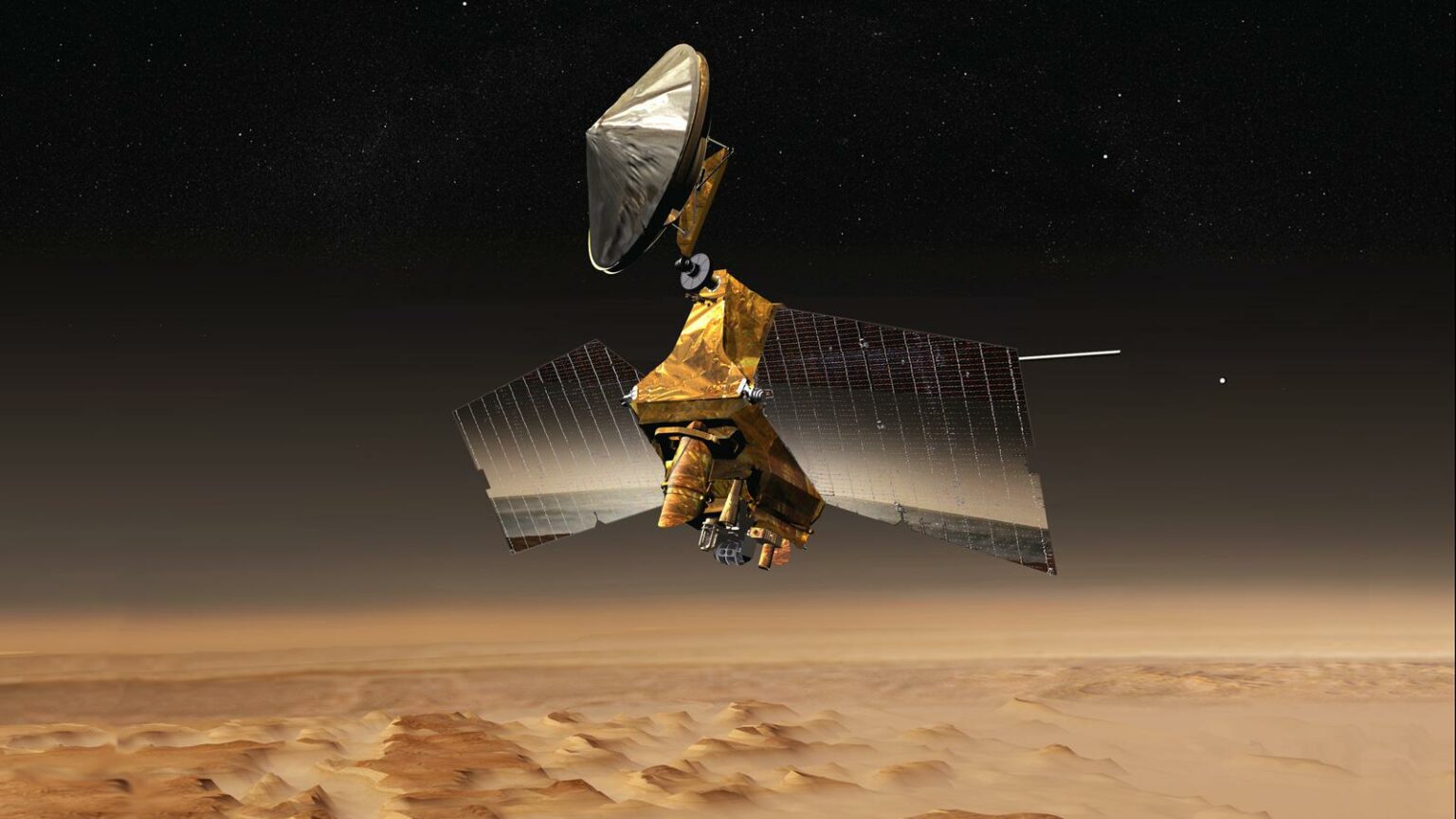
In addition to its direct scientific observations, MRO also provides support to other Mars missions. In particular, it is used as a relay station for spacecraft operating on the surface of Mars. MRO also periodically acts as a space detective, photographing the crash sites of other Mars missions, which helps to determine the cause of the disaster.
Anniversary photo
The 100,000th anniversary image was taken on October 7 using the aforementioned HiRISE camera. It shows the plains and dunes of Syrtis Major, a region located 80 km southeast of the Jezero crater, which is being explored by NASA’s Perseverance rover. Scientists are now analyzing the image to better understand the source of the sand. It is carried by the wind and eventually forms dunes.
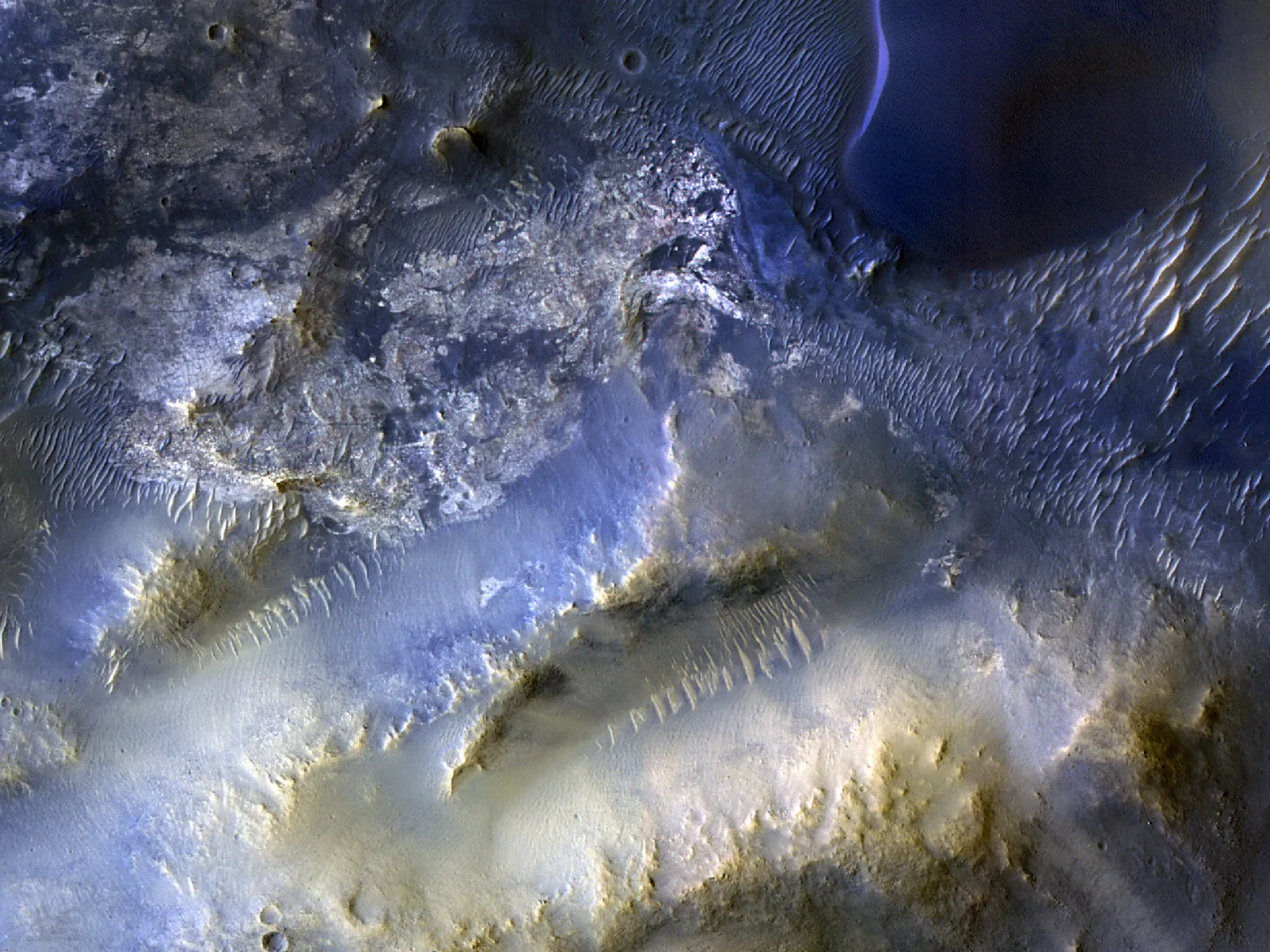
“HiRISE hasn’t just discovered how different the Martian surface is from Earth, it’s also shown us how that surface changes over time,” said MRO’s project scientist, Leslie Tamppari of NASA’s Jet Propulsion Laboratory. “We’ve seen dune fields marching along with the wind and avalanches careening down steep slopes.”
The subject of the 100,000th image was recommended by a high school student via the HiWish website, where anyone can suggest parts of the planet to explore. Members of the team at the University of Arizona in Tucson, who operate the camera, also create 3D models of HiRISE images so viewers can watch virtual fly-through videos of the objects they photograph.
“Rapid data releases, as well as imaging targets suggested by the broader science community and public, have been a hallmark of HiRISE,” said principal investigator Shane Byrne of the University of Arizona in Tucson. “One hundred thousand images just like this one have made Mars more familiar and accessible for everyone.”
According to NASA

