

A meteorite found in Azerbaijan, which was once part of Mercury, has provided scientists with insights into the planet’s chemical composition. It turned out that its magma contains a lot of sulfur, and simulations of its formation show that its properties differ significantly from those of Earth’s magma.
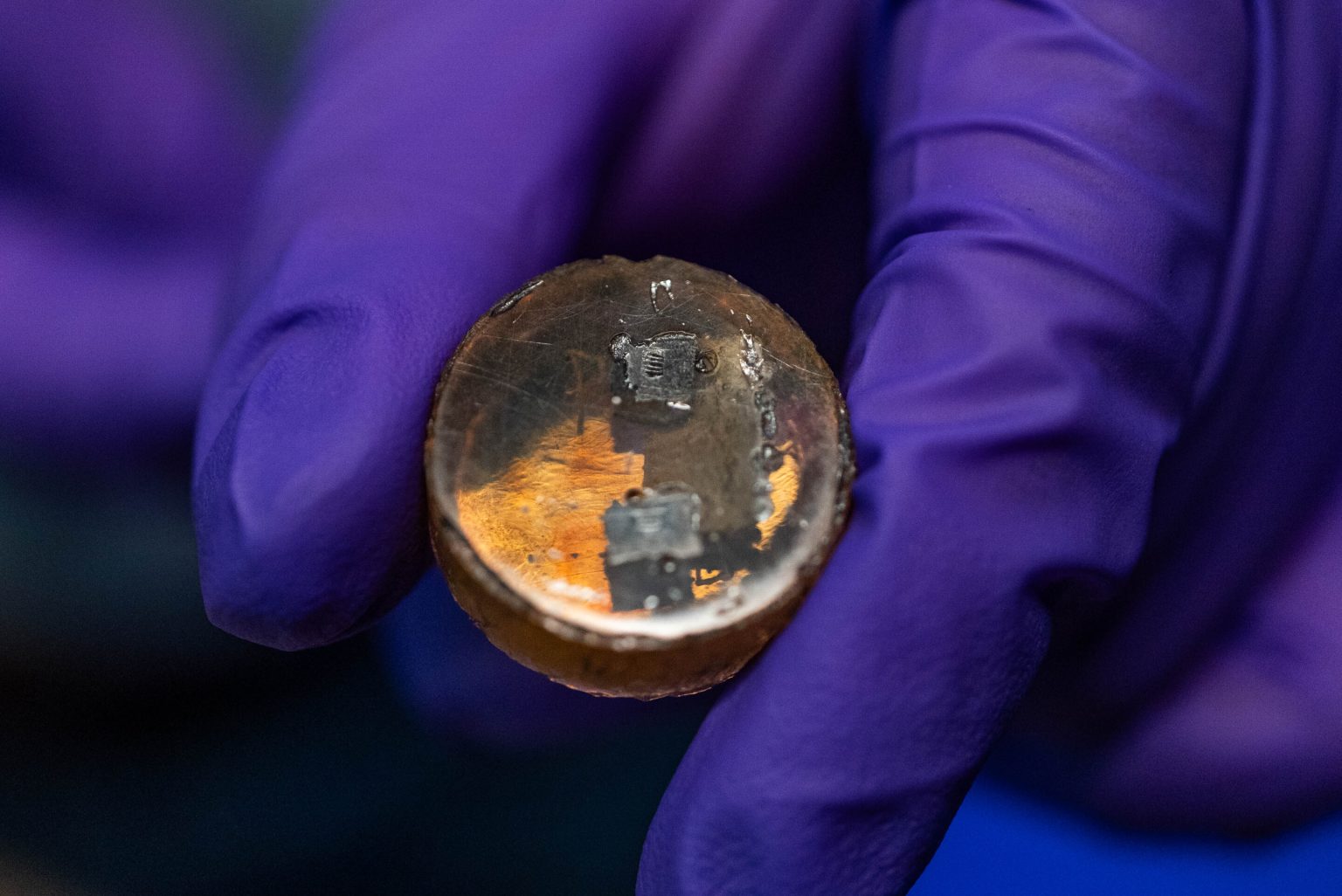
Indarch Meteorite
An article on geological research on Mercury was recently published in the journal Geochimica et Cosmochimica Acta. Previously, the planet closest to the Sun hadn’t attracted much attention from scientists in this regard, but that has now changed.
The fact is that, unlike Mars, no samples have yet been collected from Mercury’s surface for analysis. However, its chemical composition was already more or less known thanks to spectroscopic studies. And now researchers have the opportunity to study it in greater detail.
They were aided in this by the Indarch meteorite, discovered in 1891 in Azerbaijan. The thing is, it used to be part of Mercury, but was later ejected as a result of some event. Meteorites from other planets aren’t that rare, but we don’t have many pieces of Mercury on Earth.
Mercury’s magma
The availability of a sample in the form of the Indarch meteorite presented the scientists with a truly rare opportunity. They have studied in considerable detail not only the chemical composition but also the internal structure of what was once magma on Mercury.
The researchers then took the substances that make up the sample and attempted to recreate the conditions that existed on Mercury in the past. Because today it shows absolutely no signs of geological activity. But once upon a time, it was a ball of molten magma.
But was it similar to what was happening on Earth at the time? The answer is: not exactly. Just as on Earth, the molten rocks consisted mainly of silicon, aluminum, and iron. However, oxygen is the predominant second component in them. In other words, they are essentially oxides.
On Mercury, however, sulfur takes the place of oxygen. This isn’t particularly significant for the current state of the surface of the planet closest to the Sun. But in the early stages of its formation, this played a significant role. After all, this substance lowers the melting point of magma by approximately 200 degrees. This means that Mercury’s surface remained sparse for a longer period of time.
According to phys.org

