

The NOIRLan Research Center has published a magnificent photo taken in Chile. It shows the moon rising over a mountain range.
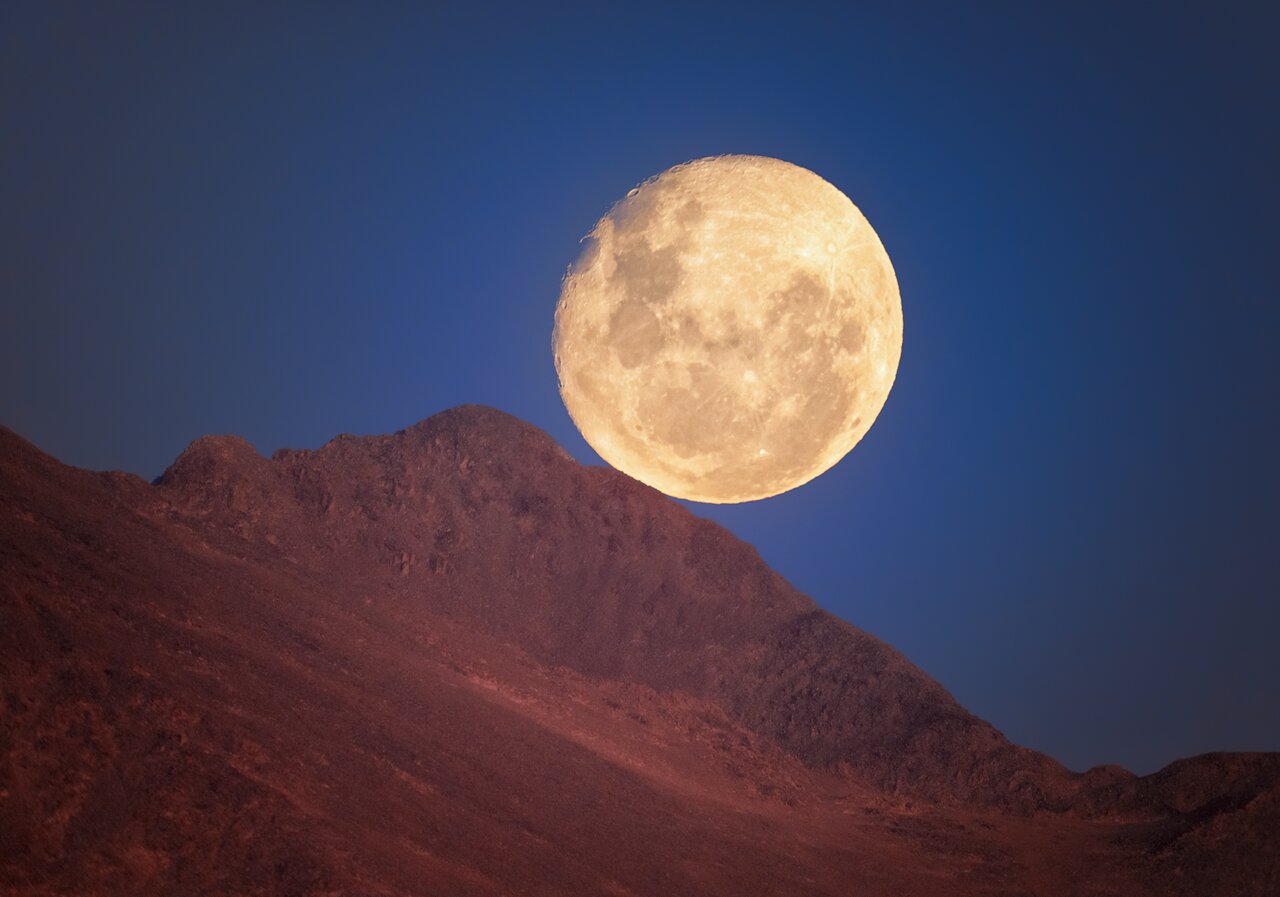
The image was taken near Cerro Pachón in Chile. It is home to a number of NOIRLab telescopes, including the newest Vera Rubin Observatory, as well as the Gemini South and SOAR telescopes.
The photo is interesting in that it shows numerous details of the lunar landscape. Dark spots of ancient basalt plains, known as seas, are scattered across the surface of our planet’s moon. They were formed during a period of active volcanism on the Moon, which peaked between 3.8 and 3 billion years ago.
On the left side of the Moon, when viewed from this perspective, are two famous seas: Mare Tranquillitatis (just above the center on the left) and Mare Serenitatis (in the center on the left). These seas are the sites of the first and, to date, last human landings on the Moon.
In the upper left corner of the Moon, the unevenness of the lunar relief is clearly visible, standing out sharply against the dark blue sky. And in the upper right quadrant, one of the most prominent lunar craters is clearly visible — the 85-kilometer-wide Tycho crater. It is rotated almost 180 degrees compared to the traditional view of the Moon from the Northern Hemisphere. It stands out quietly against the background of other, larger craters, thanks to the most noticeable system of bright rays on the Moon. This is due to its youth. It is 109 million years old, which is very young by lunar standards.According to NOIRLab

