

Two European companies are joining forces to make space a new frontier for scientific research and innovative manufacturing. Their joint mission to launch a small space station, planned for next year, will start an era of commercial use of microgravity.
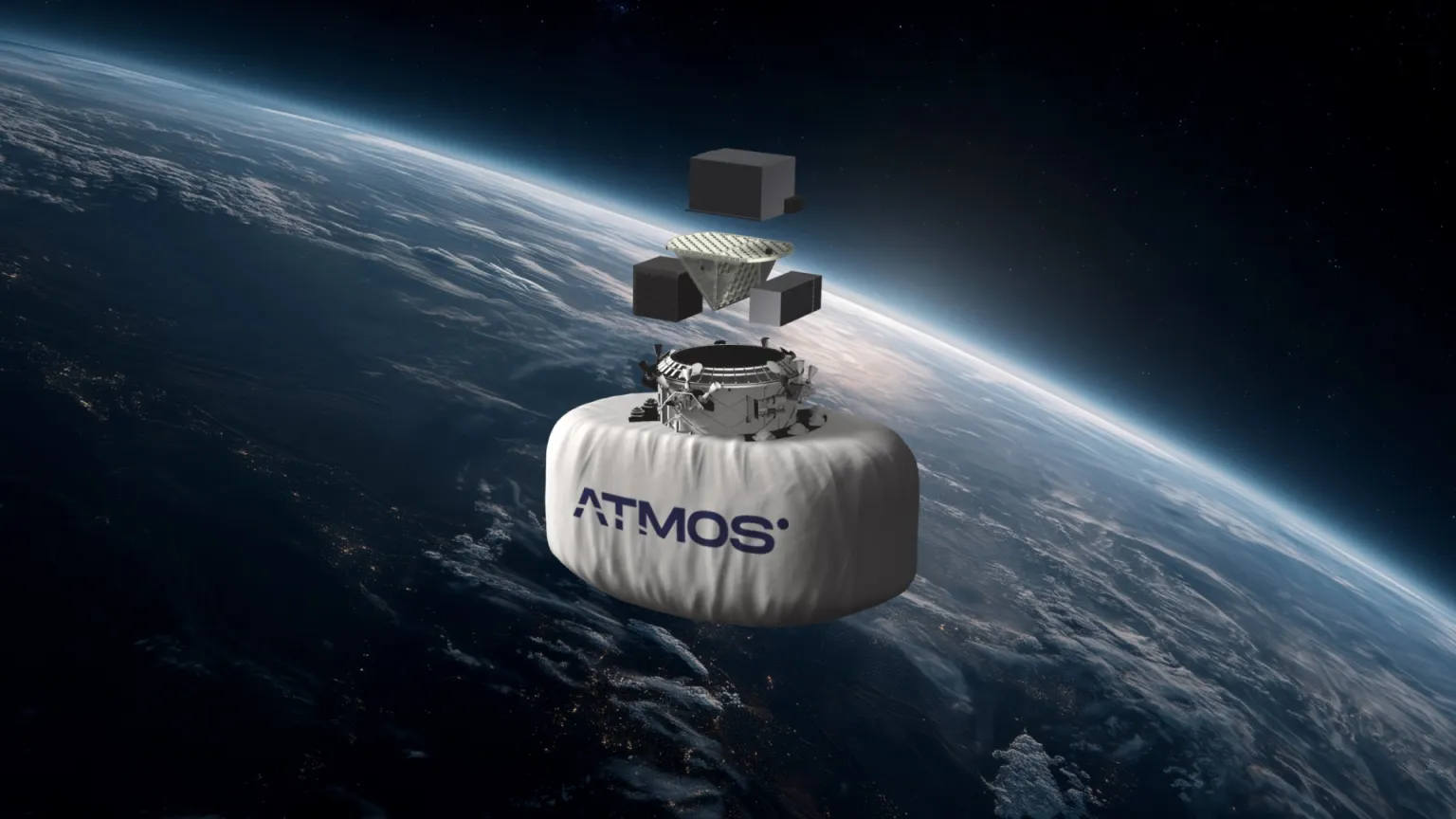
Atmos Space Cargo (France-Germany) and Space Cargo Unlimited (Luxembourg) have announced a partnership for a future SpaceX launch. The mission will demonstrate the potential for research and manufacturing in microgravity outside the ISS.
The Phoenix 2 spacecraft from Atmos will act as an orbital courier. Inside it will be housed the unique BentoBox laboratory from Space Cargo Unlimited. This platform is designed for conducting experiments in zero gravity. After several weeks in orbit, BentoBox will return safely to Earth in a special device for further analysis.
Seven steps to a space factory
This flight is only the first in a planned series of seven missions to be carried out by 2027. Their main goal is to confirm the economic and technological feasibility of orbital manufacturing.
“This first mission showcases not just our hardware, but our business model,” said Space Cargo Unlimited CEO Nicolas Gaume. He also noted that he had received “strong commercial support,” as most of the experiments in BentoBox had already been ordered by customers.
Atmos CEO Sebastian Klaus added that combining their reusable spacecraft with the BentoBox platform created a comprehensive service that set new standards in space logistics.
Funding the space breakthrough
Both companies have significant financial support to realize their ambitions. Space Cargo Unlimited raised €27.5 million in September to develop its space manufacturing capabilities. Atmos Space Cargo received €13.1 million from the European Innovation Council to develop its Phoenix 2 spacecraft.
Thus, the private space sector is actively building alternative ISS supply chains, opening up new horizons for science and business. A future where unique materials and medicines are created in orbit is becoming increasingly realistic.
We previously reported on how private space stations, such as Vast’s Haven-1, would replace the ISS in orbit.
According to Space News

