

Researchers at the University of Colorado Boulder have unveiled a nearly transparent thermal insulation material for windows that works like a high-tech bubble wrap. The development has been named MOCHI (Mesoporous Optically Clear Heat Insulator). It is a silicone gel in which more than 90% of the volume is occupied by air trapped in a network of ultra-fine pores.
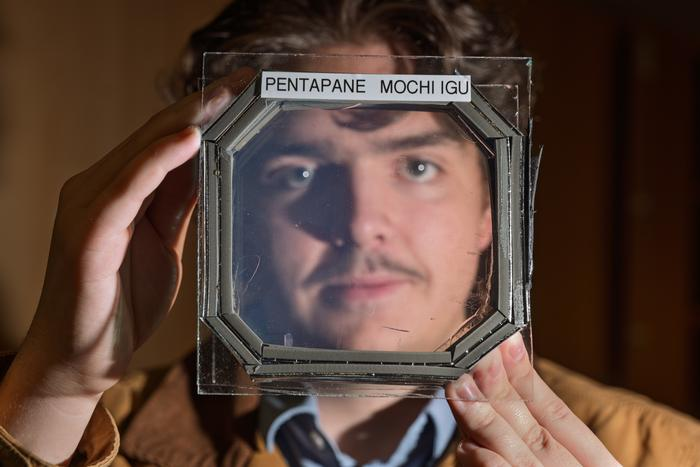
The trick is that these pores are so small (much thinner than a human hair) that it is difficult for the gas molecules inside to effectively transfer heat through collisions — and heat transfer slows down dramatically. During the demonstration, a sheet of MOCHI about 5 mm thick allowed a hand to be held over an open flame without noticeable heating. At the same time, the material hardly obscures the image: a CU Boulder press release states that it reflects approximately 0.2% of incident light.
The potential impact on energy efficiency is significant: buildings worldwide consume about 40% of all energy generated, and windows are one of the main areas of heat loss and overheating. MOCHI is currently only produced in the laboratory, but the authors believe that the process can be simplified for scaling up and that the ingredients are relatively inexpensive.
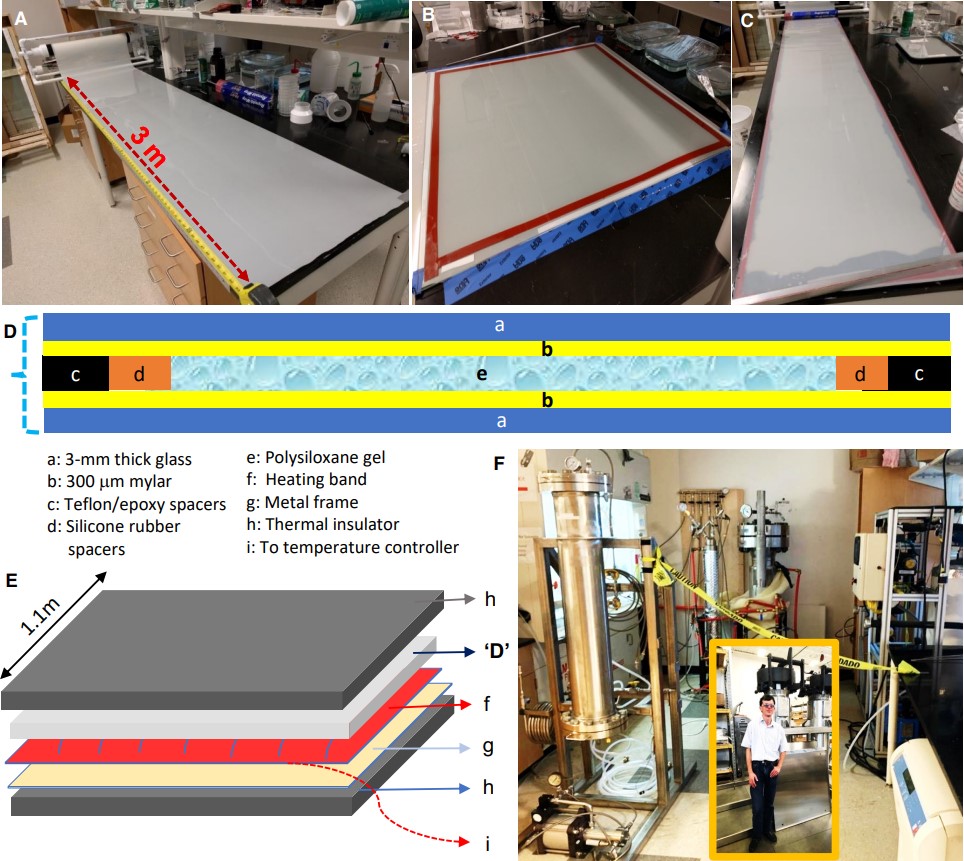
How does it work? This material consists almost entirely of air, but this air is not contained in large bubbles, but in billions of ultra-fine pores inside a transparent silicone frame. When the pores are very small, air molecules have nowhere to spread out, so they bump into the pore walls more often and transfer heat less efficiently — that is, heat passes through much more slowly. At the same time, the pores are so small that they hardly scatter visible light: light passes through, but heat is slowed down. It is the combination of transparency and microporous structure that gives the “thermos window” effect.
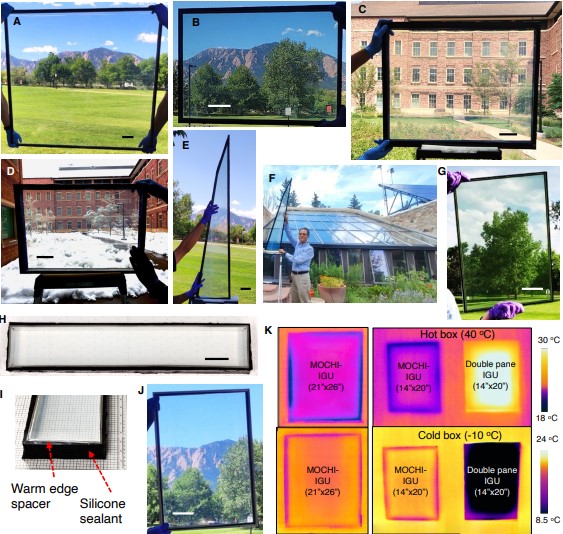
Why is this important? For space research and astronomy, transparent thermal insulation is interesting as a way to reduce energy consumption in windows in pressurized modules and greenhouses (on the Moon/Mars), as well as to stabilize the temperature regime of optical systems. Smaller thermal gradients in glazing/protective windows reduce convection and local turbulent flows that impair observation quality; additionally, the material can help with icing/dew when heated in a controlled manner.
A return to the Moon is already planned for the end of the decade, but the scientific community is increasingly asking the provocative question: shouldn’t we skip the Moon and aim for Mars as quickly as possible? In the article “NASA urges sending humans to Mars as soon as possible,” we analyzed what exactly the consortium of American scientists and engineers proposes in its report, as well as what risks could be decisive — from cosmic radiation to biosecurity and possible contamination of the Martian environment.
According to science, eurekalert

