

The object discovered by miners in Western Australia on Saturday is of extraterrestrial origin. Experts identified it as a fragment of a Chinese Jielong-3 rocket stage. Its fall once again highlights the importance of solving the problem of space debris.
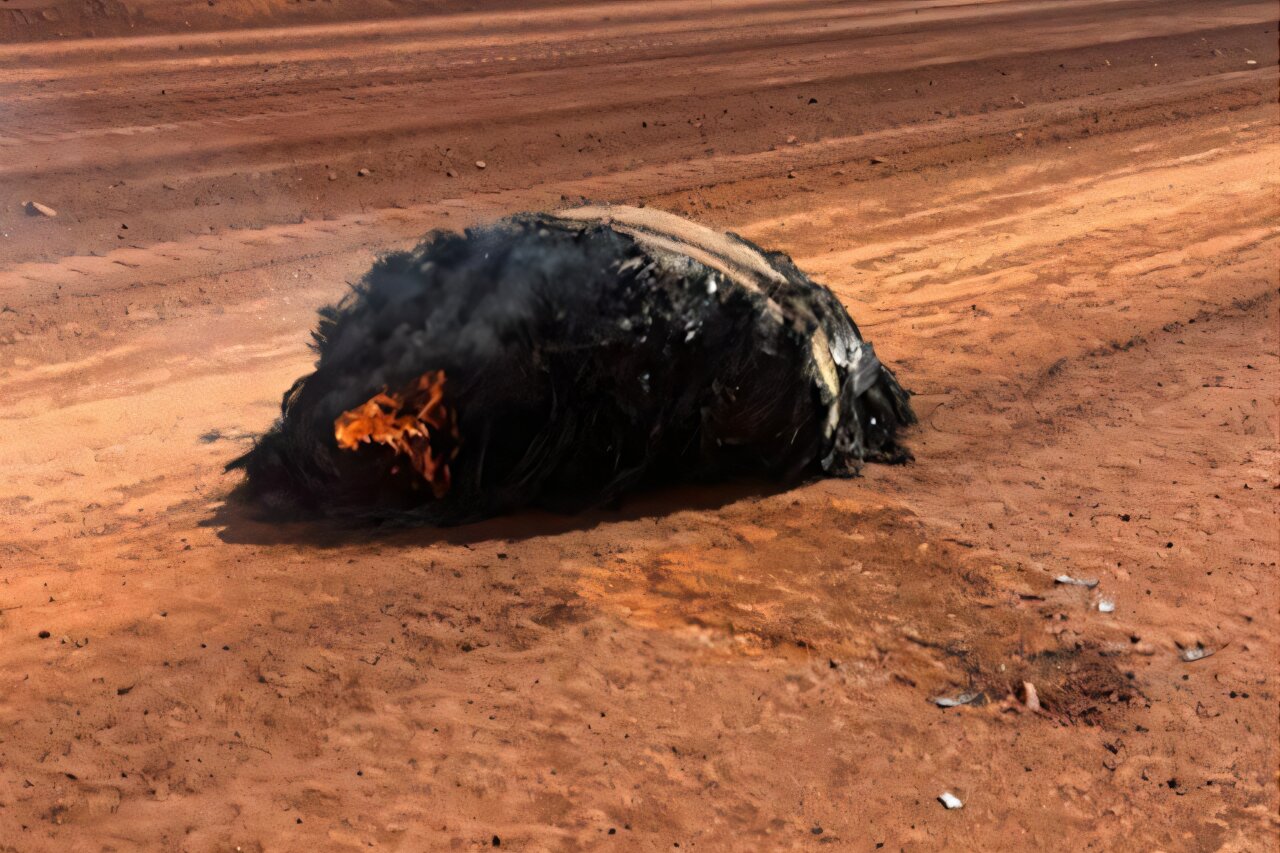
Mysterious burning object
On October 18, workers at a mine in the Pilbara region of Western Australia discovered a mysterious burning object lying on the ground. At first, it was assumed that it had fallen from space, so specialists from the Australian Space Agency arrived at the site. After inspection, they confirmed that the object was indeed connected to Earth’s orbit, but its origin turned out to be terrestrial.
To be more precise, the object turned out to be a fragment of a stage of the Chinese Jielong-3 rocket. Most likely the one that launched 12 communications satellites into orbit in September this year. More precisely, the space agency has determined with certainty that it is a fuel tank, while the rest are details that still need to be confirmed.
But if it is indeed a fragment of a Chinese rocket, then according to the international agreement on space, they have to be fully responsible for the consequences of its fall. But the debris should be returned to them.
Space debris
This time, the fuel tank crash in Australia did not have any consequences. But overall, this is a huge problem. The space around Earth is becoming increasingly crowded. There are more than 10,000 active satellites and possibly up to 40,000 pieces of space debris larger than 10 cm. By the end of this decade, approximately 70,000 satellites could be in low Earth orbit, at an altitude of less than 2,000 km.
And of all the space debris, fuel tanks and rocket stages are the most problematic. If satellites are initially designed to burn up completely in the atmosphere, then the tanks have to be made of a more heat-resistant material that can easily survive re-entry into the atmosphere, allowing them to reach the surface.
A report presented at the International Astronautical Congress in Sydney earlier this month lists the 50 most dangerous pieces of space debris in low Earth orbit, 88% of which are rocket bodies.
Usually, to avoid problems with spent stages, enough fuel is left in them to ensure their descent into an uninhabited area over the Pacific Ocean. But the Chinese often fail to do so, resulting in their rocket stages falling in random locations.
According to phys.org

