

Last autumn, the LIGO gravitational-wave detector registered a signal from the merger of two black holes. It is interesting because one of the two objects involved may have a mass smaller than that of the Sun. And this suggests that it may be a primordial black hole that formed in the very first moments of the Universe’s existence.
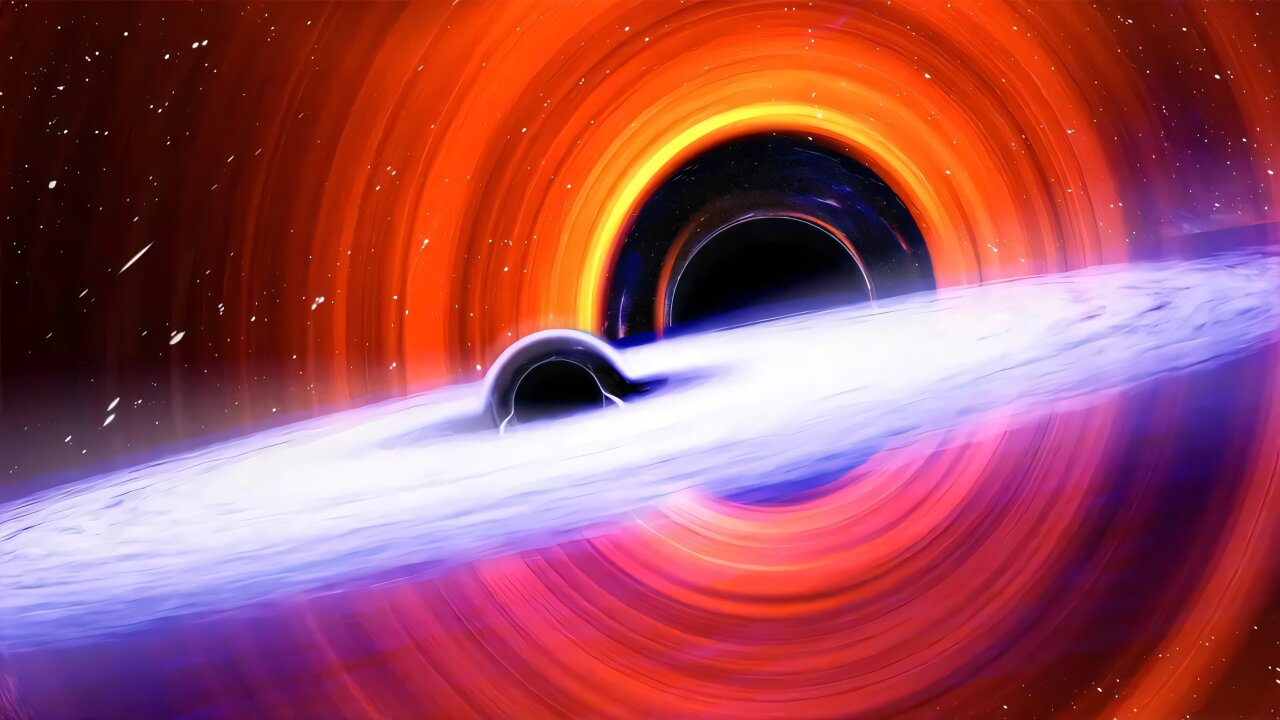
Primordial black holes
In an upcoming article in The Astrophysical Journal, two researchers from the University of Miami claim that evidence of the existence of primordial black holes was detected by the LIGO gravitational-wave detector as early as last autumn. At least, that is how they interpret the mysterious signal they received.
All black holes currently known are either the result of the collapse of massive stars or their supermassive counterparts at the centers of galaxies, about which not everything is yet understood; however, a significant portion of their mass comes from the merging of ordinary black holes.
In any case, the implication is that none of these objects can have a mass less than several times that of the Sun. There are simply no such processes in the modern Universe. But such processes could have occurred immediately after the Big Bang, and in that case, black holes with significantly smaller masses could have formed.
Primordial black holes play a significant role in the modern scientific understanding of the Universe. In particular, it is believed that these particles may be the building blocks of dark matter, which makes up the majority of matter in the Universe.
Have we discovered black holes?
However, all theoretical models regarding primordial black holes come down to one simple fact. To date, no one has ever seen any of them, and it is quite possible that they never actually existed. After all, they are not necessary even to explain dark matter.
And precisely for this reason, the new discovery—if it actually happened—is so important. However, it is not yet entirely clear whether the scientists have made a mistake in estimating the object’s mass and determining what it is. Because it is still unclear whether white dwarfs can generate gravitational waves when they are swallowed by black holes.
However, if it really was a primordial black hole, this could explain what dark matter is—something that scientists have been unable to detect. And if it really is made up of primordial black holes, this isn’t the last merger that astronomers have observed.
The next ones will also generate gravitational waves. And further improvements to the LIGO observatory may help detect them.
According to phys.org

