

New scientific research points to an unexpected solution to one of the most pressing cosmological problems of the last decade—the so-called Hubble tension. It does not deny the Big Bang or the expansion of the Universe, but offers a simple explanation as to why different methods of measuring the speed of this expansion give different results.
What is Hubble tension?
The Universe is expanding. The speed of this expansion is described by the Hubble parameter (H0). For decades, it was believed that determining its exact value was only a matter of time. However, as measurement methods became more accurate, a strange contradiction arose.
Scientists use three main methods to “measure” space:
- Supernovae in distant galaxies give a value of about 73 km/s per Mpc.
- Relic radiation indicates 67 km/s per Mpc.
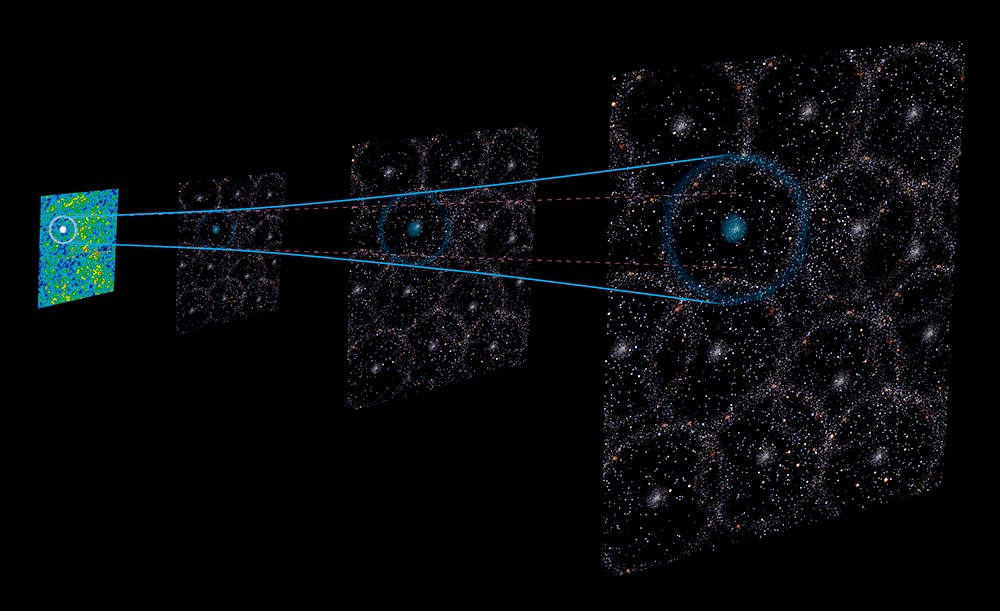
- Baryon acoustic oscillations (waves in the distribution of galaxies) confirm the relic radiation figure.
This discrepancy, known as the “Hubble tension,” cast doubt on the accuracy of our standard cosmological model, ΛCDM, which describes the evolution of the universe.
Simple reason, incredible solution
A new study has proposed an idea that is ingenious in its simplicity: what if measurements using supernovae are influenced not only by the distance to the galaxy, but also by its age?
A team of scientists analyzed data from approximately 300 distant galaxies in which supernovae were observed and took into account the age of these host galaxies. It turned out that when this correction was made, the results of measurements of supernovae were very close to those obtained from relic radiation! This means that most of the contradiction could have arisen because we ignored such an important characteristic as the age of the galaxy.
Future of Cosmology
The authors of the study note that their conclusions are still preliminary due to the small sample size. However, with the launch of new powerful telescopes, such as the Vera Rubin Observatory, scientists will soon be able to obtain data on the ages of thousands of galaxies.
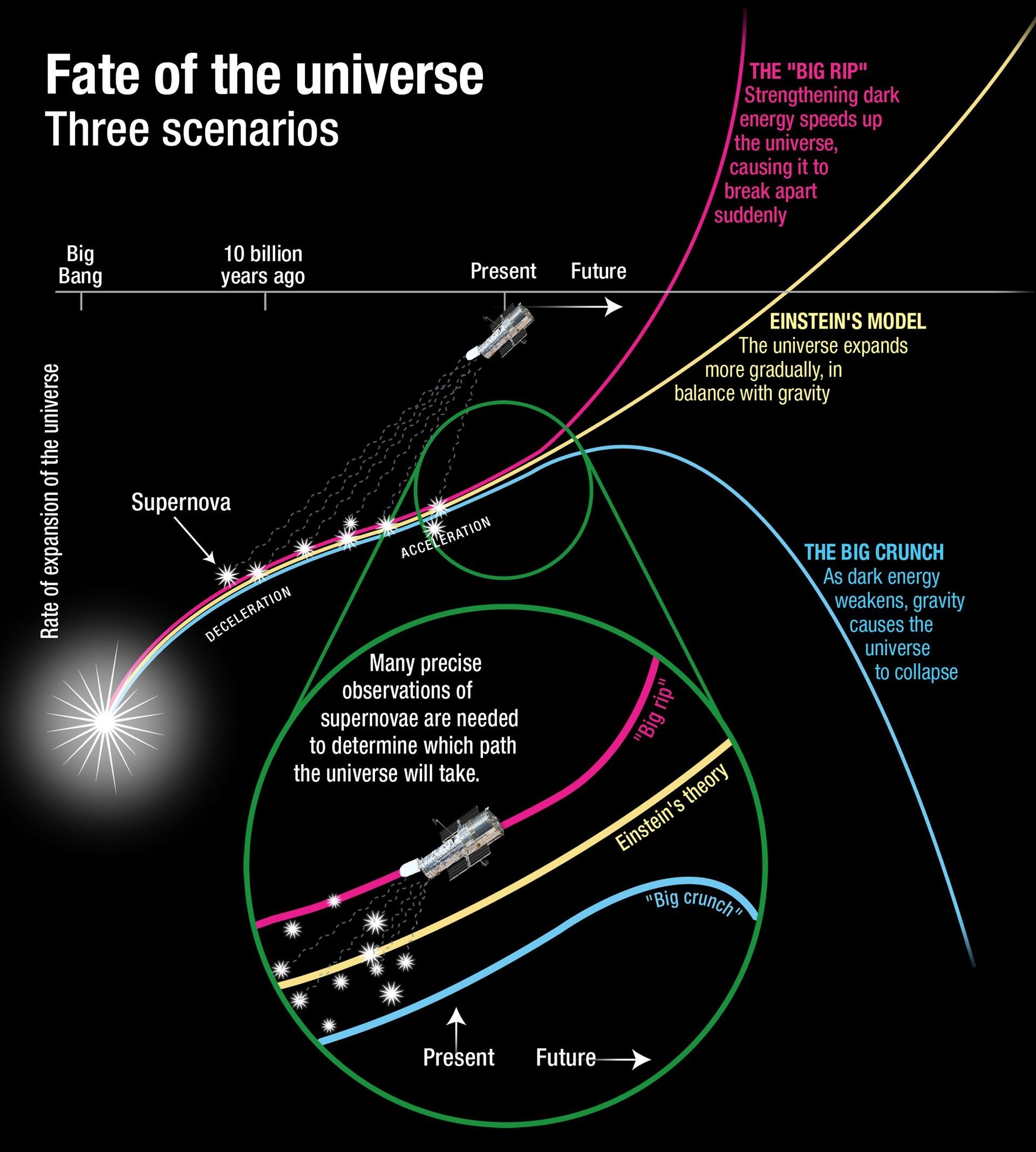
If new observations confirm this model, it will force the scientific community to rethink the role of dark energy. Einstein’s cosmological constant may not be the only factor driving the accelerated expansion of the Universe. An even more surprising discovery may await us, one that will completely change our understanding of the cosmos.
Earlier, we reported on how James Webb and Hubble puzzled scientists with new data on the expansion of the Universe.
According to Universe Today

