

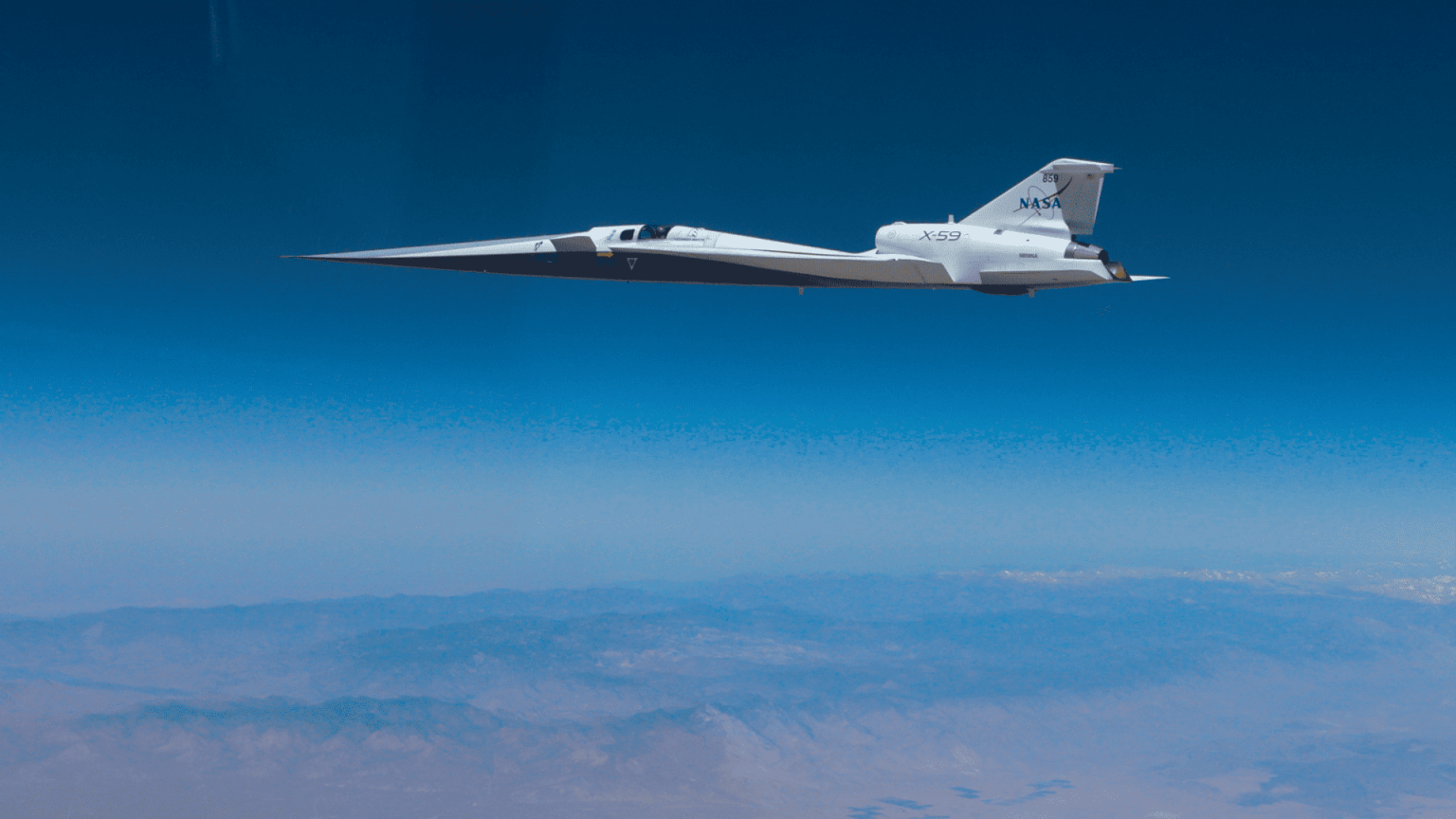
NASA has taken a step toward quiet supersonic flight. The X-59 experimental aircraft broke the sound barrier for the first time without producing the deafening sonic boom typically associated with supersonic aircraft. This confirmed that the concept works and that the mission is proceeding according to plan.
How the test was conducted
Pilot Jim Less took off from Edwards Air Force Base in California and accelerated the X-59 to approximately 1,148 km/h, which is 1.1 Mach—ten percent faster than the speed of sound. The flight altitude was about 13,230 m. The test lasted 81 minutes, during which the team evaluated flight characteristics in subsonic and supersonic modes.
An F-15 fighter jet flew alongside for observation. Its loud sonic boom drowned out any sounds from the X-59, so it was not possible to assess the aircraft’s quietness during this flight.
NASA’s X-59 aircraft completed its first supersonic flight as part of the Quest mission. Source: NASA Armstrong Flight Research Center
The next milestone
The next step will be a flight under mission conditions. The X-59 is scheduled to reach a speed of Mach 1.4, or approximately 1,489 km/h, and climb to an altitude of about 16,760 meters. These parameters form the basis for the final phase of testing.
Following this, the X-59 will conduct test flights over several communities in the United States. NASA will collect data on how people perceive the noise from the aircraft and will share it with U.S. and international regulators to help develop new noise standards.
Mission objective
The X-59 aircraft is central to the Quest mission, which aims to demonstrate that supersonic commercial flights over cities are possible without causing noise pollution for people on the ground.
As part of the program, NASA is developing methodologies and technologies for designing supersonic airliners. American manufacturers will be able to build new aircraft with the confidence that they will meet quiet flight requirements, and passengers on international routes will reach their destinations faster.
According to nasa.gov

