

56 years ago, on July 20, 1969, Neil Armstrong took a small step on the Moon that turned out to be a giant leap for mankind. This year, Moon Day was marked not by celebration, but by protest. NASA employees from the Goddard Engineers, Scientists, and Technicians Association (GESTA) took to the streets of Washington to express their strong opposition to the planned large-scale budget cuts at the agency. They warn that financial cuts will effectively halve the science budget.
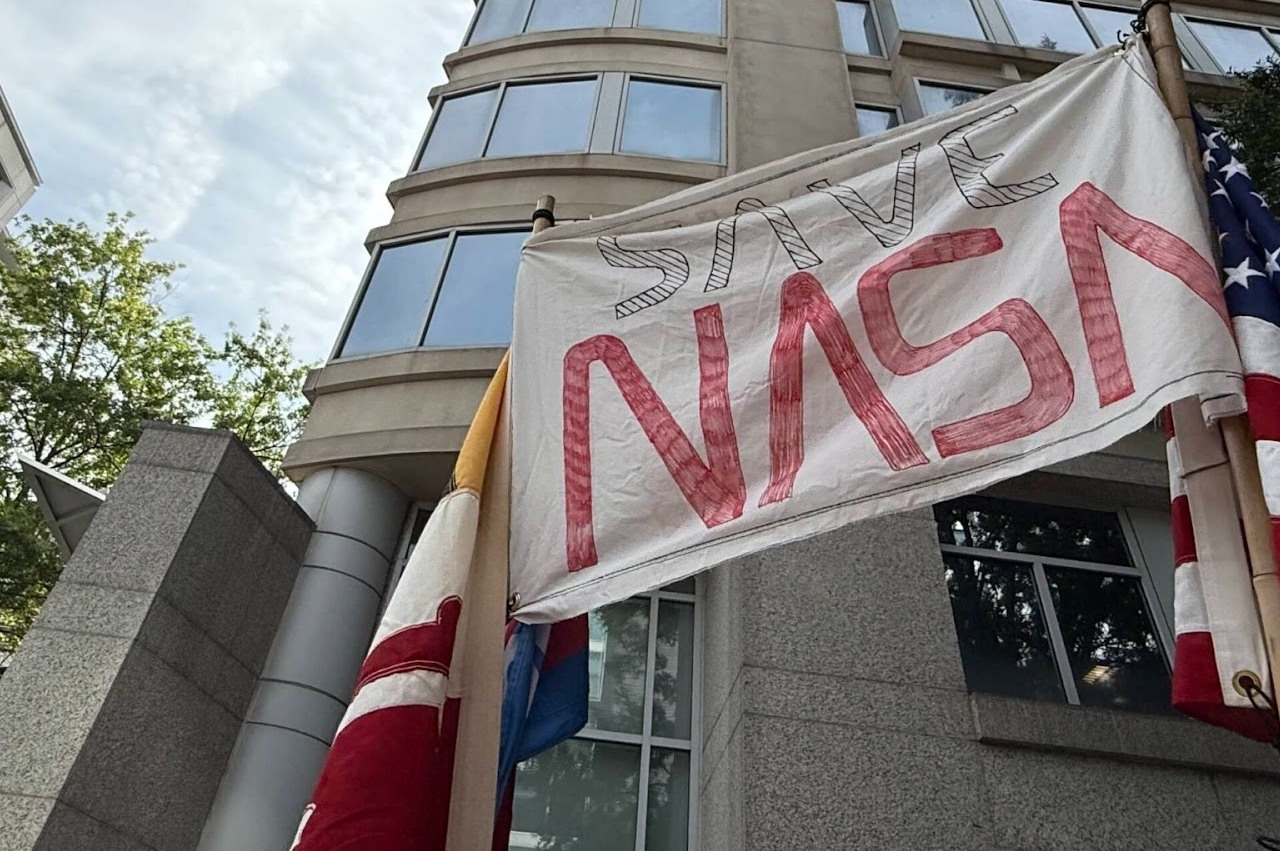
“We take to the streets on this historically significant Moon Day to save the agency that once inspired the whole world,” emphasize the organizers of the protest.
Threat to scientific achievements
Protesters accuse NASA’s current leadership of already beginning to act in accordance with the unsigned budget for 2026. This led to the dismissal of employees and the termination of contracts worth $420 million.
The total reduction in NASA’s budget for 2026 amounts to a whopping $6 billion compared to the current year. Scientists believe that this will have a catastrophic impact on key missions and delay the prospect of returning humans to the Moon within this decade.

Planetary research will be hit particularly hard: funding is set to fall from $2.7 billion to $1.9 billion. Dozens of missions are at risk, including the legendary New Horizons probe, which is exploring the far reaches of the Solar System. The LIGO project, an observatory for detecting gravitational waves, will also undergo significant cuts. Its funding may be reduced from $48 million to $29 million, which will result in the closure of one of the two detectors.
International implications
The impact of the cuts will extend beyond the US. The European Space Agency has warned that three joint missions with NASA may be canceled. Among them is the long-awaited LISA, a gravitational wave space observatory, which has been in development for almost 30 years. NASA contractors involved in LISA have already informed employees of the risk of dismissal by the end of September.
A small bright spot for NASA was the additional $9.9 billion in funding from the bill signed by President Trump. These funds will support the ISS, Artemis missions, and Mars exploration. However, scientists insist that cutting science funding will really hurt the agency’s ability to make big discoveries.
We previously reported on how NASA’s JPL put operational spacecraft up for sale due to budget cuts.
According to nasawatch.com

