

NASA and the US Department of Energy (DOE) have announced the renewal of their partnership on a project to develop a space nuclear reactor. It is intended for use in the Artemis program and future missions to Mars.
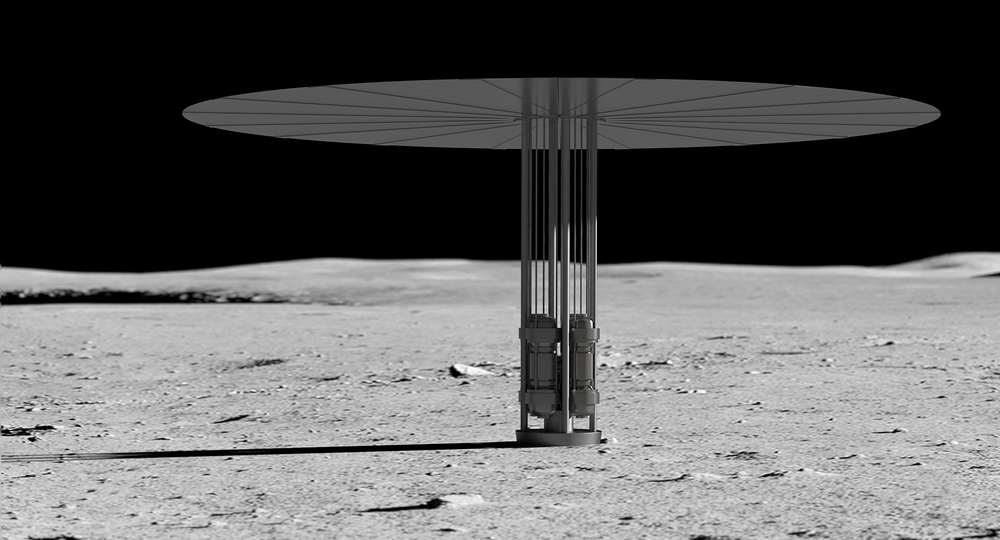
NASA has been working on a nuclear reactor project for a long time, which could be used to provide energy to bases on the surface of the Moon and Mars. The main advantage of such a system is that it will be able to generate electricity for many years without the need for refueling. At the same time, unlike solar power plants, it will not be subject to factors such as the long 14-day lunar night or, as in the case of Mars, changing weather conditions and dust storms.
Last December, Donald Trump issued an executive order calling for the construction of a lunar base by 2030, as well as the preparation of a nuclear reactor for launch to its surface by the same year. Now, NASA and the DOE have announced the signing of a memorandum of understanding confirming their commitment to this ambitious deadline.
It is worth noting that NASA and DOE have more than half a century of experience working together in the field of space nuclear power systems. For decades, many deep space explorers, such as the Voyager and Cassini spacecraft and the Curiosity and Perseverance Mars rovers, have used radioisotope thermoelectric generators (RTGs) as their power source. A similar power source will be installed on the Dragonfly drone, which is scheduled to launch in 2028. Its destination will be Titan.
At the same time, it is worth noting that, from a technical point of view, RTGs have a fairly simple design. They have no moving parts that can break. In this respect, a nuclear reactor is a much more complex device, so creating such a system will be a significant challenge for engineers.
According to NASA

