

NASA specialists have found a way to enable the Curiosity rover to perform several tasks simultaneously. This will allow for maximum efficiency in using its energy source and extend its service life.
Curiosity’s energy budget
Curiosity recently reached a region filled with cell-like formations. These hardened ridges are believed to have been created by underground waters billions of years ago. Spanning many kilometers in this part of Mount Sharp, these formations may shed light on whether hypothetical microbial life could have survived in the depths of Mars billions of years ago, extending the planet’s habitability until it began to dry out.

Performing this detective work requires a great deal of energy. In addition to moving and extending its robotic arm to study rocks and boulders, Curiosity is equipped with a variety of scientific instruments and heaters that require power.
Other NASA missions, such as the Spirit and Opportunity rovers and the InSight lander, relied on solar panels to recharge their batteries. However, this technology always carries the risk of insufficient sunlight. Therefore, engineers equipped Curiosity with a radioisotope generator (RITEG). Thanks to this, the rover is not affected by changes in lighting conditions. The downside is that because plutonium decays over time, charging Curiosity’s batteries takes longer each year, leaving less energy for scientific research.
More effective science
NASA engineers generally send Curiosity a list of tasks to complete one by one before the rover ends its day and takes a break to recharge. In 2021, the team began investigating whether it would be safe to combine two or three of the rover’s tasks, thereby reducing its active time.
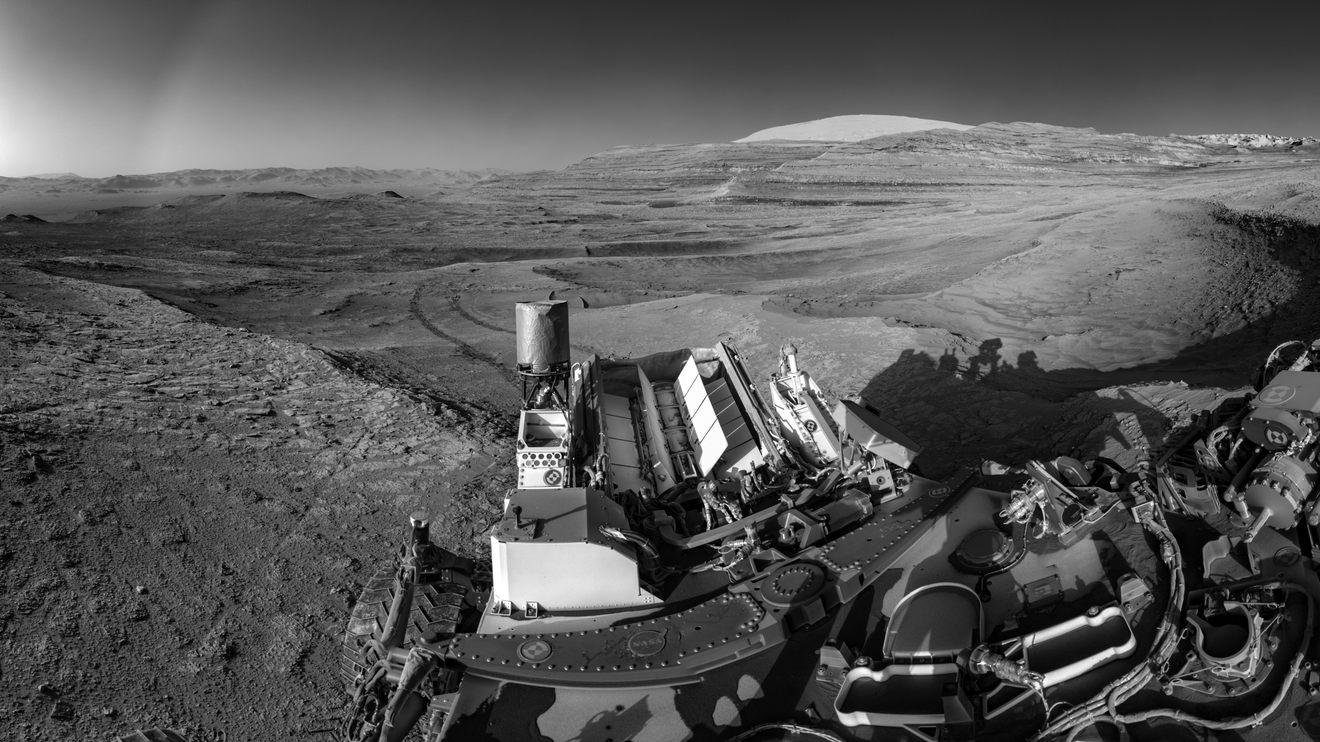
For example, the Curiosity radio regularly sends data and images to a passing orbital spacecraft, which transmits them to Earth. Can the Mars rover communicate with the orbital spacecraft while moving, shifting its robotic manipulator, or taking images? Combining tasks can shorten each day’s plan, requiring less time with heaters and equipment turned on and ready for use, which reduces energy consumption. Testing has shown that Curiosity is capable of doing all this safely.
Another technique is to allow Curiosity to decide when it needs to rest if it finishes its tasks early. Engineers always overestimate the duration of daily activities in case of unforeseen circumstances. Now, if Curiosity completes these actions ahead of schedule, it will go to sleep earlier.
By allowing the rover to manage its own rest time, it is possible to reduce the charging time before the next day’s schedule. Even actions that reduce the time required to complete a single task by just 10 or 20 minutes can have a significant long-term effect, maximizing the service life of the RITEG for further scientific research and exploration.
A lot remains to be done
Engineers are implementing new features in Curiosity based on their experience operating it. Several mechanical issues required a redesign of the sample collection method using a drill bit mounted on a robotic arm, and movement capabilities were improved through software updates. When the color filter stopped rotating on one of the two cameras mounted on Mastcam, Curiosity’s rotating “head,” the team devised a workaround that allowed them to capture the same beautiful panoramas.
NASA has also developed an algorithm to reduce damage to Curiosity’s wheels, which are worn down from hitting rocks. Although engineers are closely monitoring any new damage, they are not concerned. After 35 kilometers of driving and extensive research, it became clear that, despite wear and tear, the wheels are capable of serving for many more years. In combination, these measures allow Curiosity to operate as actively as before.
According to JPL

