

NASA has signed a $30 million contract with startup Katalyst Space. It will try to save the Swift space telescope, which will enter the atmosphere next year.
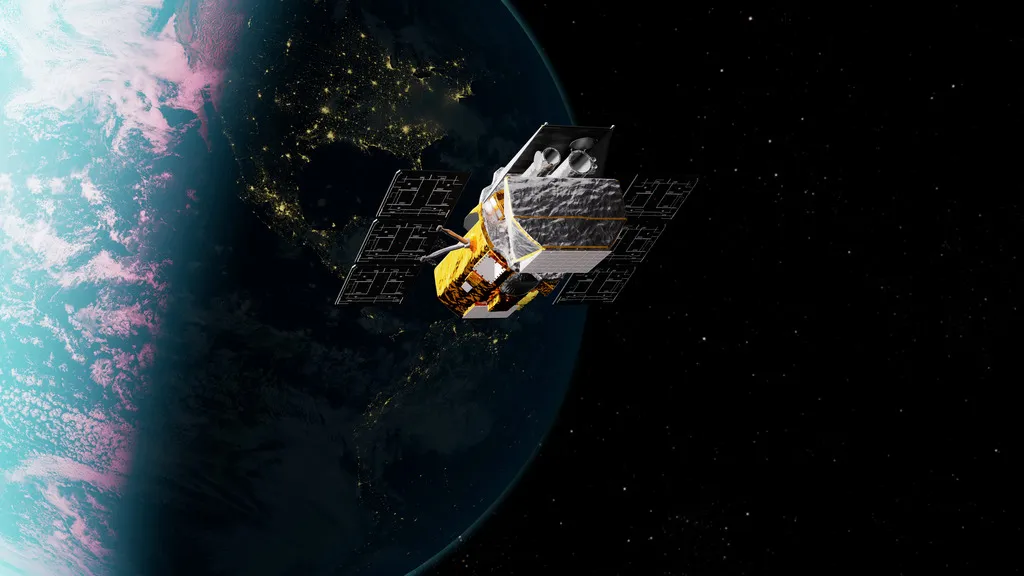
The Swift telescope was launched in 2004 with the aim of recording and observing cosmic gamma-ray bursts. As often happens, NASA was able to find additional tasks for it in the future. Over time, Swift began to function as a multi-purpose observatory, specifically engaged in tracking and characterizing all types of astrophysical transient phenomena.
Despite its considerable age and the loss of two of its four gyroscopes, Swift is still in service and conducting observations. However, the telescope may face destruction as early as next year.
At the moment of launch, Swift was placed into a 600-kilometer near-Earth orbit. In subsequent years, its altitude gradually decreased due to deceleration in the upper layers of the Earth’s atmosphere. The current surge in solar activity has significantly accelerated this process. The telescope is currently in a 440-kilometer orbit. Experts estimate that it will enter Earth’s atmosphere in the second half of next year.
Since the telescope has no engines, it cannot independently counteract the process of altitude loss. In the past, this has doomed many NASA missions, such as NEOWISE. However, advances in satellite servicing technology provided a unique opportunity to attempt to rescue the spacecraft for the first time in history.
This task was assigned to Katalyst Space. On September 24, NASA announced that it had won a $30 million contract under the Small Business Innovation Research Phase 3 program to raise Swift’s orbit.
The mission to rescue the telescope will take place in the spring of 2026. The LINK demonstrator, which was originally planned to be used to service a geostationary satellite, will be used for this purpose.
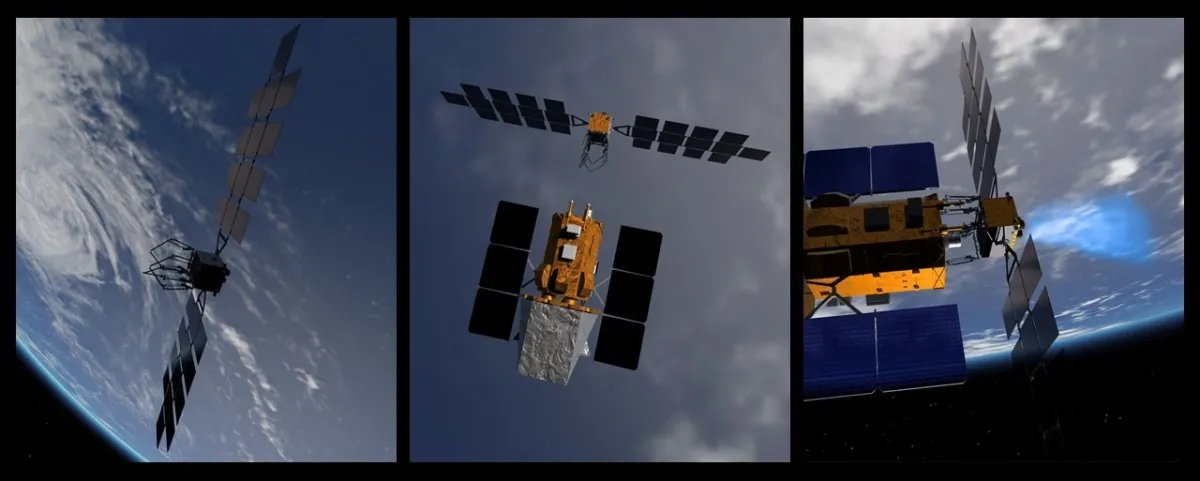
LINK will use a specially designed mechanism to connect to Swift, which does not have docking mechanisms or interfaces for satellite servicing. Katalyst claims that successful completion of this task will demonstrate the ability to service spacecraft not equipped with docking or similar systems, opening up new markets for commercial and national security.
“Given how quickly Swift’s orbit is declining, we are racing against time, but by using commercial technologies that are already in development, we are solving this problem,” said Shawn Domagal-Goldman, acting director of NASA’s astrophysics division, in a statement. “This is NASA’s progressive approach, which allows for risk. But attempting to raise the orbit is more affordable than replacing Swift’s capabilities with a new mission, and it benefits the country by expanding the use of satellite servicing to a new and broader class of spacecraft,” added Shawn Domagal-Goldman.
Earlier, we reported on Northrop Grumman’s plans to launch a robot for servicing geostationary satellites.

