

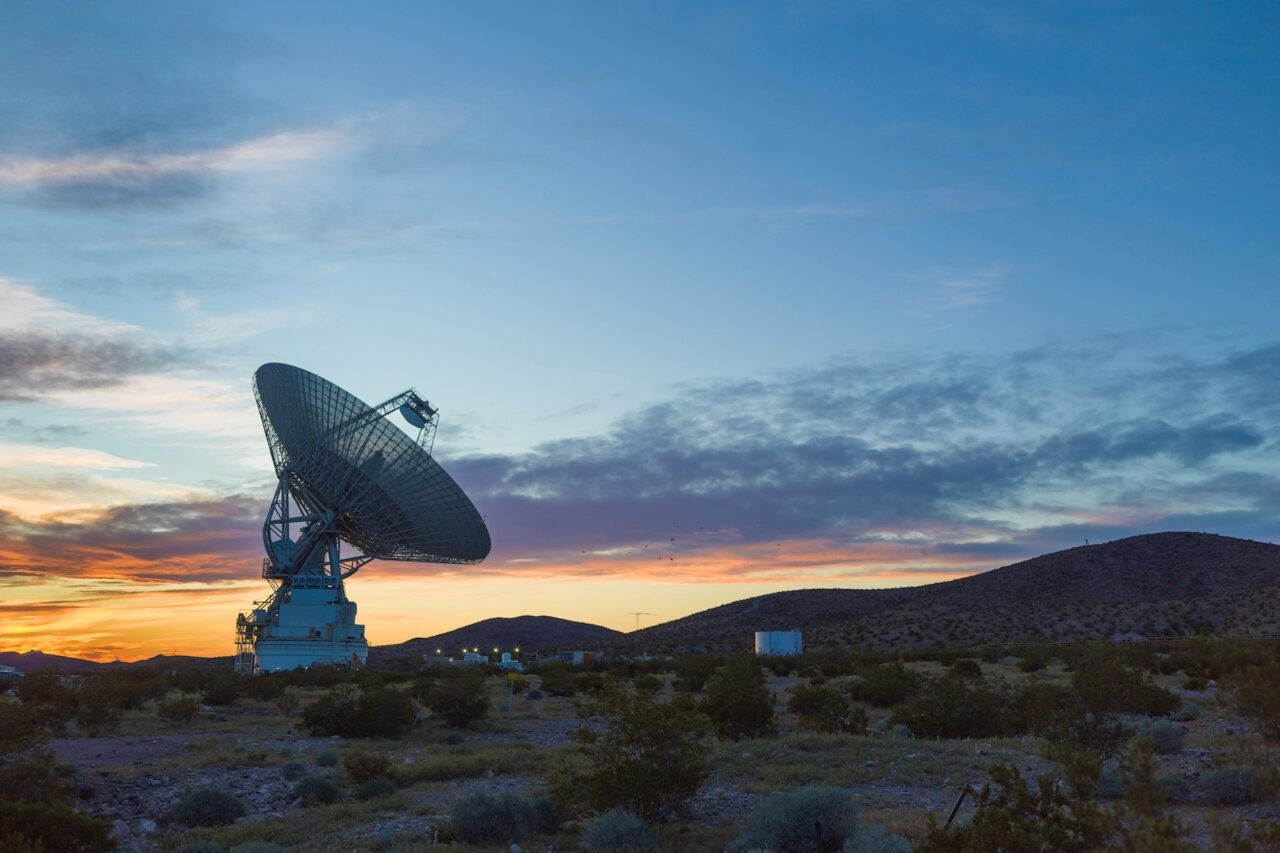
A large-scale accident has occurred at the heart of the global space communications network. One of the most powerful antennas in the world, the 70-meter giant DSS-14 Goldstone Solar System Radar at the Goldstone base in California, has been damaged and out of service for almost two months. The incident occurred on September 16 due to a technical malfunction—excessive rotation of the structure, which led to broken cables, pipes, and even damage to the fire suppression system. The latter caused flooding of the node, exacerbating the scale of the problem.
NASA has provided little information about the exact causes and solutions to the problem. Repair work has been delayed, and the commission’s official conclusions are not expected until after the US federal government resumes operations.
Vital network
What is DSS-14 and why is its failure causing such concern among the scientific community? This antenna is a key element of the Deep Space Network (DSN). The DSN is NASA’s nervous system for communicating with all interplanetary spacecraft. Three antenna complexes in California, Spain, and Australia, evenly spaced, provide continuous contact with spacecraft even as the Earth rotates.
DSS-14 is a true legend. It was this station that received the first signals from the Voyager probes traveling in interstellar space and maintained communication with numerous missions to Mars. In addition, its capabilities are used to track asteroids approaching Earth, accurately measuring their sizes and trajectories. Its decommissioning places a significant additional burden on the other antennas in the network.
Extraordinary load
The problem is not just the failure of a single antenna. The DSN network is already operating at full capacity. A 2023 report by NASA’s Inspector General showed that demand for its resources regularly exceeds capacity by 40%. And in the coming years, the load will only increase.
A key factor is the ambitious Artemis program, which aims to return humans to the Moon. The first unmanned Artemis I mission in 2022 required more than 900 hours of DSN operation. Imagine the workload that the Artemis II manned flight, scheduled for 2026, will create when one of the main antennas may still be unavailable.
DSN has experienced breakdowns before, but they have always been temporary. How long it will take to restore DSS-14 is unknown. But one thing is clear: in a world that increasingly relies on space exploration, the failure of one such “bridge” to the stars is a serious challenge for the entire scientific community.
Earlier, we reported on how an unexpected cause of the destruction of the Aresibo telescope was discovered.
According to Space News

