

At the beginning of the year, NASA faced budget cuts that threatened the future of its flagship mission, the Nancy Grace Roman Space Telescope. However, the project survived and is preparing for launch in 2027. This instrument, whose observational power is equivalent to 200 Hubble telescopes, is designed to unravel one of the great mysteries of the cosmos: the nature of dark energy. Its first target is cosmic voids.
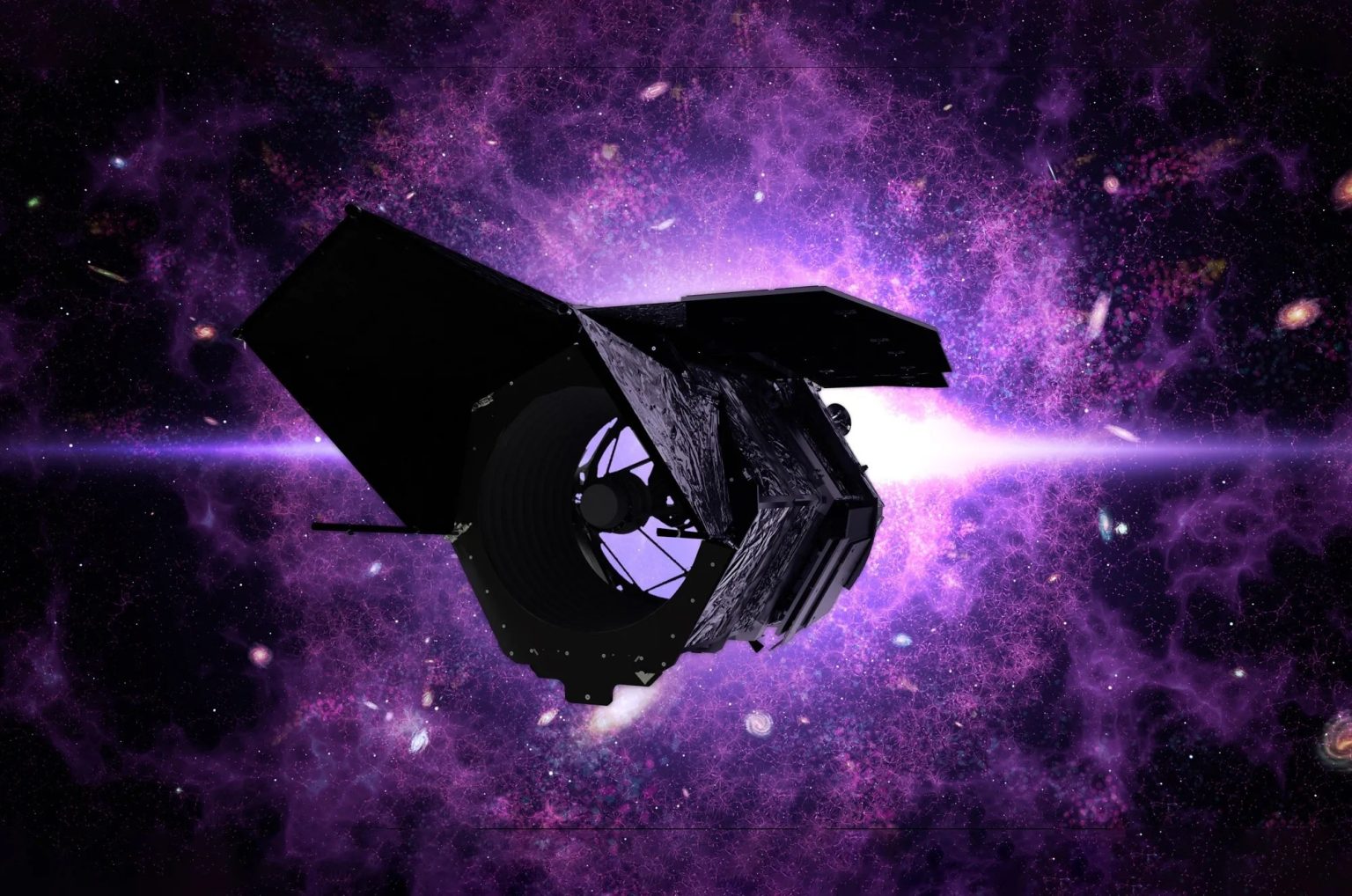
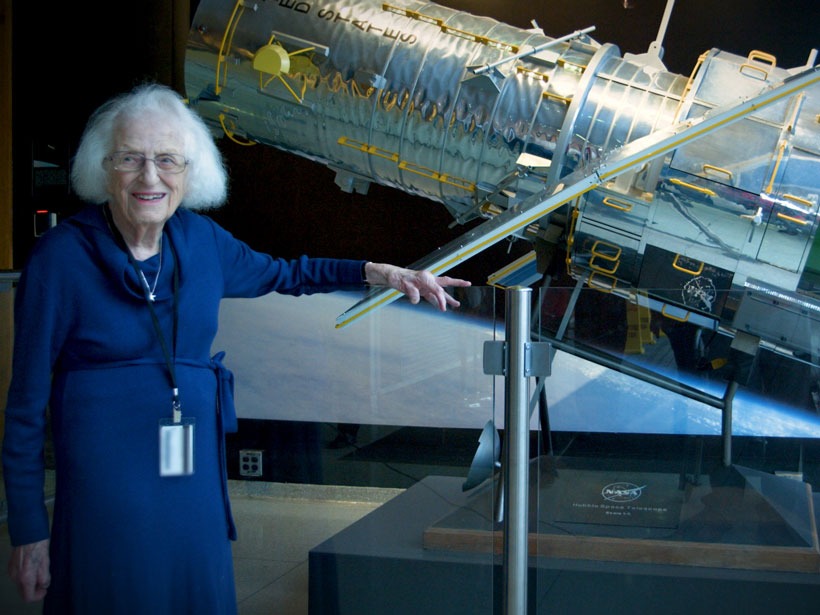
Nancy Grace Roman, after whom the telescope is named, was a key figure in the creation of the legendary Hubble. Her name now adorns a new generation of instruments. Like the James Webb Telescope, Nancy Grace Roman will operate in the infrared range, but will have a field of view 100 times wider than Hubble. This will enable unprecedented large-scale surveys of the universe.
Hunting for voids
One of the telescope’s key programs will be the High-Latitude Wide-Area Survey. Its goal is to study cosmic voids: huge, sparsely populated regions of space that are also called voids. It is there, scientists believe, that dark energy—a hypothetical force accelerating the expansion of the universe—dominates.
“To detect voids, it is necessary to see dim and sparse galaxies. Roman will give us this opportunity,” explains astrophysicist Giulia Degni. The telescope is expected to detect tens of thousands of such voids.
The recipe for dark energy
Obtaining data is only the beginning. The next step will be a complex analysis to reverse engineer the properties of dark energy. Scientists will use data on the position of galaxies and their red shift to determine the three-dimensional shapes of voids.
Astrophysicist Alice Pisani compares this process to recreating a cake recipe from the finished product: “You try to put in the right ingredients—the right amount of matter, the right amount of dark energy—and then you check whether your cake looks as it should. If it doesn’t, that means you put in the wrong ingredients.”
Check for sphericity
Scientists already have theoretical models suggesting that in a homogeneous universe, voids should be nearly spherical. The team plans to statistically combine images of thousands of voids found thanks to Nancy Grace Roman in search of this pattern. If the symmetry is broken, it will indicate an error in our understanding of dark energy or the structure of the cosmos.
Earlier, we reported on how a supercomputer created a synthetic universe in nine days.
According to Gizmodo

