

Every year in March and April, northern Thailand is shrouded in smoke from seasonal fires. This year, the smoke was so thick that a NASA satellite captured it from orbit.
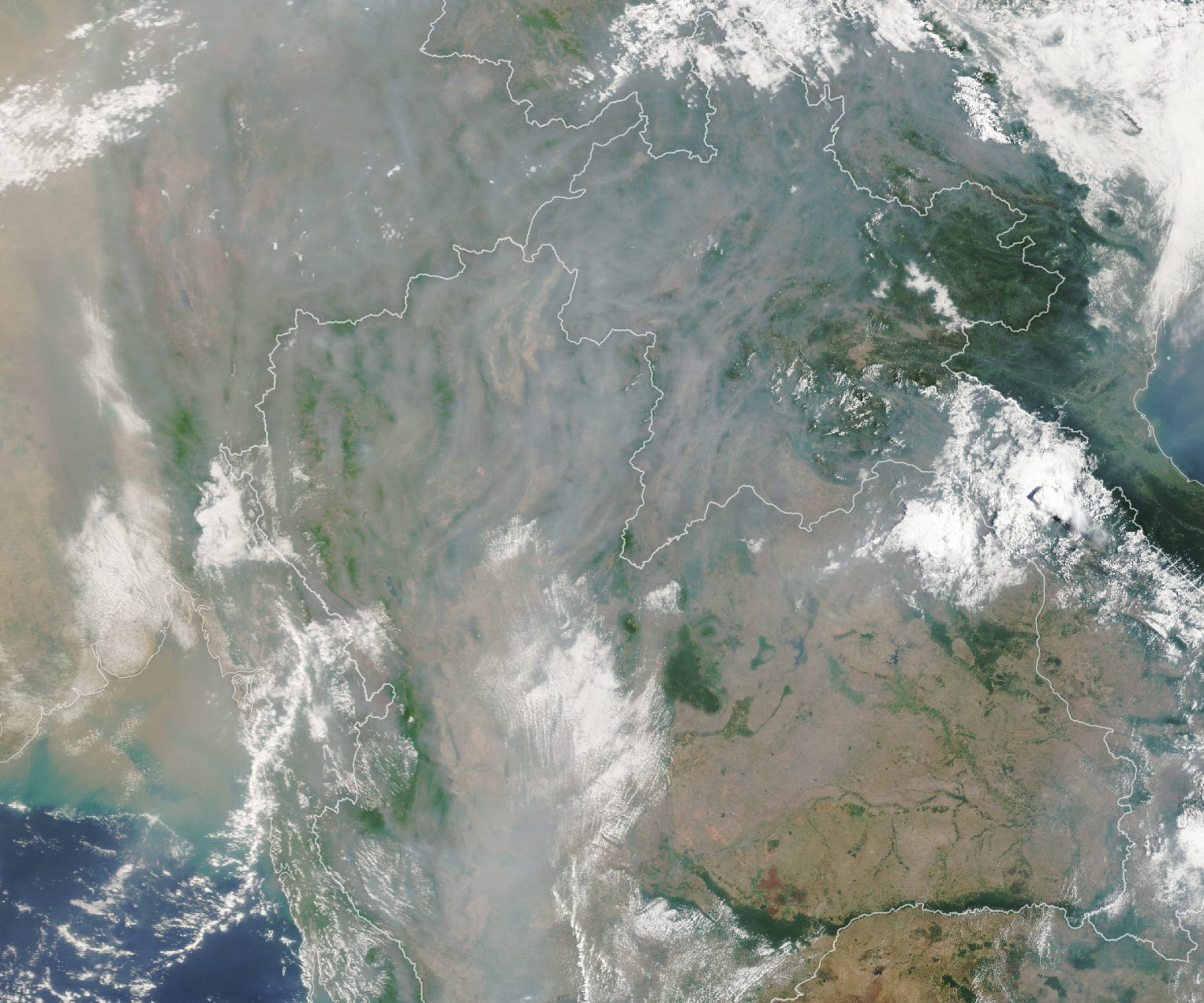
On April 22, the MODIS (Moderate Resolution Imaging Spectroradiometer) instrument aboard NASA’s Terra satellite captured images showing haze partially obscuring the valleys and mountain ranges above Chiang Mai—Thailand’s second-largest city, known for its picturesque mountain scenery.
According to researchers, most of the smoke comes from small agricultural and forest fires—these are set intentionally to dispose of plant debris or for the controlled regeneration of forest areas.
Fire season and pollution levels
Satellite sensors detected isolated hotspots as early as January, but their number rose sharply between February and April. Activity typically peaks in March, and the situation improves with the arrival of May rains.
According to researchers’ estimates, biomass combustion accounts for about 70% of PM2.5 fine particulate matter in the air. This is a suspension of dust and fine combustion particles less than 2.5 micrometers in diameter that penetrates deep into the lungs. The rest of the pollution comes from transportation, power plants, industry, and the burning of charcoal.
Mountains as a trap
Geography exacerbates the situation: the surrounding mountains block the movement of air masses and contribute to temperature inversions. This phenomenon occurs when a colder layer of air near the ground is “covered” by a warmer layer above it—and instead of dispersing, pollutants accumulate in the valley.
On April 22, ground-based air quality monitors in Chiang Mai recorded PM2.5 levels that fell into the “unhealthy” and “very unhealthy” categories on the World Air Quality Index scale.
Tourism has dropped by 90%
The chronic smog is also taking its toll economically. Local media report that after more than a month of smog, the number of tourists in the town of Pai—a popular destination for travelers northwest of Chiang Mai—has dropped by 90%.
On March 27, meteorologists at the ASEAN Specialized Meteorological Center (ASMC) raised the alert level to three—the highest on the scale—warning of a high risk of transboundary pollution.
According to NASA Earth Observatory

