

Astronomers have made a unique discovery, finding evidence of the birth of a black hole in archival data. It turns out that humanity has obtained the clearest evidence ever of how a massive star quietly disappears from the sky, turning into a gravitational abyss without even having time to become a supernova.
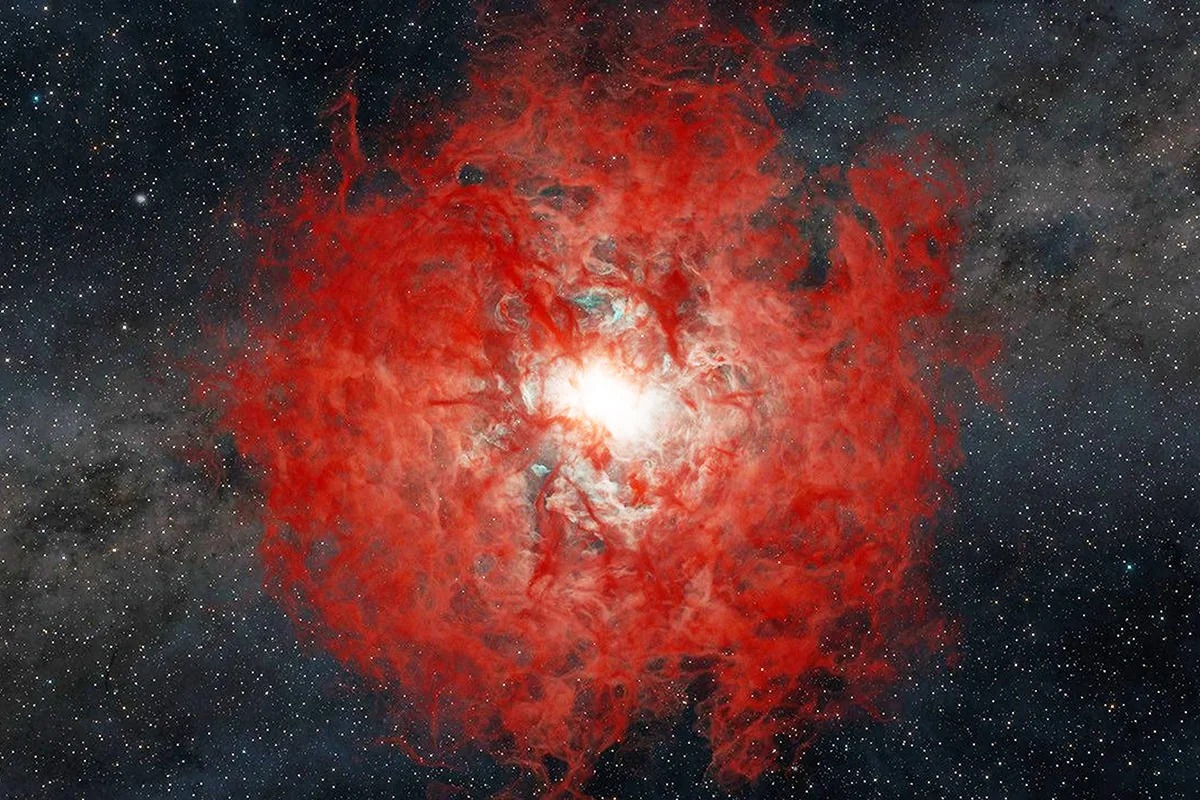
The story began with data from the NEOWISE telescope. This NASA device, designed to hunt for dangerous asteroids, completed its mission at the end of 2024, burning up in Earth’s atmosphere. But before that, it managed to transmit invaluable information back to Earth.
Death without fireworks
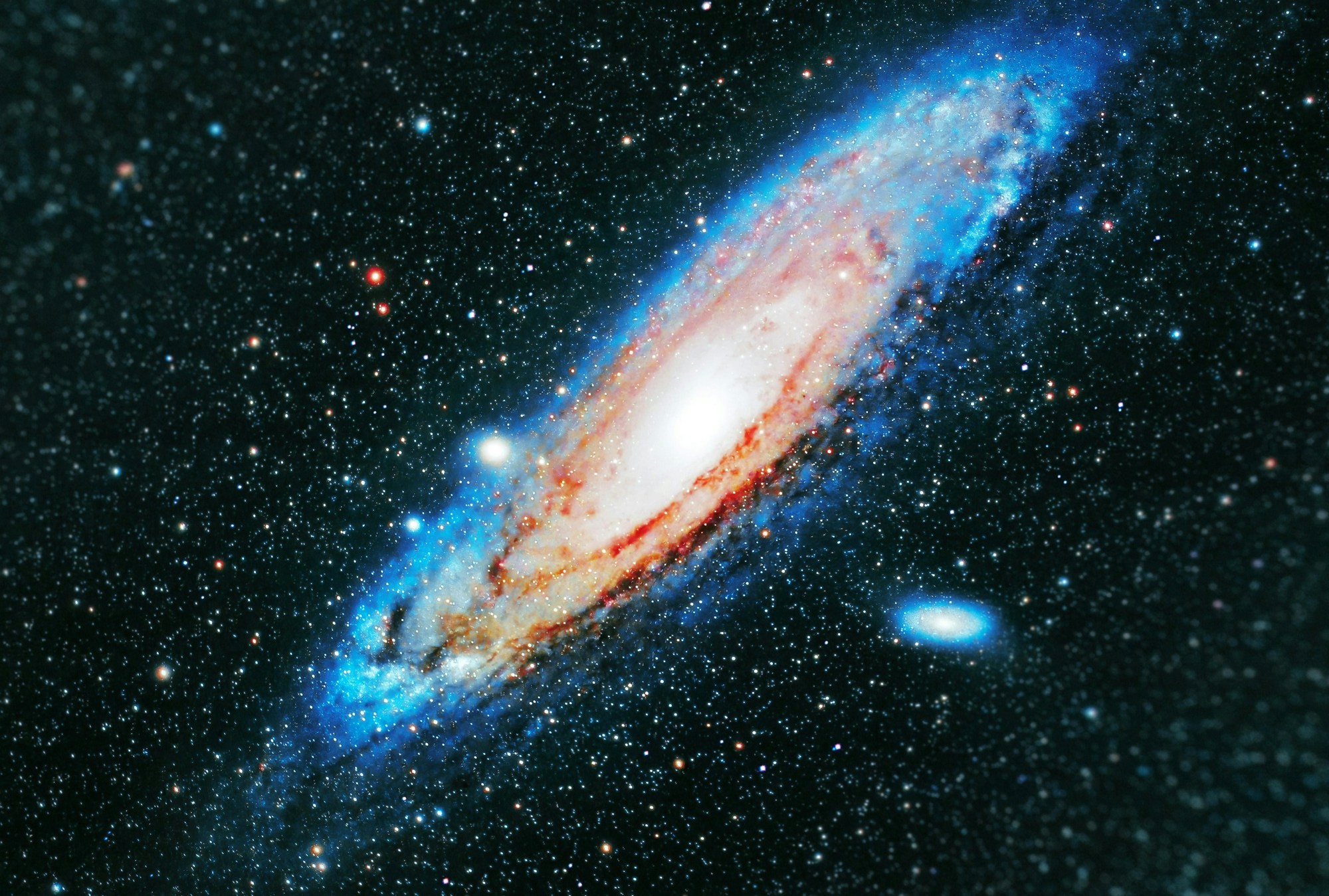
After analyzing archives from 2014, an international team of researchers stumbled upon a strange object. The data clearly showed how the infrared light source was becoming brighter in the Andromeda Galaxy, the closest giant galaxy to us. The star, designated M31-2014-DS1, burned in the infrared range for nearly three years before suddenly fading away, leaving behind only a cloud of dust.
Scientists led by Kishalay De of Columbia University concluded that they had witnessed a phenomenon that theorists had long predicted but never seen so clearly — the direct collapse of a star into a black hole.
Quiet collapse
M31-2014-DS1 was a supergiant. At its peak, its mass exceeded that of the Sun by 13 times, but at the moment of its “death,” it had lost weight to 5 solar masses, shedding its hot shell. Contrary to classical ideas, the star did not explode as a supernova. Its core could not withstand its own gravity and simply collapsed inward, creating a black hole.
Previously, astronomers believed that stars of this mass inevitably ended their lives in a spectacular explosion. This discovery proves that the fate of a star depends on the chaotic interplay of gravity, gas pressure, and shock waves in its interior.
The hunt for the invisible
The discovery of M31-2014-DS1 changes our understanding of cosmic processes. It confirms that black holes can form not only as a result of loud catastrophes, but also as a result of the quiet, almost imperceptible disappearance of a star from the sky.
Why did this dramatic transformation go unnoticed for so long? It is extremely difficult to detect something like this. It is surprising that a massive star died without exploding, and no one noticed this for more than ten years. The data was publicly available, waiting for a researcher to discover it.
According to scientists, a similar event already occurred in 2010 in the galaxy NGC 6946, but at that time the signal was much weaker and could not be confirmed.
We previously reported on how a black hole explosion could reveal the fundamental nature of the universe.
According to skyatnightmagazine.com

