

Astronomers have discovered mysterious bursts of gamma radiation that repeated several times during the day. There is no precedent for such an event in the entire history of observations.
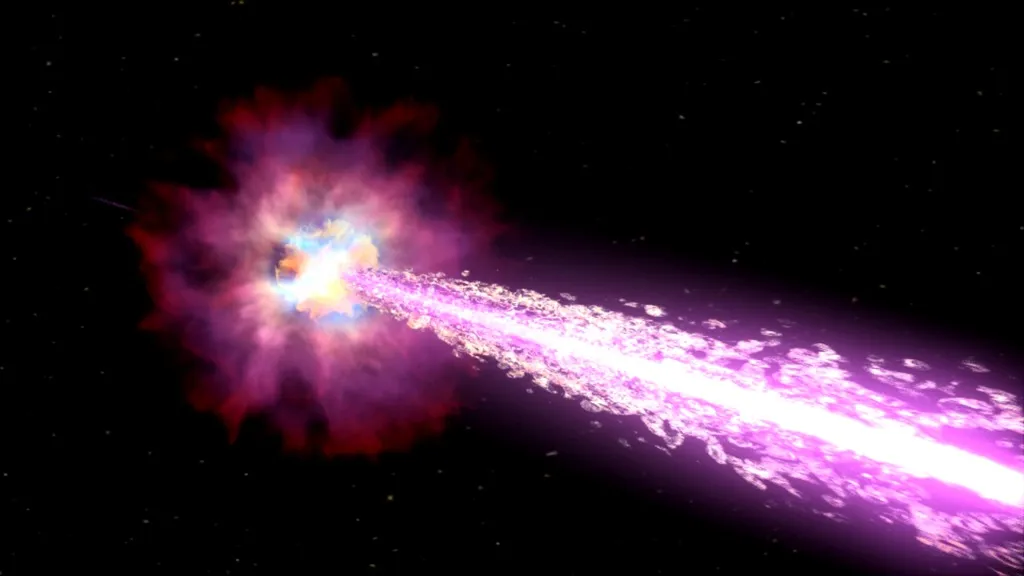
Gamma-ray bursts (GRBs) are the brightest electromagnetic events occurring in the Universe. In a matter of seconds, they release as much energy as the Sun would emit in its entire lifetime. Gamma-ray bursts occur as a result of catastrophic events such as the merger of neutron stars, the collapse of massive stars, or their disruption by black holes.
However, the burst, designated GRB 250702B, was unlike any other recorded by astronomers in more than half a century of observations. Typical bursts last from milliseconds to minutes and never repeat themselves, since the event that generates them is catastrophic.
In the case of GRB 250702B, everything was different. The first report of the burst came on July 2 from the Fermi space telescope. It recorded not one, but three bursts from this source within a few hours. It later emerged that it had been active almost a day earlier. This was confirmed by data from the Einstein Probe spacecraft.
The event stumped astronomers. Such a long and recurring gamma-ray burst had never been observed before. Since the signal came from the plane of our galaxy, filled with stars, it was suggested that it originated within the Milky Way.
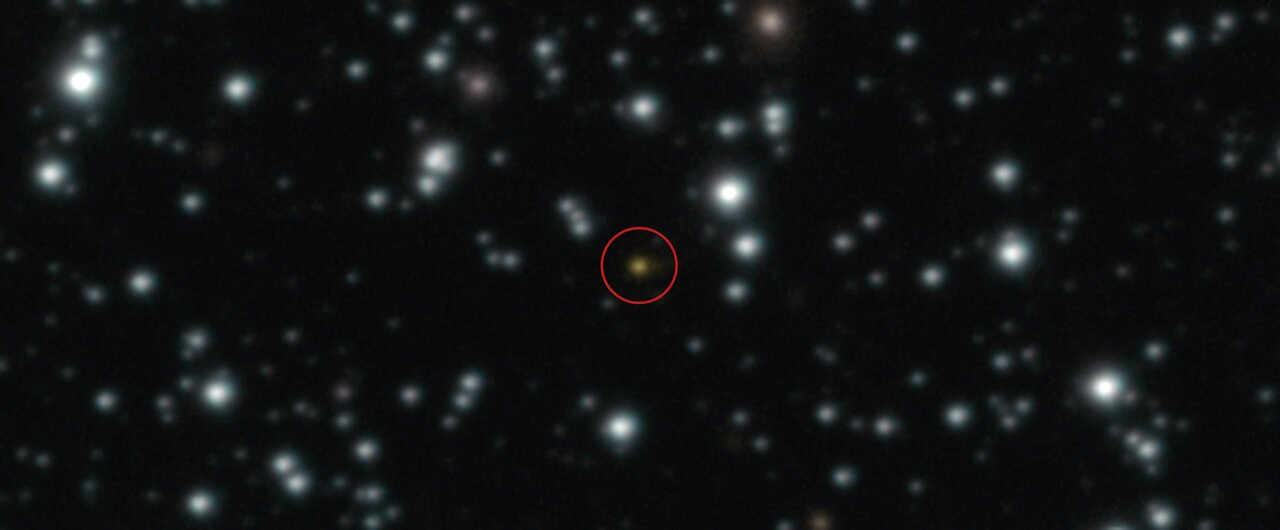
To investigate this question, scientists used ESO’s Very Large Telescope (VLT). It proved that GRB 250702B has an extragalactic origin and is not related to the Milky Way in any way. Its source is located in a galaxy that may be several billion light-years away from Earth. Meaning that the burst was much more powerful than previously thought.
The nature of the event that gave rise to GRB 250702B is still unknown. One possible scenario is the collapse of a massive star, accompanied by the release of enormous amounts of energy. However, as scientists emphasize, this collapse should be unlike anything they have seen before. As an alternative, the option of the star being torn apart by a black hole is being considered. This could explain the duration of the burst, but it would require an unusual star destroyed by an even more unusual black hole to explain its other characteristics.
Astronomers continue to observe the aftermath of the explosion using various telescopes and instruments, including the James Webb Space Telescope and the VLT. They hope that their data will help solve this mystery and determine the cause of the mysterious explosion.
According to ESO

