

The new 4-meter Multi-Object Spectroscopic Telescope (4MOST) has successfully completed its first trial observations. This instrument will significantly enhance the European Southern Observatory’s (ESO) capabilities for studying the Universe.
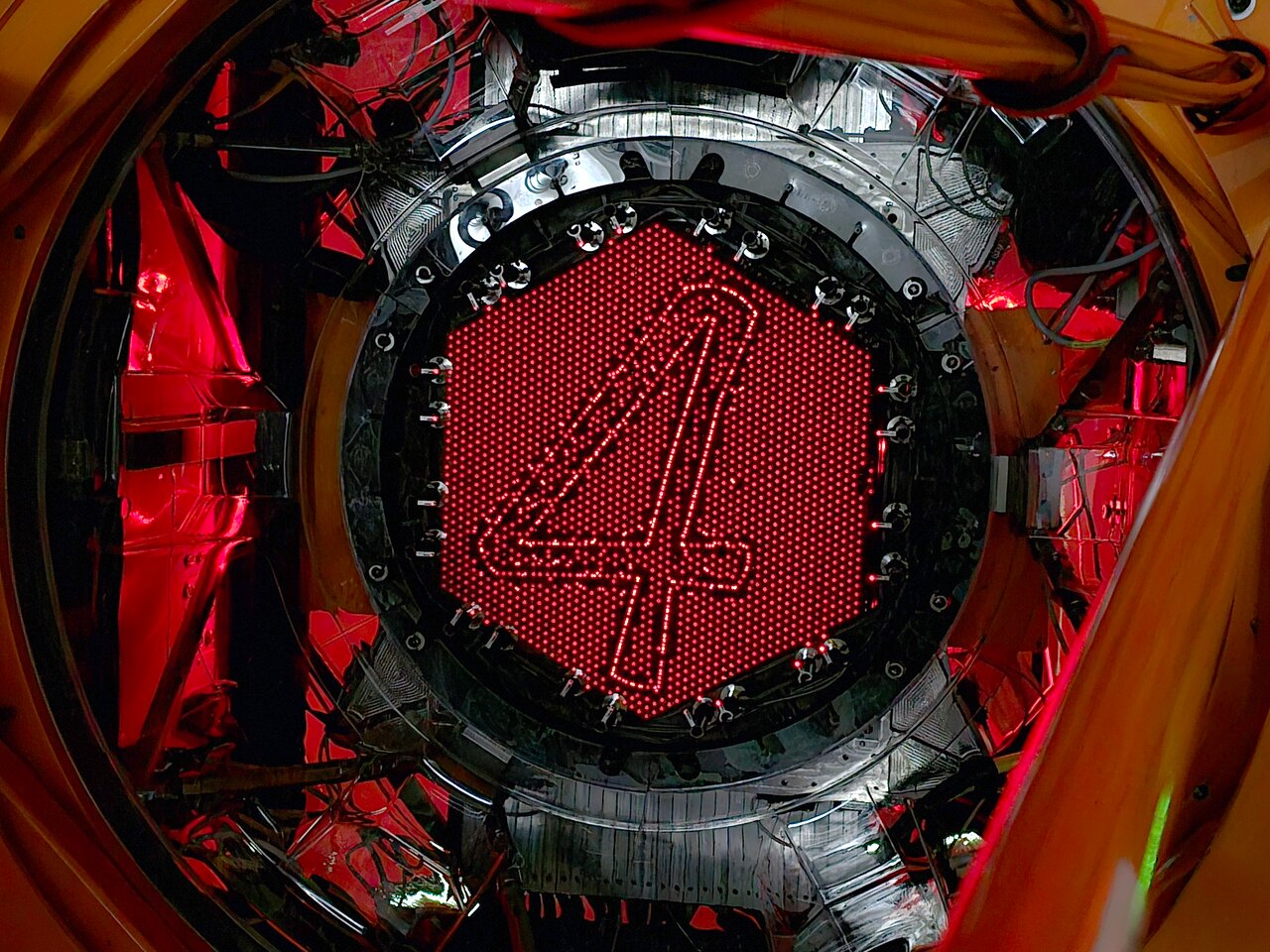
4MOST replaced the VISTA Infrared Camera (VIRCAM), which had been conducting observations for the VISTA telescope since 2008. It is a spectrograph designed to simultaneously capture light from thousands of space objects. The instrument is equipped with more than 2,400 thin optical fibers, each about the thickness of a human hair. The light they collect is directed to three separate spectrographs, which split it into 18,000 color components (in the visible light range from violet to red), producing separate spectra. Using these, astronomers can analyze the properties of the observed cosmic sources, including their chemical composition, velocity, or distance.
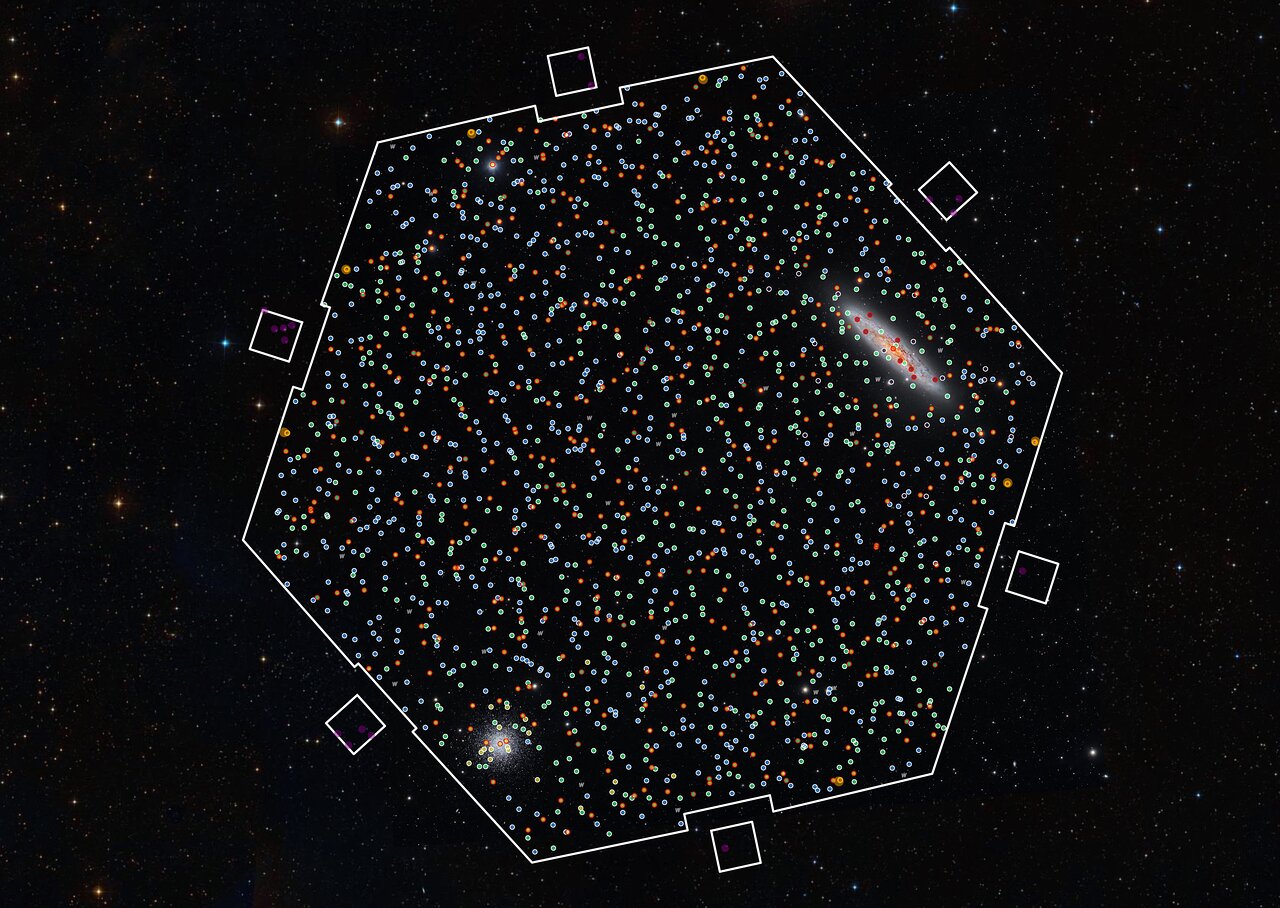
Another important advantage of the new instrument is its large field of view, equivalent to 16 full moons. It will be able to serve ten or more scientific studies simultaneously within a single observation, maximizing scientific productivity.
The first observations by 4MOST covered the area of the sky containing the Sculptor Galaxy and the star cluster NGC 288. The images published by ESO demonstrate the ability of this advanced instrument to observe multiple targets. During its first launch, 4MOST also collected spectra from various stars in our Milky Way and more than a thousand nearby and distant galaxies, demonstrating its impressive capabilities.
According to astronomers, 4MOST will not only shed light on our own galaxy, but also provide a glimpse into other galaxies to understand how they form and evolve. By observing distant galaxies, 4MOST will also help us better understand dark matter — an invisible form of matter that penetrates galaxies and the space between them. The instrument will also be used to study the evolution of the Universe, investigating how it expands and changes over time.
It is expected that during its first five years of operation, the new telescope will record and analyze light from more than 25 million different objects. This will reveal the history of the Milky Way, explore the mysteries of dark matter, study the origins of stars, and achieve many other scientific goals.
According to ESO

