

European astronomers are striving to better study exoplanets and are building new telescopes for this purpose. One of them will be PoET, located in Chile, and the other will be the PLATO orbital observatory.
Search for habitable exoplanets
Among the billions of galaxies and stars in the Universe, there is only one known place where life exists—Earth. However, the hope of finding other living worlds encourages scientists to use increasingly advanced methods in their search. Despite the cataloguing of approximately 6,000 exoplanets, a replica of Earth — a planet similar in size, orbiting a star similar to our Sun, in a position similar to ours — has not yet been discovered. This is not due to a lack of effort. Rather, it reflects the difficulties faced by researchers.
Although scientists have discovered rocky planets similar in size to Earth orbiting smaller red dwarfs, planets orbiting Sun-like stars are much harder to detect because they appear relatively smaller against the background of their brighter host stars. However, the new telescope may assist researchers in this search. This opens up the possibility of expanding our understanding of potentially habitable worlds in the Galaxy. We know that Earth has the optimum size and is located at the right distance from its host star to sustain water and life. Could similar conditions exist in other parts of the Universe?
Overcoming the “noise” of the stars
Dr. Nuno Santos, a leading Portuguese astrophysicist and a key figure in exoplanet research in Europe, heads a team of researchers developing new observation tools. They will help overcome the obstacles created by these distant burning “suns.”
One of the main obstacles is the “noise” created by stars similar to our Sun. Turbulent plasma and shifting magnetic fields on their surfaces generate a range of phenomena in stellar atmospheres, including dark spots and a “graininess” pattern similar to boiling water. This hides the faint signal that indicates the planet passing in front of its star.
“If you look at the surface of the Sun, it resembles a pot of boiling water, dotted with darker and lighter areas,” said Santos. “The main problem is that we don’t really understand how to diagnose this noise coming from the star.” Santos and his team, based at the Institute of Astrophysics and Space Sciences in Portugal, are building a new telescope called PoET — the Paranal Solar Espresso Telescope. This compact instrument, measuring just 60 cm in diameter, is being sent to Chile, where it will operate alongside the European Southern Observatory’s Very Large Telescope (VLT), located on a mountain in the Atacama Desert.
Instead of tracking planets around distant stars, PoET will focus on our own Sun, analyzing the noise generated by granulation and related processes. The solar telescope will be connected to another space instrument located in Chile called ESPRESSO — the Echelle Spectrograph for Rocky Exoplanets and Stable Spectroscopic Observations. It is specially designed to separate starlight into different colors and study planets orbiting distant stars.
This will provide a detailed spectrum of chemical elements coming from the Sun and allow us to track how they change as a result of movements on its surface. This data will help astronomers more accurately filter out “noise” in observations of other stars similar to the Sun, making it easier to detect distant, Earth-like planets.
New promising VLT
Observation with PoET is expected to begin before the end of 2025 and continue for three years. The telescope uses an optical configuration to block everything except the part of the Sun being studied. PoET will conduct daytime observations using ESPRESSO, which will be remotely controlled by Santos from Porto. At night, ESPRESSO will return to its primary role as part of the VLT.
This preparatory work is particularly important as the European Space Agency prepares for its PLATO (PLAnetary Transits and Oscillations of stars) mission, scheduled for launch in 2026.
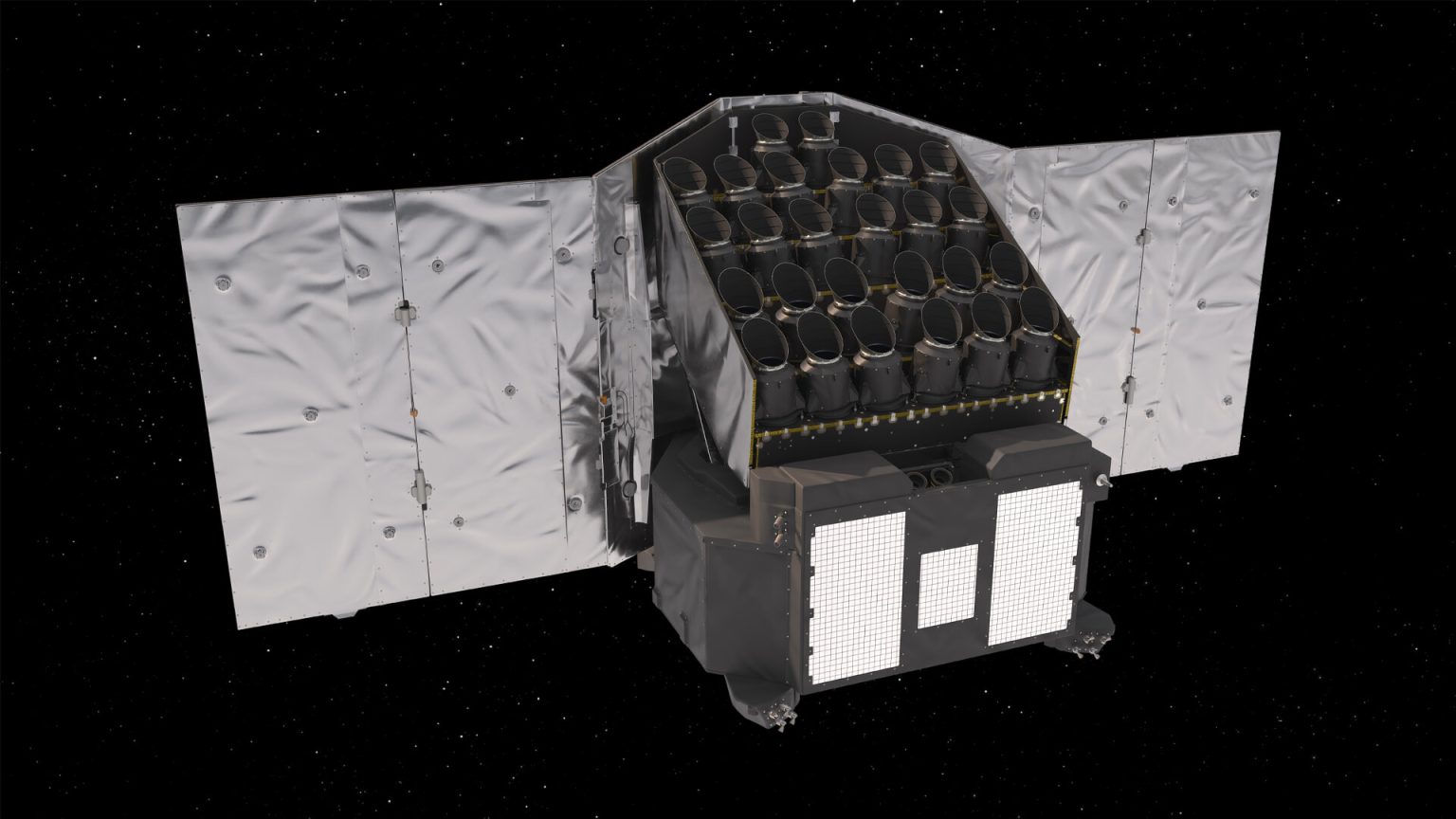
The PLATO space telescope will use 26 cameras to search for planets orbiting around a million stars, focusing on Earth-like worlds around stars similar to the Sun. Its instruments will measure the radius of each planet, allowing scientists to determine its density and composition—even at distances of hundreds or thousands of light-years. Reducing stellar noise using PoET will be extremely important for PLATO to make accurate measurements. “We have to find a way to get rid of this noise to be able to fully exploit the data from the upcoming PLATO mission,” said Santos. “Our hope and our expectation is that PoET will learn enough so that we’ll be able to reduce the noise to the needed level.”
Prospects for observations with new telescopes
PoET exists thanks to the support of the European Research Council (ERC). Work by Santos’ team gives Europe an important role in the global search for habitable worlds, and missions such as PLATO promise exciting new discoveries.
If everything goes according to plan, PoET could deliver results by mid-2026, providing important data for PLATO after its launch. In the future, missions such as NASA’s Habitable Worlds Observatory, expected in the 2040s, and the next big European telescope, scheduled for completion by 2030, will attempt to directly image some of the potentially habitable planets discovered by PLATO and search for signs of life. But first, astronomers need to figure out how many such worlds exist and where they can be found.
PoET and PLATO telescopes will expand the boundaries of what is possible in our space exploration. Their progress will increase our understanding of space as we learn more about our galaxy, as well as the potential for life far beyond our home.
According to phys.org

