

Modern telescopes can see a huge number of objects in the depths of space. The new neural network is capable of classifying which ones are galaxies and which ones are quasars. This will greatly help scientists understand what space is like as a whole.
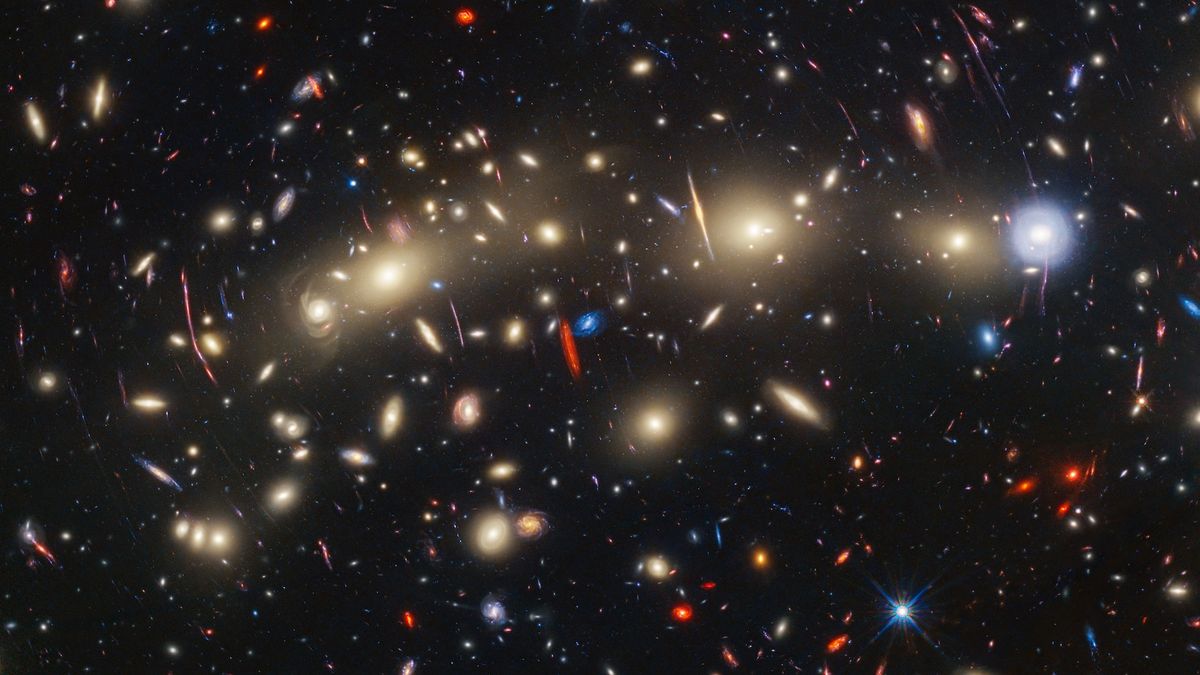
Classification of celestial objects
A new study conducted by scientists from the Yunnan Observatories of the Chinese Academy of Sciences has led to the development of a method for classifying celestial objects based on neural networks, as described in an article recently published in The Astrophysical Journal Supplement Series.
The accurate classification of stars, galaxies, and quasars is crucial for understanding the structure and evolution of the Universe in modern astronomy. Although spectroscopic observations provide high classification accuracy, they require a lot of time and resources.
Unlike them, photometric visualization is more effective and sensitive to faint objects. However, classification based solely on morphological or spectral energy distribution (SED) characteristics is ambiguous. For example, high redshift quasars and stars appear as point sources in images, making them difficult to distinguish.
Capabilities of the new neural network
To solve these problems, the research team created a multimodal neural network that can simultaneously process morphological and SED characteristics. Thanks to the integration of these complementary data sources, the model has achieved high accuracy in classifying stars, quasars, and galaxies. It was trained using spectroscopically confirmed sources from the Sloan Digital Sky Survey Data Release 17, which provided the basis for classification.
When applied to the fifth release of the Kilo-Degree Survey (KiDS) data, the model successfully classified more than 27 million celestial sources brighter than r = 23 magnitudes over an area of approximately 1,350 square degrees of the sky.
Testing confirmed the effectiveness of the model. When applied to 3.4 million Gaia sources with significant proper motion or parallax — characteristics usually unique to stars — the model correctly identified 99.7% as stellar objects, galaxies, or quasars.
It is noteworthy that the study has revealed that the model can correct misclassifications in existing catalogs.
According to phys.org

