

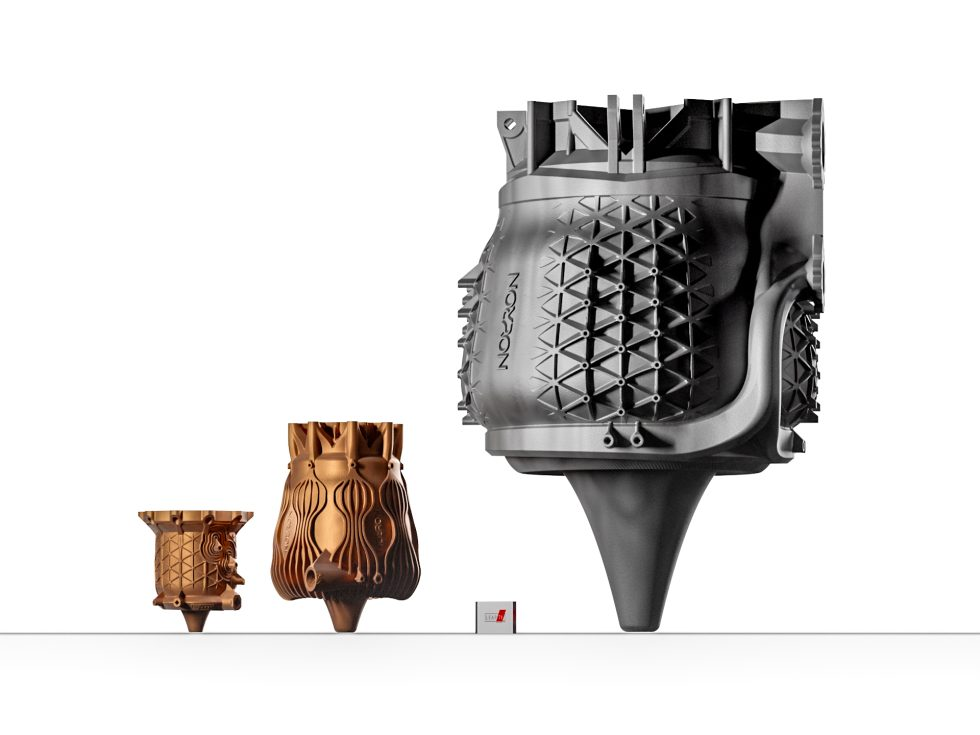
3D printing is already moving from the ranks of experimentation and becoming a real-world tool for new rocket technology. This time, attention was drawn to a project by LEAP 71 and the Chinese manufacturer HBD, who used 3D metal printing to produce a large rocket engine with an XRA-2E5 aerospike nozzle. We are talking about a cryogenic methane-oxygen engine that is about one meter tall and has a thrust of 200 kN, or approximately 20 tons.
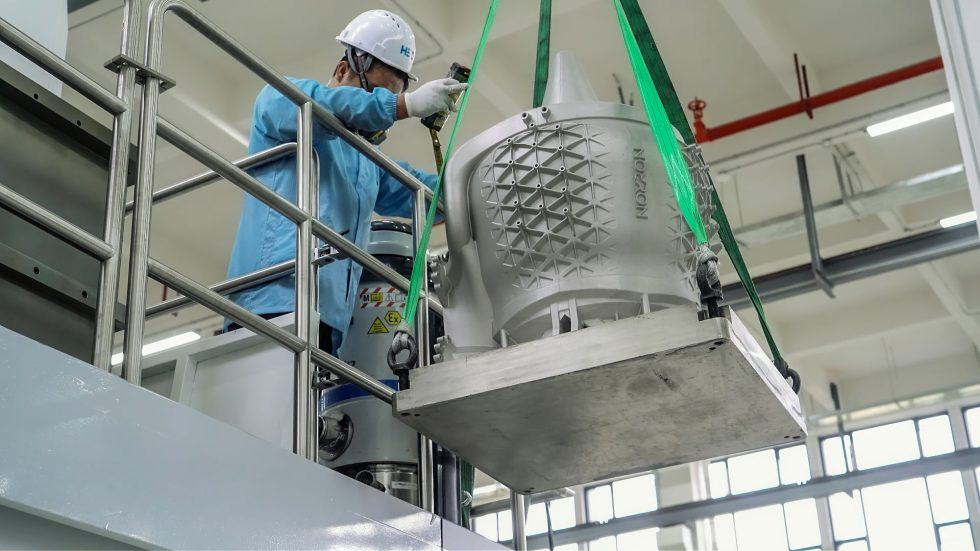
The developers claim that this is the largest 3D-printed aerospike engine of its kind, constructed as a single-piece unit. It was manufactured from the heat-resistant alloy Inconel 718 during 289 hours of continuous operation on the HBD 800 machine. A key feature of the aerospike design is that it theoretically offers high efficiency across a wide range of altitudes—from dense atmospheric layers to a vacuum—making it well-suited for promising reusable systems.
The design was developed using LEAP 71’s Noyron system, which combines physical models and engineering constraints to enable automated design.
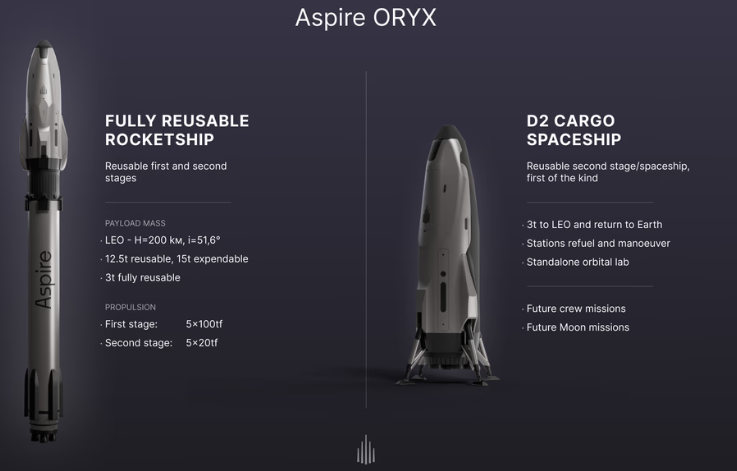
The project involves Aspire Space’s reusable Oryx rocket. The company’s official website states that the upper stage of the system will be equipped with 200-kN engines, and the first fire test of such an engine is scheduled for the third quarter of 2026. If these plans are implemented, 3D printing will become even more firmly established as one of the key manufacturing approaches in modern rocket engineering.
How does it work? First, engineers create a digital model of the engine, after which an industrial 3D printer builds it layer by layer from metal powder, fusing the material using lasers. In this way, it is possible to produce a highly complex part with internal cooling channels, which would otherwise have to be assembled from numerous individual components using conventional methods. As a result, production is accelerated, and the design becomes more compact and cohesive.
Why is this important? This technology is important primarily because it enables the faster production of complex power units and reduces the number of components and potential design weaknesses. This means shorter rocket development times, lower costs for experimental engines, and faster testing of new solutions for launching scientific instruments, telescopes, interplanetary probes, and satellite platforms into orbit.

