

Usually, when a spacecraft deploys its solar panels, there are no structures designed to keep them in a certain position. However, a new development may make this possible. It is believed that this will help maintain integrity during maneuvers.
New solar panel technology
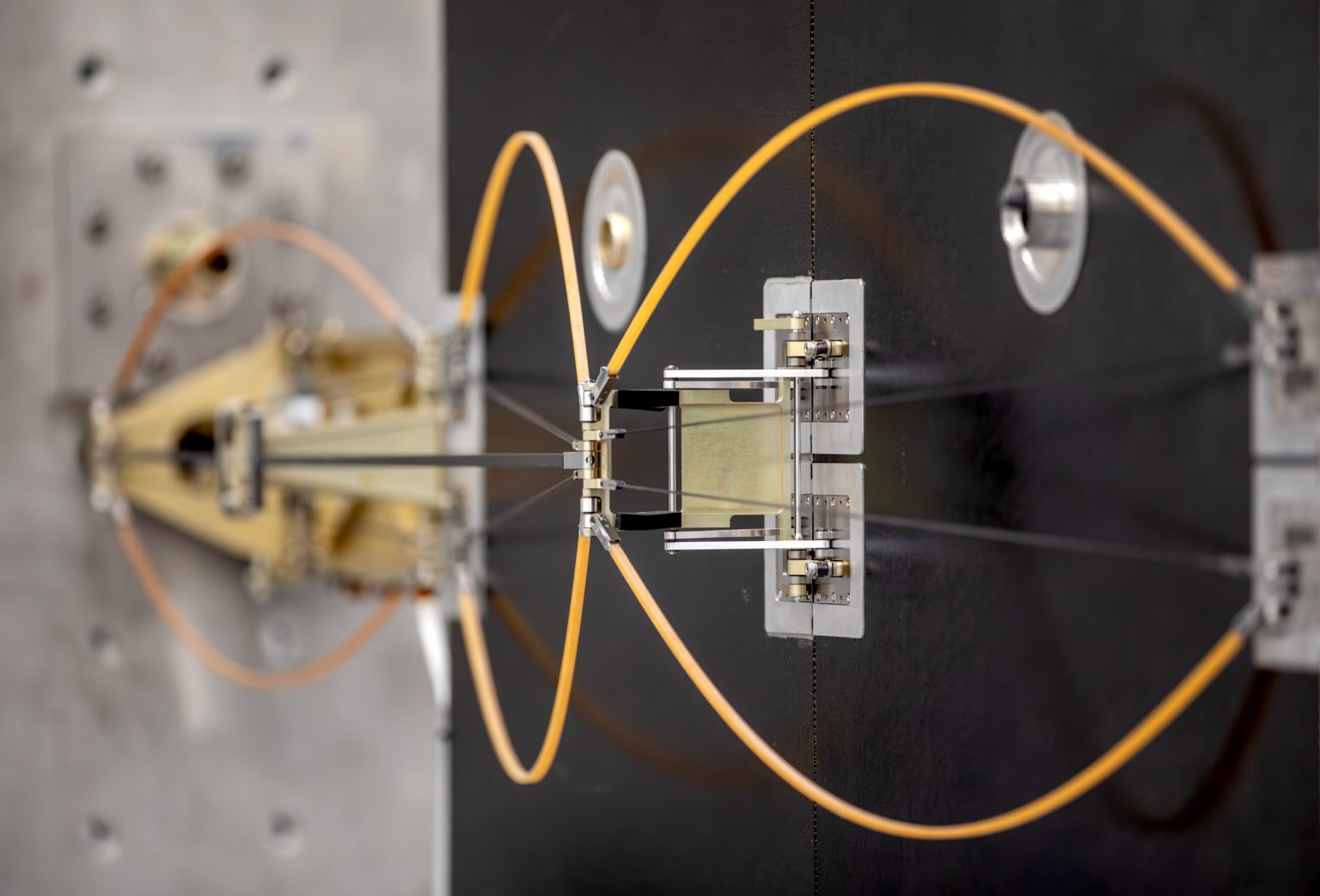
The Southwest Research Institute (SwRI) has developed technology to increase the rigidity of deployable structures on spacecraft, enabling autonomous spacecraft docking operations. SwRI integrates Parallelogram Synchronized Truss Assembly (PaSTA) technology with solar panels on Astroscale U.S. Refueler spacecraft. The team is also developing two different deployable booms using PaSTA technology for another spacecraft being developed by SwRI.
The 300-kilogram American Astroscale refueler will be the first to conduct hydrazine refueling operations in geostationary orbit for the United States Space Force (USSF) and will be the world’s first orbital refueling mission supporting US Department of War assets. SwRI has been awarded a contract by Astroscale U.S. to build, integrate, and test a refueler for the USSF. The spacecraft requires precise aiming to dock with other vehicles in space, which requires a rigid, deployable solar panel to power its movements.
Increased structural rigidity of solar panels
“There are no bumpy roads in space, so floppy arrays typically don’t pose a problem—unless precise control and stability are needed for docking,” stated SwRI engineer Randy Rose, author of the recently issued patent for PaSTA technology. “Any vibrations can disrupt the process, so structural rigidity is crucial. PaSTA stabilizes solar panels, providing the rigid structure necessary for spacecraft docking maneuvers.” PaSTA provides a structural framework for solar panels, stressing the rigidity of the structure after deployment. The solar panels of the American Astroscale refueler unfold four and a half feet away from the spacecraft. On other SwRI spacecraft, each panel will extend 20 feet and collect a total of 5,000 watts of energy for the spacecraft, while providing the same pointing accuracy as the smaller refueler.
PaSTA uses a patented system of interconnected elements in a truss structure to increase the stability and rigidity of solar panels. As a result, the panels don’t bend. Instead, they stretch or compress along their length, known as axial loading.
“A traditional solar array has several hinged panels folded like an accordion that unfold one after another,” says Ryan Rickerson, lead mechanical engineer for the PaSTA project. “With each hinge operating independently, deployments can be difficult to predict and can fail, potentially leading to the loss of the spacecraft. By incorporating the PaSTA structure to a deployable array, the extension of adjacent panels is synchronized, and a single damper is able to control the rate of deployment.”
Testing new solar panels
Deploying solar panels can be difficult to test because testing is conducted on the ground under atmospheric conditions. A large solar panel experiences aerodynamic drag, which is not a factor in space. PaSTA solves these problems by synchronizing the way panels are deployed, creating a smooth and controlled deployment.
Testing and integration of PaSTA-equipped solar panels for the space refueler continues at SwRI.
According to phys.org

