

An ordinary star outside the galactic disk attracted attention due to its unusual activity. At first, the object really looked like an ordinary star. But when astrophysicists pointed telescopes capable of seeing polarized light at it, an incredible sight met their eyes. All surrounding objects, even the “rebellious” black hole in the center, simply disappeared — only a lone bright spot remained. This was the beginning of one of the most amazing space mysteries of recent years.
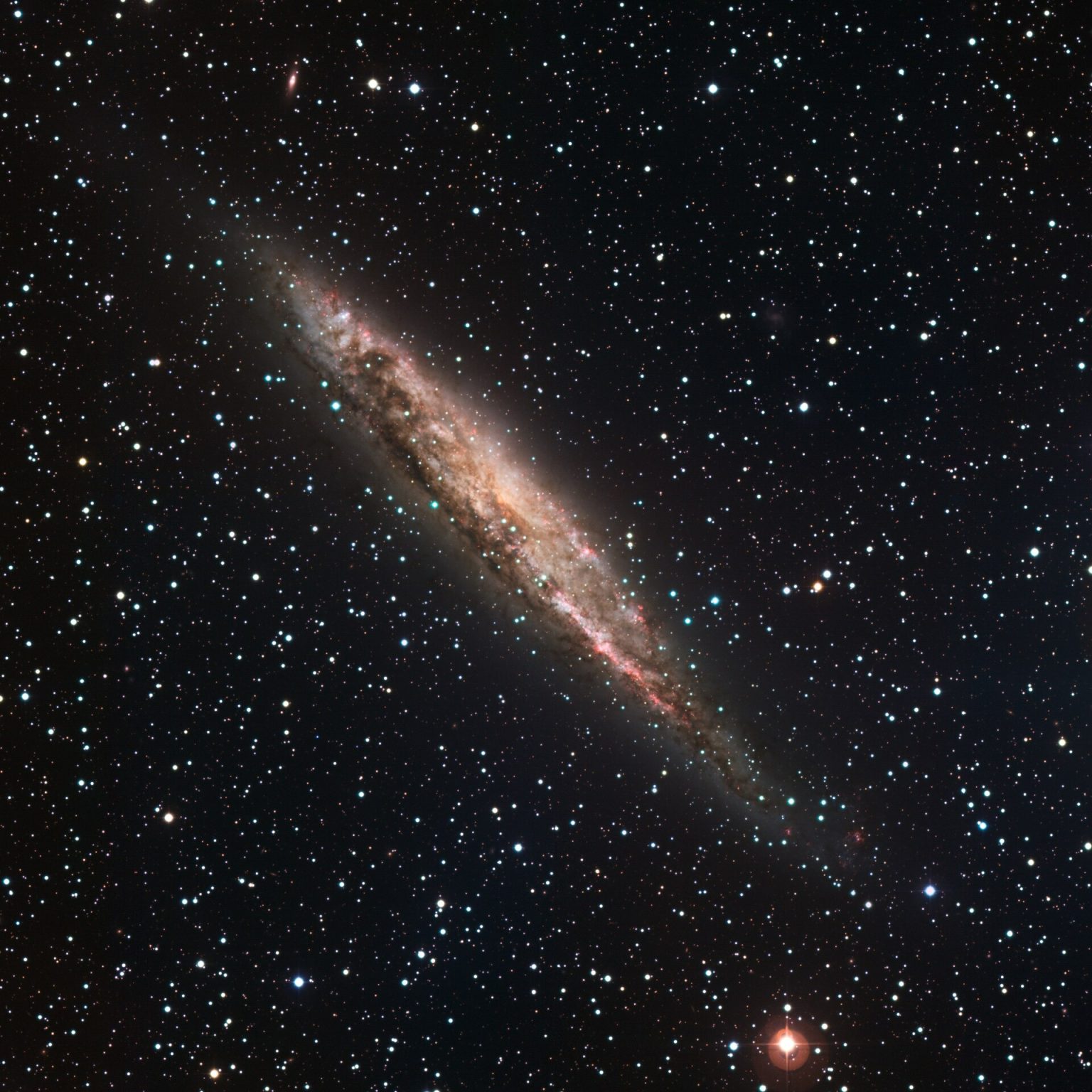
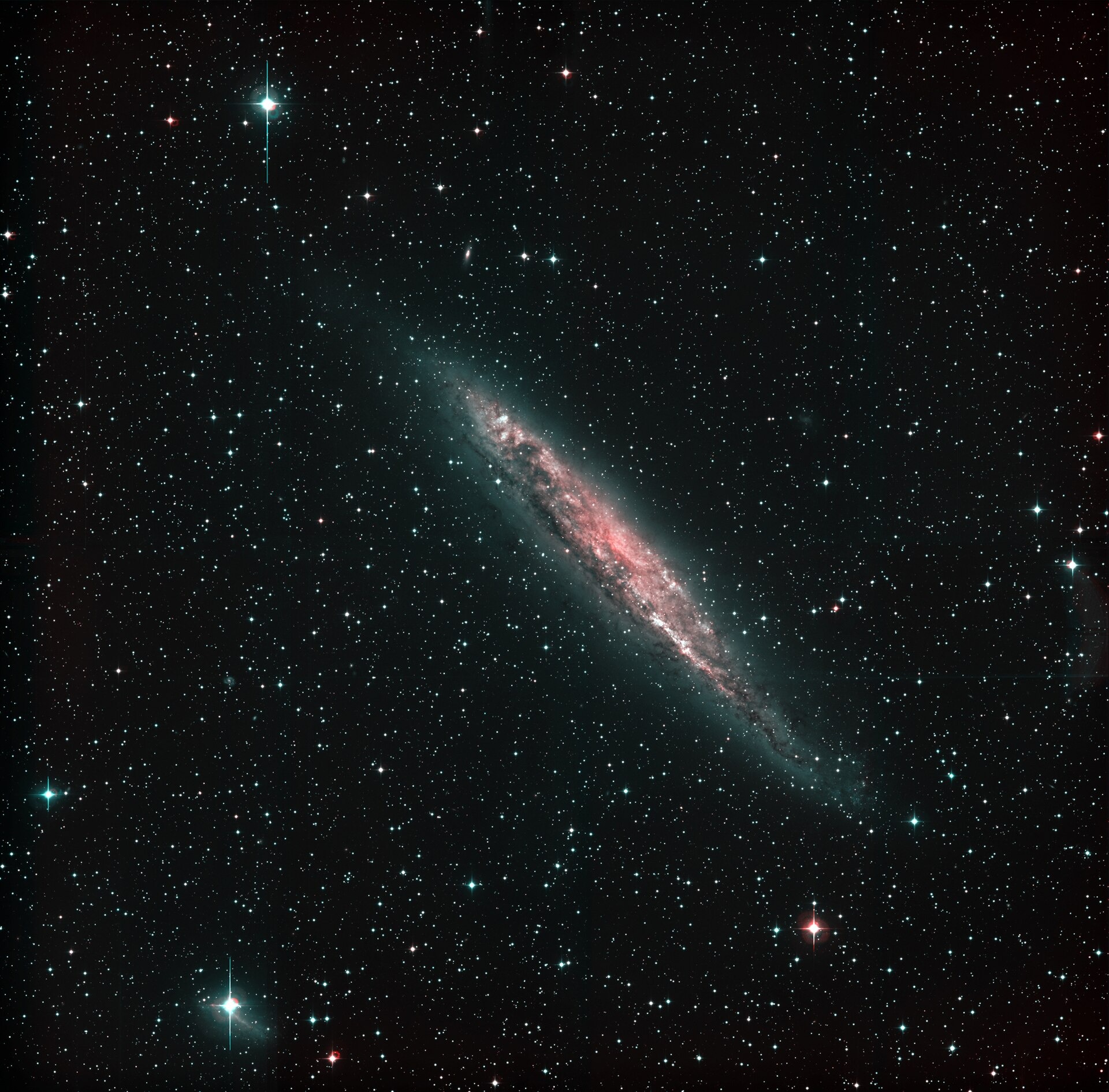
This mysterious point, named Punctum (from the Latin word for “point” or “dot”), was discovered by an international team led by Elena Shablovinskaia, an astrophysicist at Diego Portales University in Chile. They studied the galaxy NGC 4945, our cosmic neighbor, which was considered to be well understood. No one expected to find anything radically new there. However, Punctum turned out to be a unique object, visible only in the millimeter wavelength range thanks to the power of the ALMA telescope complex in Chile. When scientists tried to find it using X-rays or radio telescopes, it simply disappeared.
No analogues in the Universe

What surprised scientists most was not only its “invisibility” in other spectra, but also the strange structure of its magnetic field, which could be seen thanks to polarized light. Usually, light from space objects is chaotic and disordered due to the complex structure of magnetic fields. However, the light waves around Punctum were extremely organized. The team compared it to all known extreme phenomena: magnetars, pulsars, black hole jets. But nothing matched. Punctum is tens of thousands of times brighter than the most powerful magnetars and even bright supernovae. This did not fit into any of the existing scientific scenarios.
Key to the mystery
According to scientists, the main clue that could lead to the solution is the unique polarization of the object’s light, a kind of “fingerprint” of its magnetic environment. To understand the nature of Punctum, further observations at different wavelengths are needed.
Astronomers need to determine whether its magnetic field changes over time and whether it is related to other types of objects, such as neutron stars or black holes. This discovery is a great example of multi-messenger astronomy, where one source is studied using different types of radiation.
The infinity of the Universe — the infinity of mysteries
The discovery of Punctum is not just the discovery of a new object, it is a powerful reminder that there are whole worlds around us that we still know nothing about. Even in seemingly well-explored corners of space, revolutionary discoveries may be waiting to be made.
According to Elena Shablovinskaia, we are only at the beginning of our journey to uncovering all the diversity and amazing secrets that the Universe holds.
Earlier, we reported on the top five unsolved mysteries of modern physics.
According to Space

