

British scientists have applied models typically used to simulate other planets to a situation very familiar to us. What would happen if the Russia-Ukraine war escalated into a limited nuclear conflict? It turns out that this would affect the climate of the entire planet, albeit only in the short term.
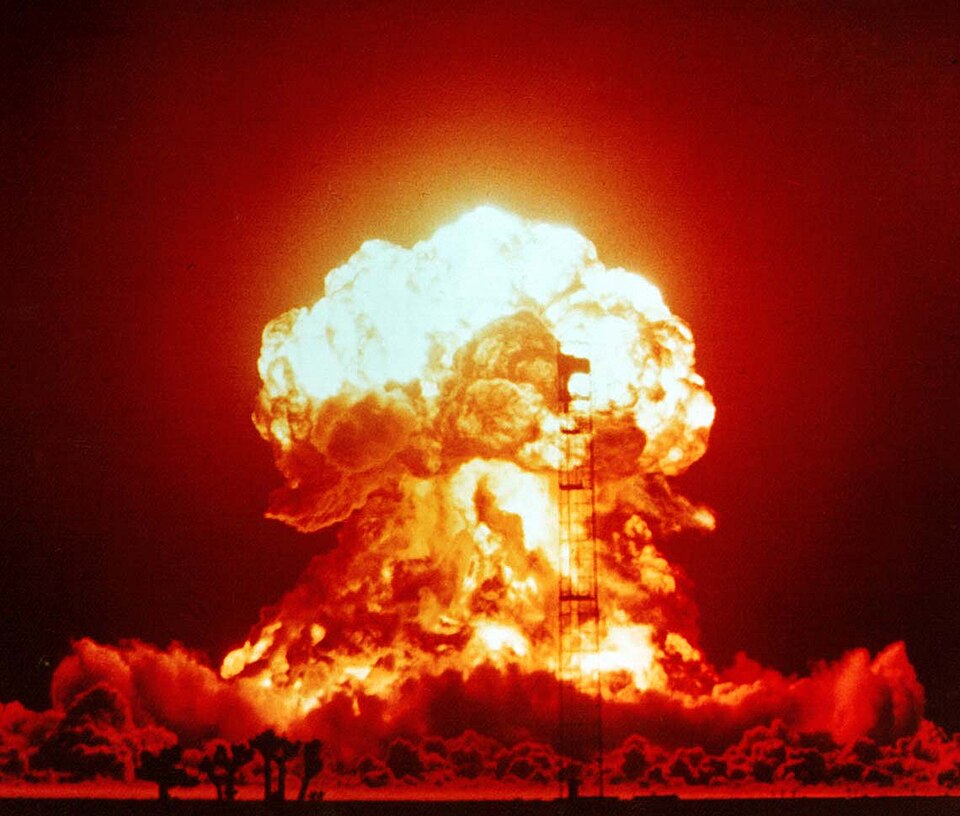
If the war turns nuclear
A study by researchers from the University of Exeter has been published in the scientific journal Clean Air, in which they examine a scenario that others tend to avoid discussing. What would happen if even a few atomic bombs were used in the Russian-Ukrainian war, which has been going on for many years?
This issue is indeed difficult to grasp. Because many in the West have grown accustomed to viewing the Russian-Ukrainian conflict as something local and far removed from them. However, it has repeatedly demonstrated its capacity for unexpected escalation, including technological escalation.
In reality, no one can guarantee that at least a few atomic bombs won’t be dropped there in the very near future. The researchers deliberately did not consider what would happen to the region itself, focusing instead on the global climate impacts.
Global impact on the climate
Basically, the authors of the new study aren’t entirely wrong about its focus. After all, many people think that Russia and Ukraine are too far away from their own countries, but everyone has heard about climate change. Atmospheric models developed for Mars and Jupiter show that a nuclear strike on Ukraine would indeed affect the global climate.
True, but in the opposite direction from the one people usually fear. Dust and soot from nuclear explosions will blanket the sky with thick clouds, leading to a global drop in temperatures across the entire Northern Hemisphere.
The average temperature drop in this region will be 1°C, while in North America and Russia it could reach 5°C. And that’s no small matter, because this average drop in temperature also brings short-lived but intense frosts and downpours that could easily destroy crops—especially heat-loving plants—thousands of kilometers away from the war zone.
However, the study showed that these changes will last only about six years, after which everything will return to its previous state. So there’s no need to panic about the end of the world or celebrate the end of global warming.
But everyone will feel the consequences of this new escalation of the war. This is partly because the winds will carry radioactive materials even farther. Forty percent of the contamination will affect the Southern Hemisphere.
According to phys.org

