

Moon samples collected by the Apollo 17 mission have revealed new information about the Light Mantle, a distinctive bright band crossing the surface of the Moon. These are the remains of an ancient landslide that may be associated with the Tycho crater.
The last people on the Moon
Launched in December 1972, the Apollo 17 mission was the last flight in the Apollo program. As part of this program, NASA sent a scientist (geologist Harrison Schmitt) to the Moon for the first time, which largely determined its record “catch” of 110 kg of lunar soil samples, which were then delivered to Earth.
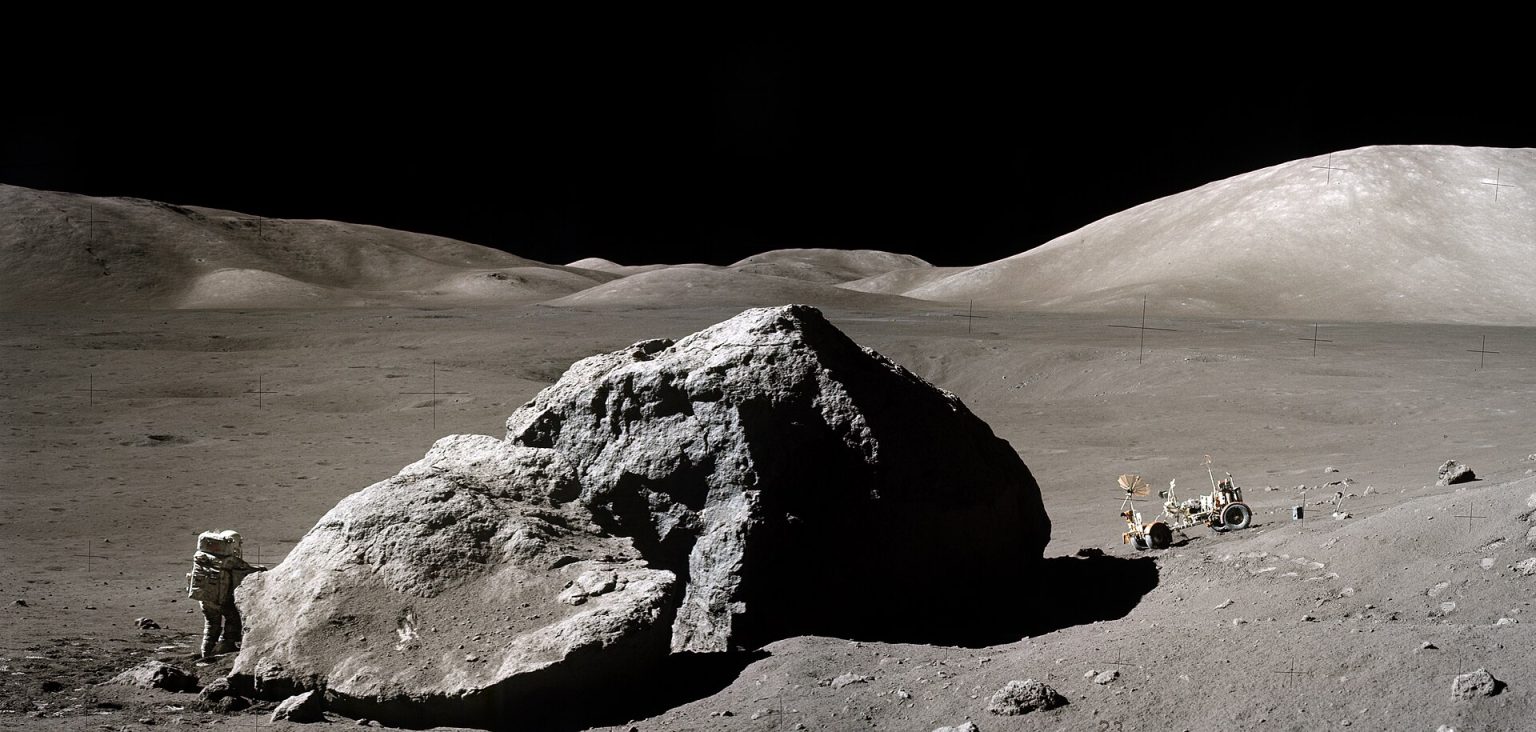
Light Mantle was one of the key objectives of the mission. This five-kilometer-long deposit, located at the foot of the two-kilometer-high South Massif mountain, has attracted the attention of scientists since its discovery. It is believed to be the remains of an ancient landslide. However, how exactly it formed and what allowed it to stretch for several kilometers was unknown.
The astronauts studied the Light Mantle by taking a series of cores. Some of them were placed in long-term storage in a sealed container in a special nitrogen storage facility. This was done with the expectation that in the future they could be studied using more advanced technologies and new scientific approaches that did not exist at that time.
Anatomy of a lunar landslide
This turned out to be the right decision. Over the next half-century, scanning technology took a huge leap forward, making it possible to examine samples in great detail. The research team took advantage of this circumstance. First, scientists simulated how landslides could occur on the Moon using rocks of similar composition. After that, they opened one of the sealed cores, analyzed its contents, and then compared it with the results of computer simulations.
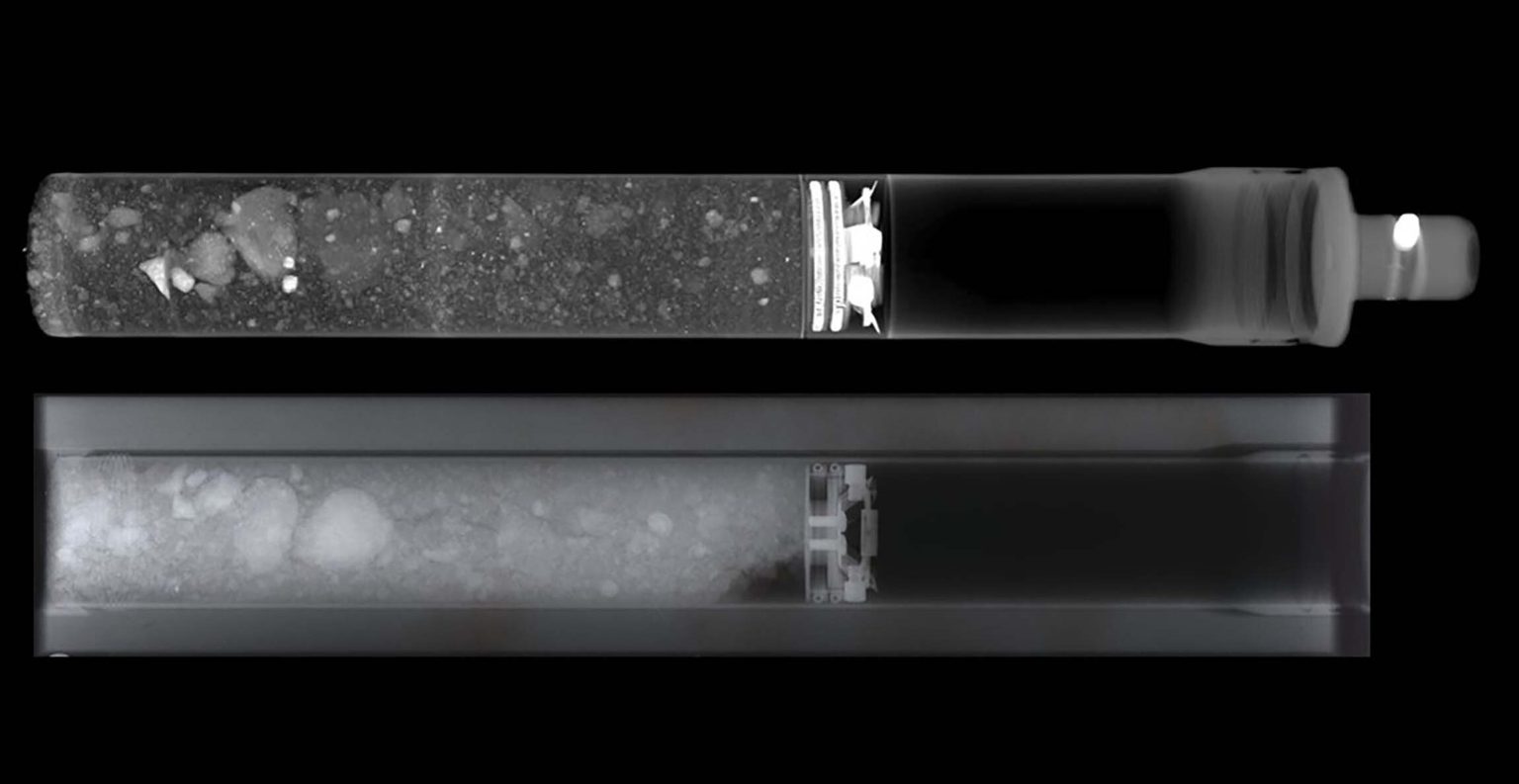
According to the researchers, analysis showed that the finer material covering the fragments in the core originated from them, rather than from the surrounding rock. This suggests that the debris broke apart and helped the landslide to “flow” like a liquid.
Although it is still unclear what exactly caused the landslide, one of the most likely causes was attributed to the impact of an asteroid that formed the Tycho crater. During the impact, countless rocks were thrown outwards and then fell back onto the Moon, forming small secondary craters. They diverge from Tycho with bright rays. Some of them stretch toward the Southern Massif.
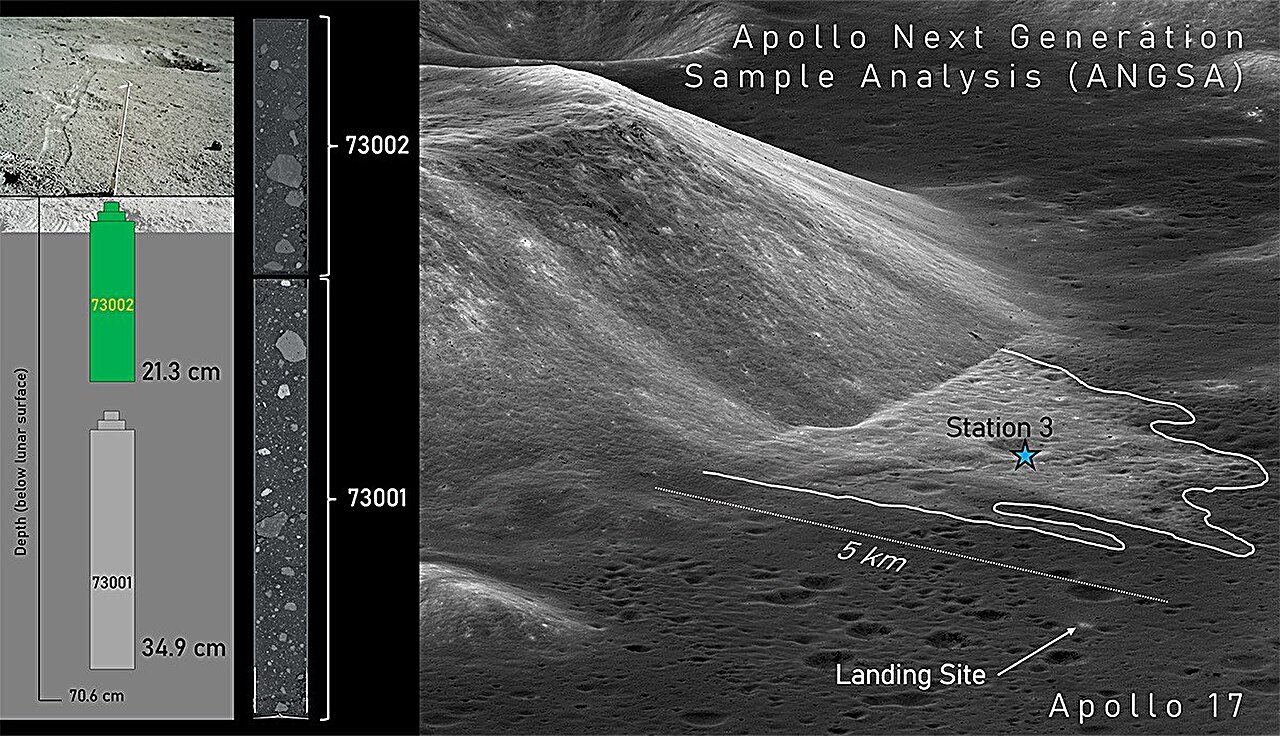
Scientists have suggested that some of the material ejected during the formation of Tycho may have struck the South Massif. This could have caused a landslide, which ultimately formed the Light Mantle.
According to Phys.org

