

The Perseverance rover has discovered unusual formations that are almost perfectly spherical in shape. According to scientists, they were formed as a result of the cooling of molten material.
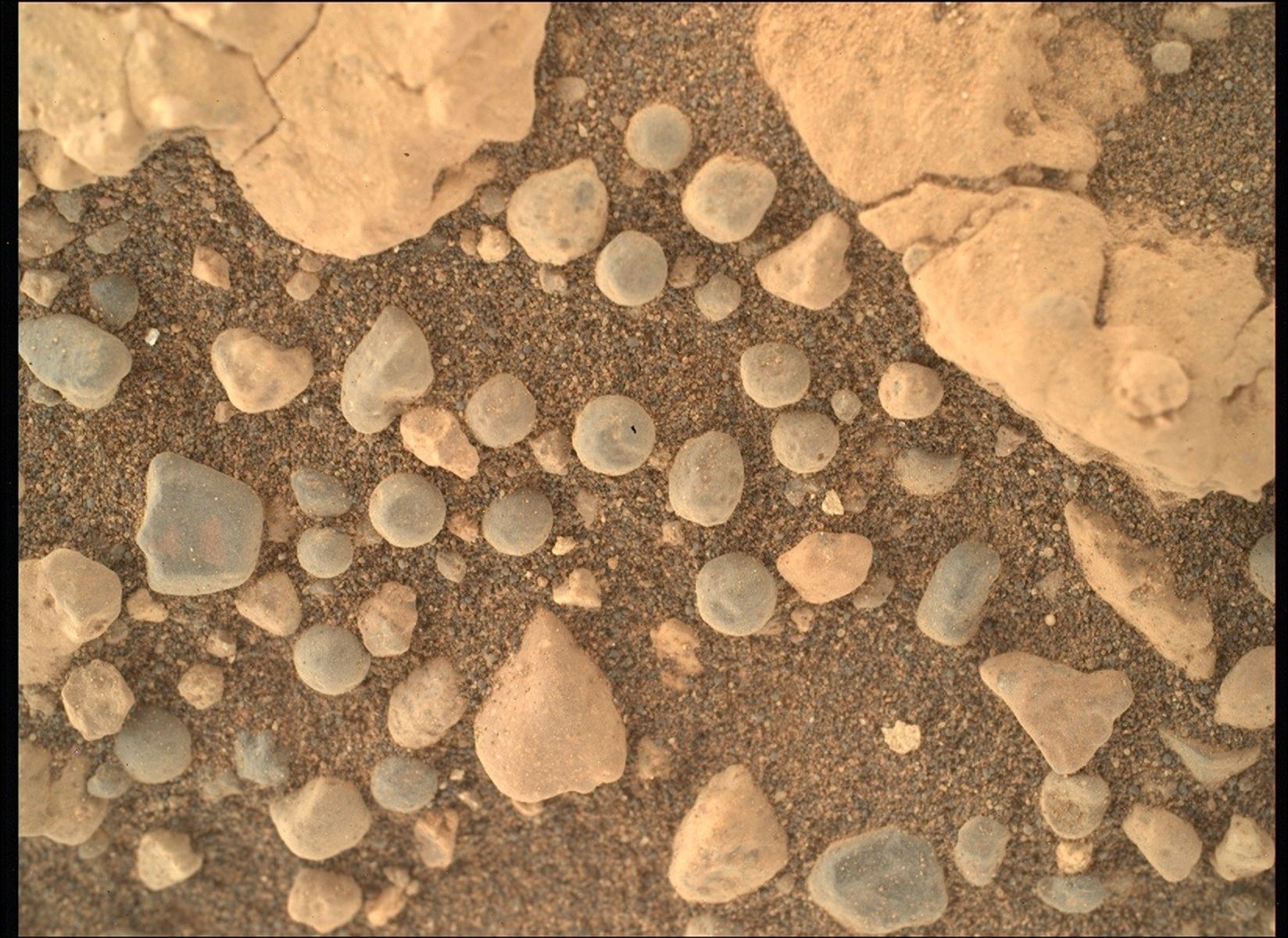
Spherical particles are not what you would expect to find in Martian soil. However, two decades ago, the Opportunity rover discovered spherical hematite formations (unofficially nicknamed “blueberries”) near its landing site on the Meridiani Plateau.
Now, the Perseverance rover has also managed to detect spherical particles. The discovery was made in an area unofficially named Witch Hazel Hill. Spherical formations are embedded in the bedrock and scattered throughout the area. Perseverance studied them by taking a series of images and measuring their elemental composition.
Despite their external similarity to “blueberries,” these spherical particles have a completely different composition and, probably, origin. The fragments found by Opportunity consisted of hematite minerals, and they’re thought to have formed in groundwater-rich sediments way back in Mars’ past.
For comparison, these spherical particles are composed of basalt and were probably formed as a result of a meteorite impact or volcanic eruption. When a meteorite hits the surface of Mars, it can melt rock and spray droplets of molten rock into the air. These droplets can cool quickly, solidify into spherical particles, and fall as rain onto the surrounding area. Alternatively, spherical particles could have formed from molten lava during the eruption.
The Perseverance team intends to continue searching for answers to the question of the origin of these spherical particles. If they were formed as a result of an ancient impact, they can tell us about the composition of the impactor and shed light on the formation of craters in the early history of Mars. If they were caused by a volcanic eruption, they may preserve traces of past volcanic activity in the area around Jezero crater. In any case, these spherical particles are a reminder of a dynamic period in the distant past of the Red Planet.
Earlier, we reported on how Perseverance encountered a stubborn rock during its “battle.”
According to NASA

