

Two total solar eclipses will occur one year apart—in August 2026 and August 2027. Both eclipses will be visible in Spain, but each is a completely different phenomenon. For those planning a trip in advance, the choice between them isn’t as obvious as it seems.
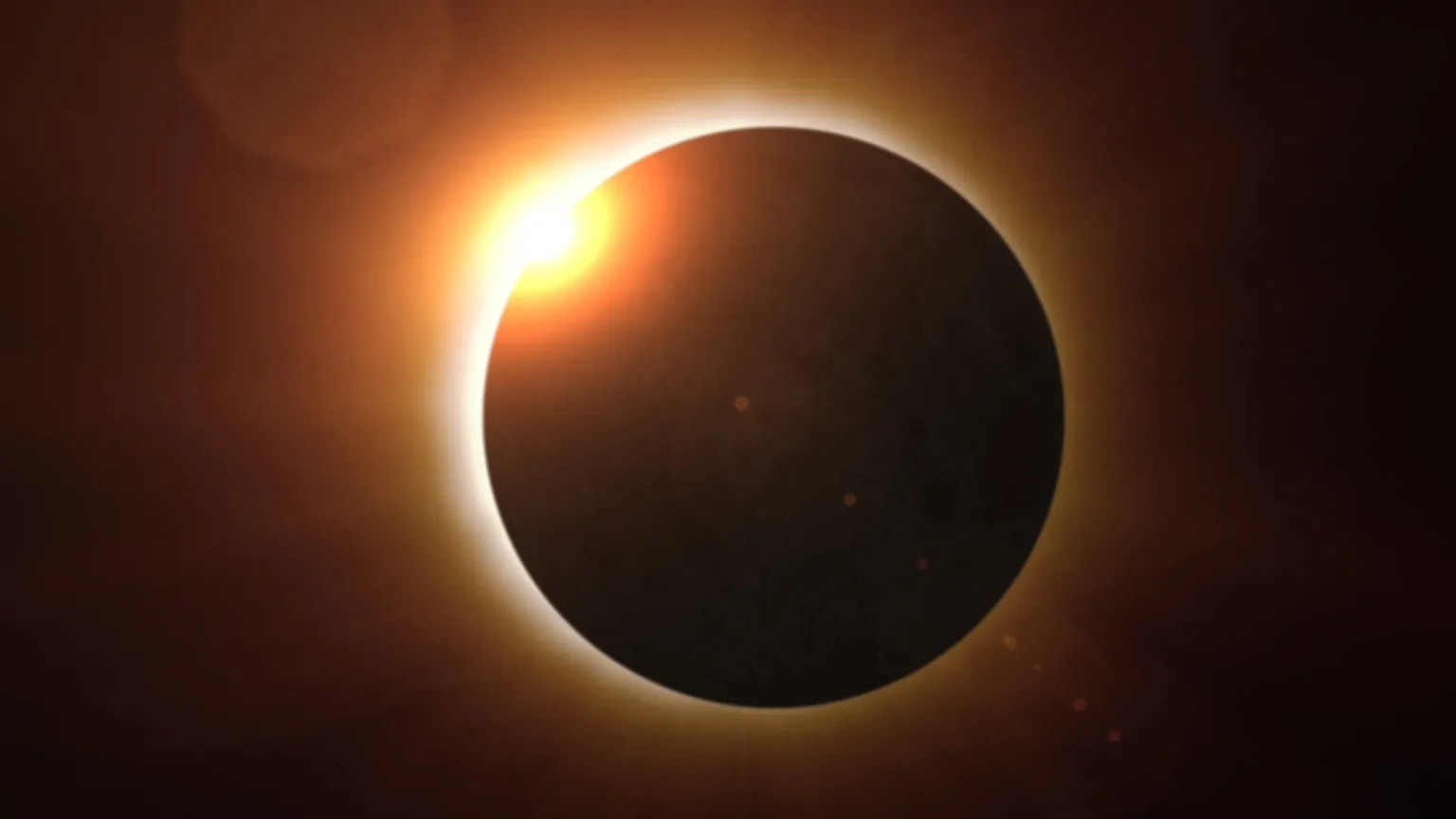
2026 Eclipse
The first one will occur on August 12, 2026. The path of totality will stretch from Siberia through eastern Greenland and Iceland, then cross northern Spain and end in the Mediterranean. This is a special event for Europe: the first total solar eclipse over the mainland since 1999. The viewing zone will include Reykjavík, Bilbao, Zaragoza, León, Burgos and Valladolid.
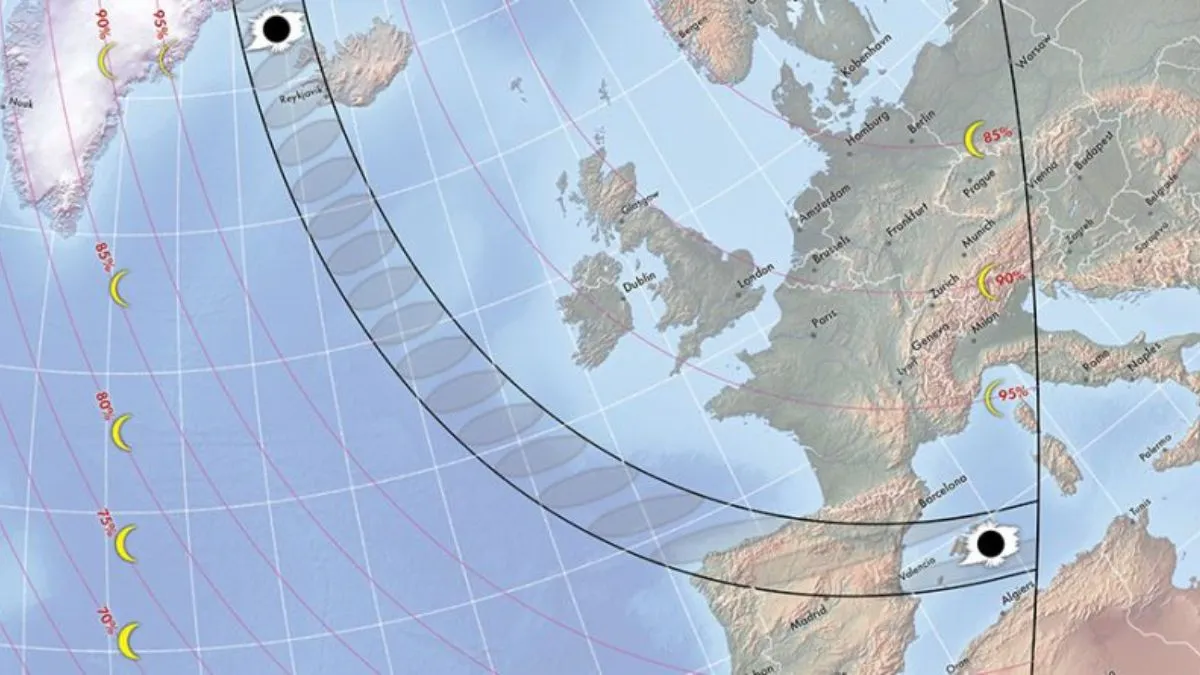
A distinctive feature of this eclipse is the Sun’s low position. In the Balearic Islands, the Sun’s disk will disappear below the horizon almost at the moment of totality. This phenomenon is rare and looks incredible, though it requires a clear view of the horizon. The total phase will last just over two minutes. Cloud cover over Spain and Iceland in August is expected to be moderate, but some clouds cannot be ruled out.
2027 Eclipse
The next eclipse will take place on August 2, 2027. It has already been unofficially dubbed the “eclipse of the century.” The reason is its exceptional duration: over Luxor, Egypt, the Moon will block the Sun for 6 minutes and 22 seconds, which is more than three times longer than the 2026 eclipse. This is the longest total phase over land since July 11, 1991, and there won’t be another one until August 3, 2114.
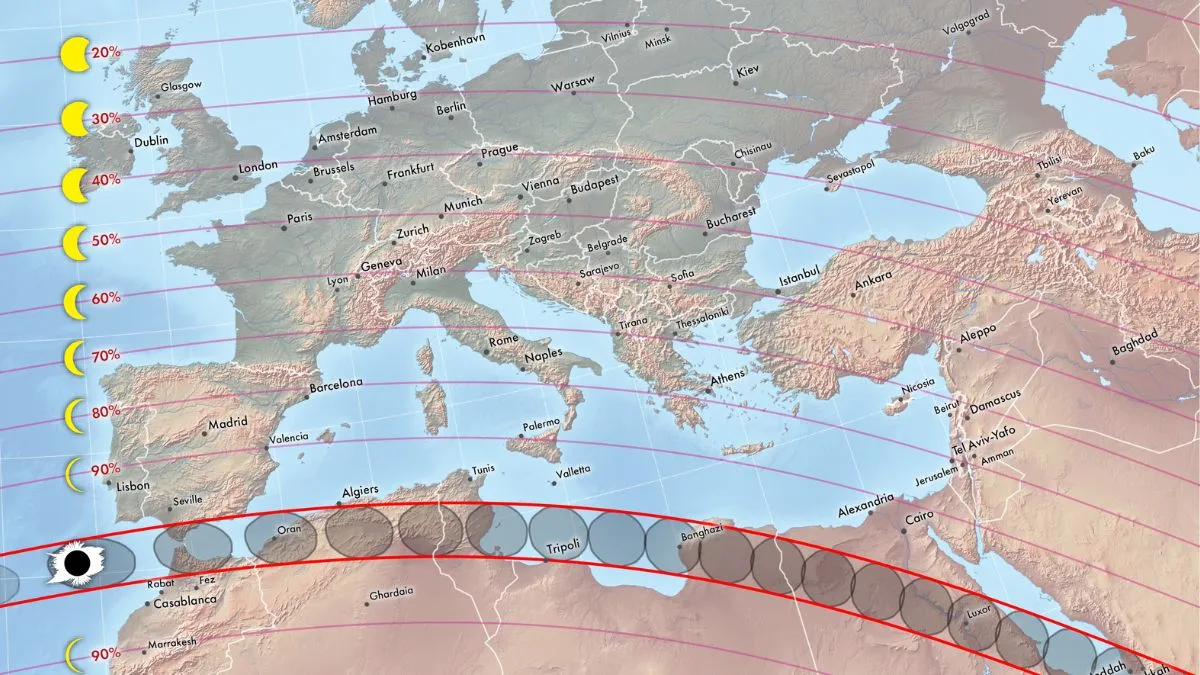
The path of the eclipse will stretch from southern Spain through North Africa and on to the Middle East. Luxor, with its ancient landmarks—the Karnak Temple and the Valley of the Kings—has become a focal point for eclipse chasers. The chance of cloud cover is minimal here, but the average daily temperature in August reaches 41 °C, and organized tours are already extremely expensive.
Spain in both zones
Spain will be in the zone of total eclipse twice in a row—a unique occurrence for any country. In 2026, the eclipse will cover the north and center of the country, and in 2027, it will cover the south, specifically Andalusia. Near the Strait of Gibraltar, the total phase will last more than four minutes, and Tarifa and Cádiz are considered among the best viewing locations.
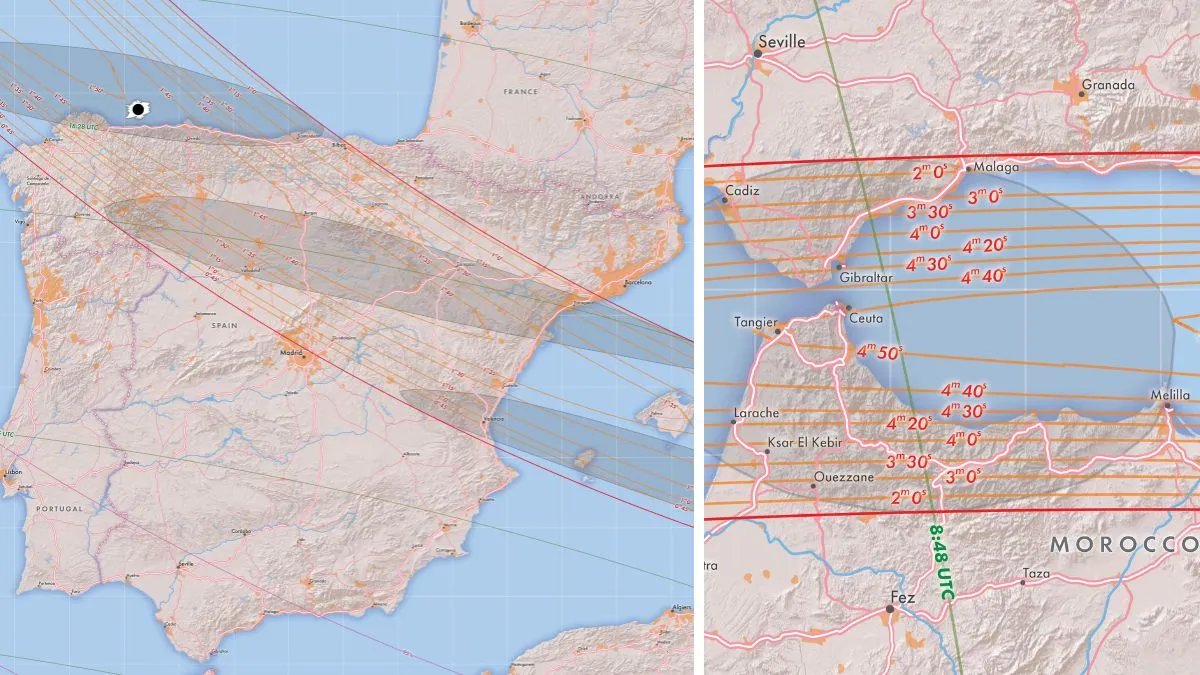
Experienced observers point out that focusing solely on duration is a mistake. A two-minute eclipse can be just as impressive as a six-minute one. The key here is to be in the full-phase zone with a clear sky overhead. If you have the chance to see both, you should take advantage of it.
According to space.com

