

On July 14, 2015, one of the most important space events of the 21st century took place: the New Horizons mission made a flyby of Pluto. On the occasion of the tenth anniversary of the historic visit, we tell you about the technical structure of the spacecraft and its main achievements.
The last white spot on the map of the Solar System
After the Voyager 2 probe made a flyby of Neptune in 1989, the last white spot on the map of the Solar System, as it was thought at the time, was Pluto. Not surprisingly, in the bowels of NASA was developed several projects for missions to the ninth planet of the Solar System were developed. But due to a lack of finances, none of them were chosen for implementation.
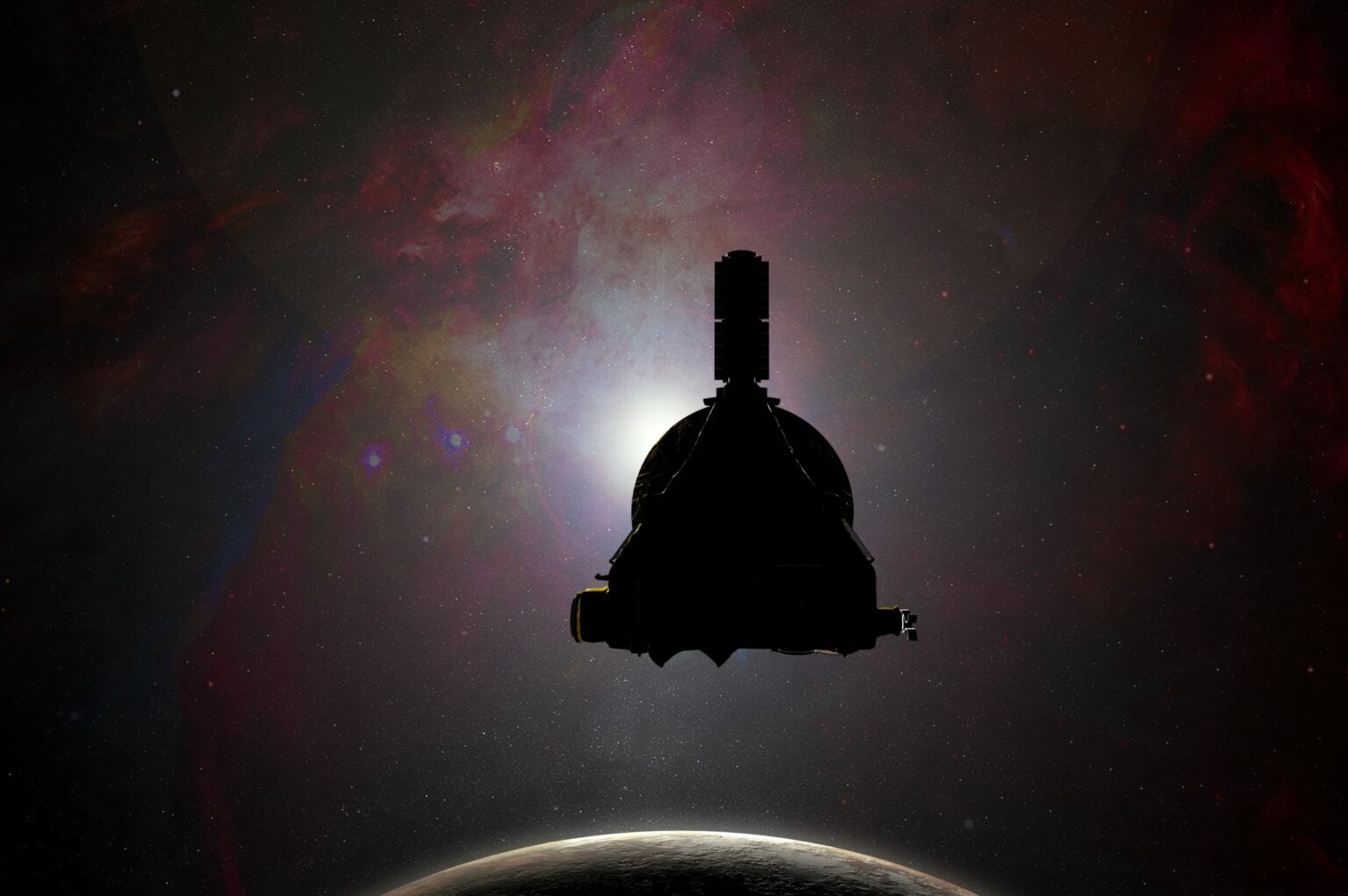
The situation changed in the late 1990s, when astronomers confirmed the existence of the Kuiper belt and began to discover the icy bodies inhabiting it, the largest of which turned out to be Pluto. Now it was no longer a question of sending a mission to a lone object, but of exploring a vast, unexplored region that had previously escaped the attention of scientists.
In 2003, NASA finally approved a mission to Pluto, called New Horizons. A team from Johns Hopkins University Applied Physics Laboratory was responsible for building the spacecraft.
New Horizons technical device
The dimensions of New Horizons are 0.69 × 2.11 × 2.74 meters, with a mass (at the time of launch) of 478 kilograms, of which 77 were fuel. The apparatus receives power from a radioisotope thermoelectric generator (RITEG), which generates it through the decay of plutonium-238.
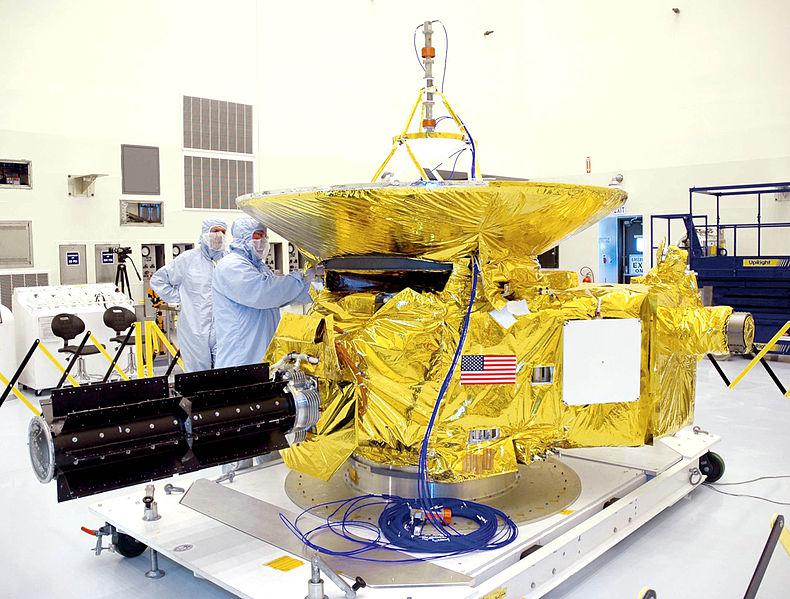
New Horizons carries seven instruments on board: three optical, two for measuring the characteristics of charged particles, one device for a radio experiment (to study Pluto’s atmosphere from the characteristics of radio signals from Earth), and a dust detector.
There is also a symbolic cargo on board the spacecraft. These are:
- two US flags;
- two commemorative coins honoring the states of Maryland, where the machine was built, and Florida, from where it was launched;
- a 1990 postage stamp that reads “Pluto: Not Yet Explored”;
- a small fragment of the first manned private suborbital spacecraft, SpaceShipOne;
- two CDs, one containing the names of the 434,738 people who participated in NASA’s “Send Your Name to Pluto” campaign, and the other containing photos of the craft and its developers;
- a capsule containing part of the ashes of Pluto discoverer Clyde Tombaugh, who died in 1997.
Nine years to fly to Pluto
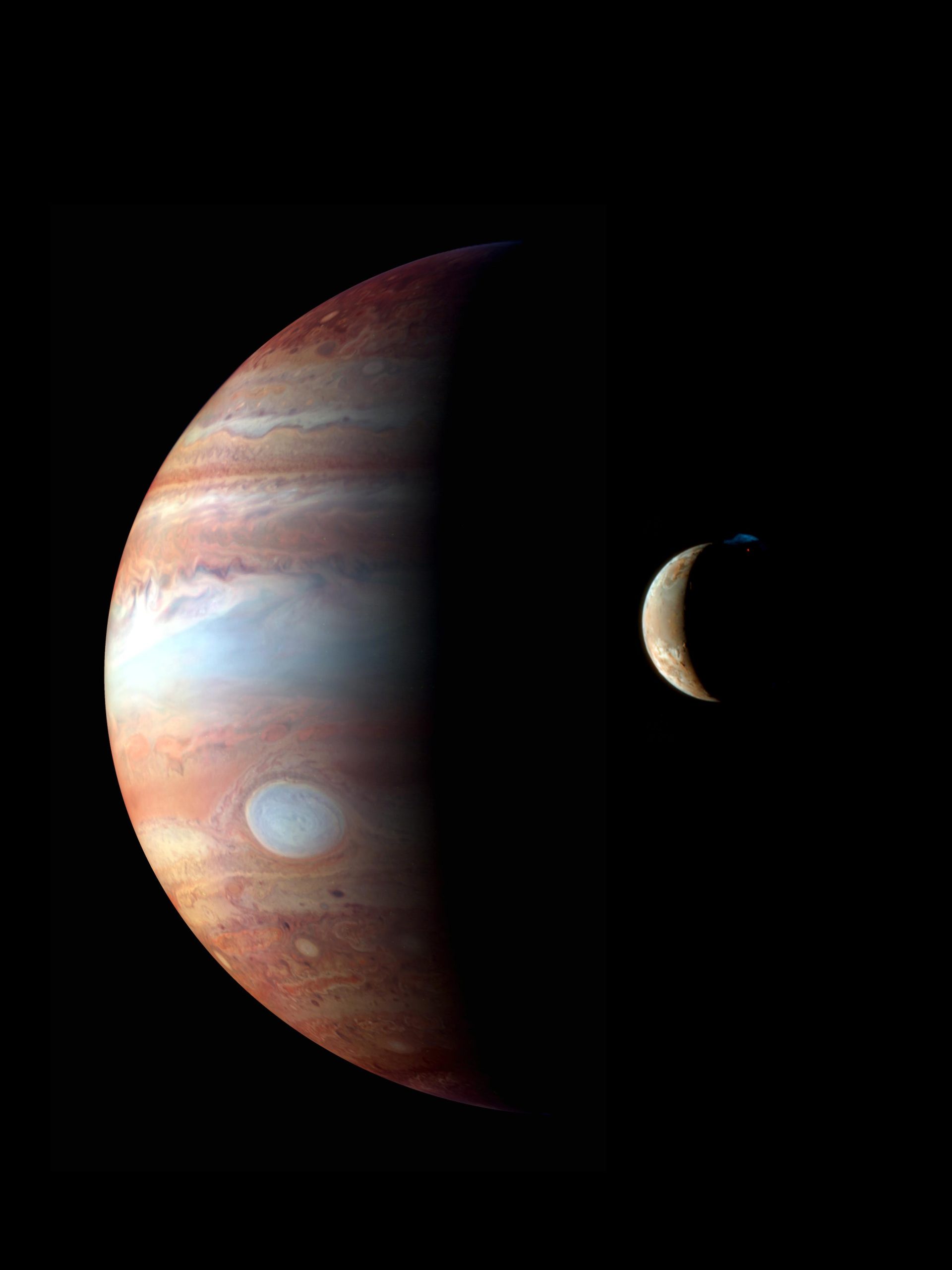
New Horizons was launched on January 19, 2006, using an Atlas V rocket. The spacecraft left the vicinity of the Earth, moving at a heliocentric speed of 16.2 km/s, which was a record. In 2007, New Horizons made a flyby of Jupiter. The gas giant’s gravity accelerated the probe, which reduced the flight time to Pluto by several years.
Shortly after the launch of New Horizons, astronomers “demoted” Pluto. It lost the status of a planet and became known as a dwarf planet. It is worth noting that many employees of the mission were not in agreement with this decision. During the New Horizons mission, the Hubble telescope also managed to discover two previously unknown satellites of Pluto, named Styx and Kerberos.
One of the important innovations of New Horizons was the hibernation mode. The spacecraft spent most of its flight to Pluto in hibernation mode and did not require a large staff to maintain operations, which helped reduce the cost of the mission.
Meeting Pluto
The historic meeting with Pluto took place on July 14, 2015. New Horizons flew at a distance of 12,472 km from its surface. The time and distance were chosen through careful analysis. Scientists wanted to get detailed images of a bright area on Pluto’s surface previously identified in Hubble telescope images. The chosen trajectory also provided high-resolution images of its largest satellite, Charon.
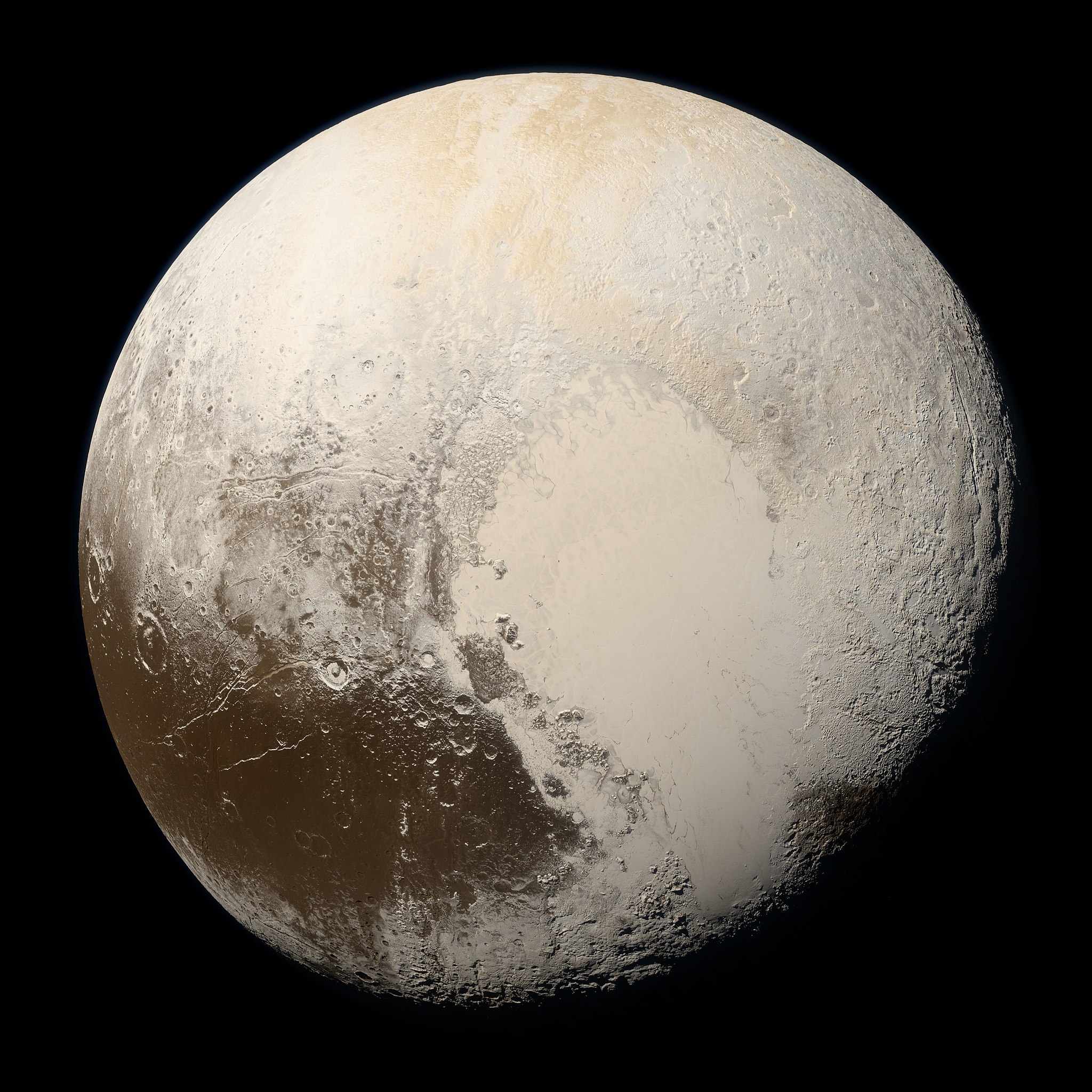
Due to technical limitations, it took New Horizons more than a year to transmit all the information it collected back to Earth. But the wait was worth it. Almost the first published images created a sensation. It turned out that the bright region on Pluto is shaped like a giant heart.
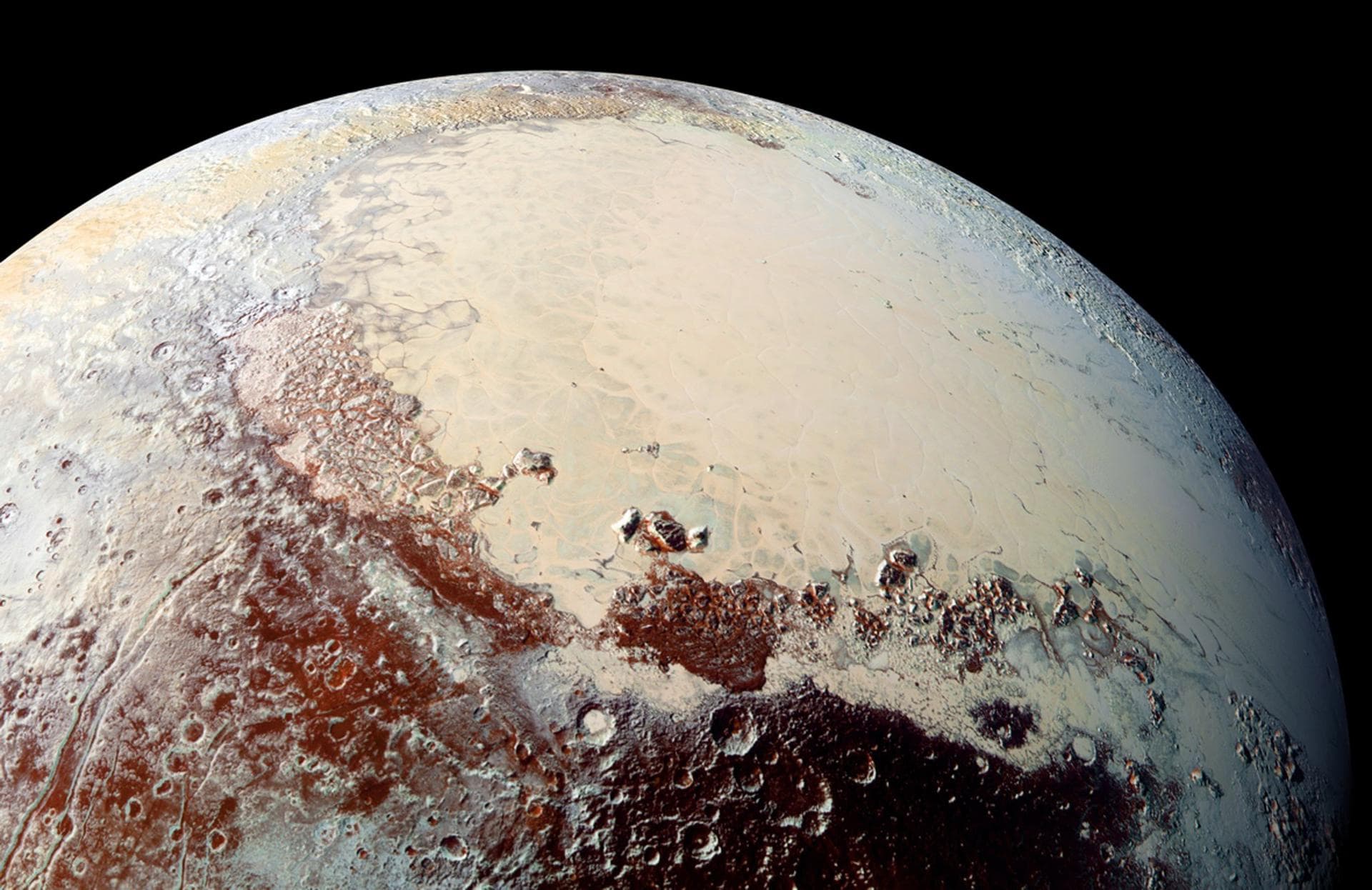
The western part of this “heart”, called the Sputnik Planitia, is one of the most amazing formations in the entire Solar System. It is covered in bright nitrogen ice and is extremely young – there is not a single visible crater on it. It is flanked by mountains of water ice. Sometimes blocks break off from them, which, like icebergs, drift across the Sputnik Planitia at a rate of a few centimeters per year. According to the most popular version, this region is a giant impact crater, eventually filled with frozen gases from Pluto’s atmosphere.

Source: NASA/JHUAPL/SwRI
Other very interesting formations have also been found on Pluto. These include surface areas with giant ice needles, mountains with methane snow caps, cryovolcanoes, and lowlands covered with a layer of organic molecules.
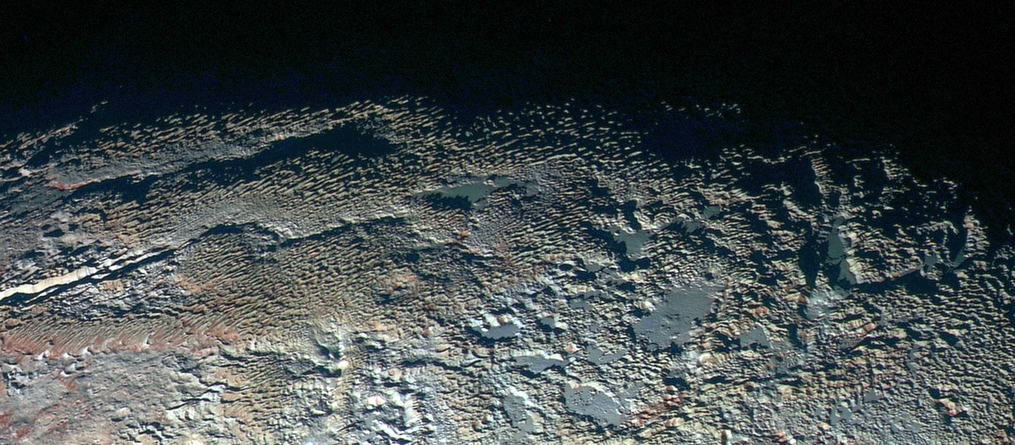
Pluto’s atmosphere has also surprised scientists. Despite its extreme rarefaction, winds blow in it, and it has a surprisingly complex structure. And the hydrocarbon haze gives it a blue hue.

Subsequent analysis of New Horizons data has also indicated that Pluto may harbor a subsurface ocean. So, at least in theory, life may exist on the dwarf planet.
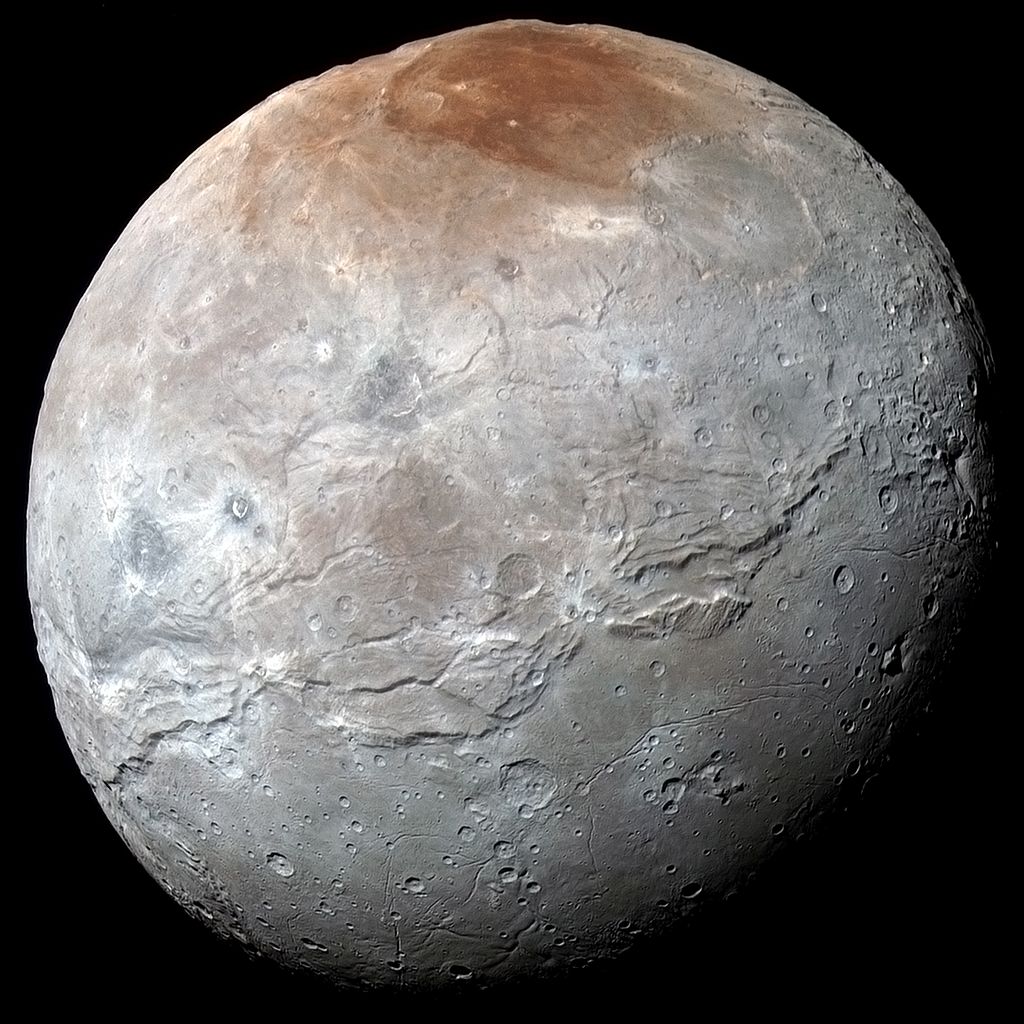
As for Charon, the satellite has surprised scientists with a system of canyons girdling its equator, which may even exceed the famous Valles Marineris in length. Perhaps this is all that remains of the ocean that once lurked in its depths. According to one hypothesis, the freezing of the ocean caused the satellite’s crust to crack, forming giant canyons.
Traveling to the Kuiper belt
After passing Pluto and Charon, New Horizons continued its journey deep into the Kuiper Belt. Its new target was an icy object called Arrokoth. The meeting took place on January 1, 2019, at a distance of 6.5 billion km from the Sun.
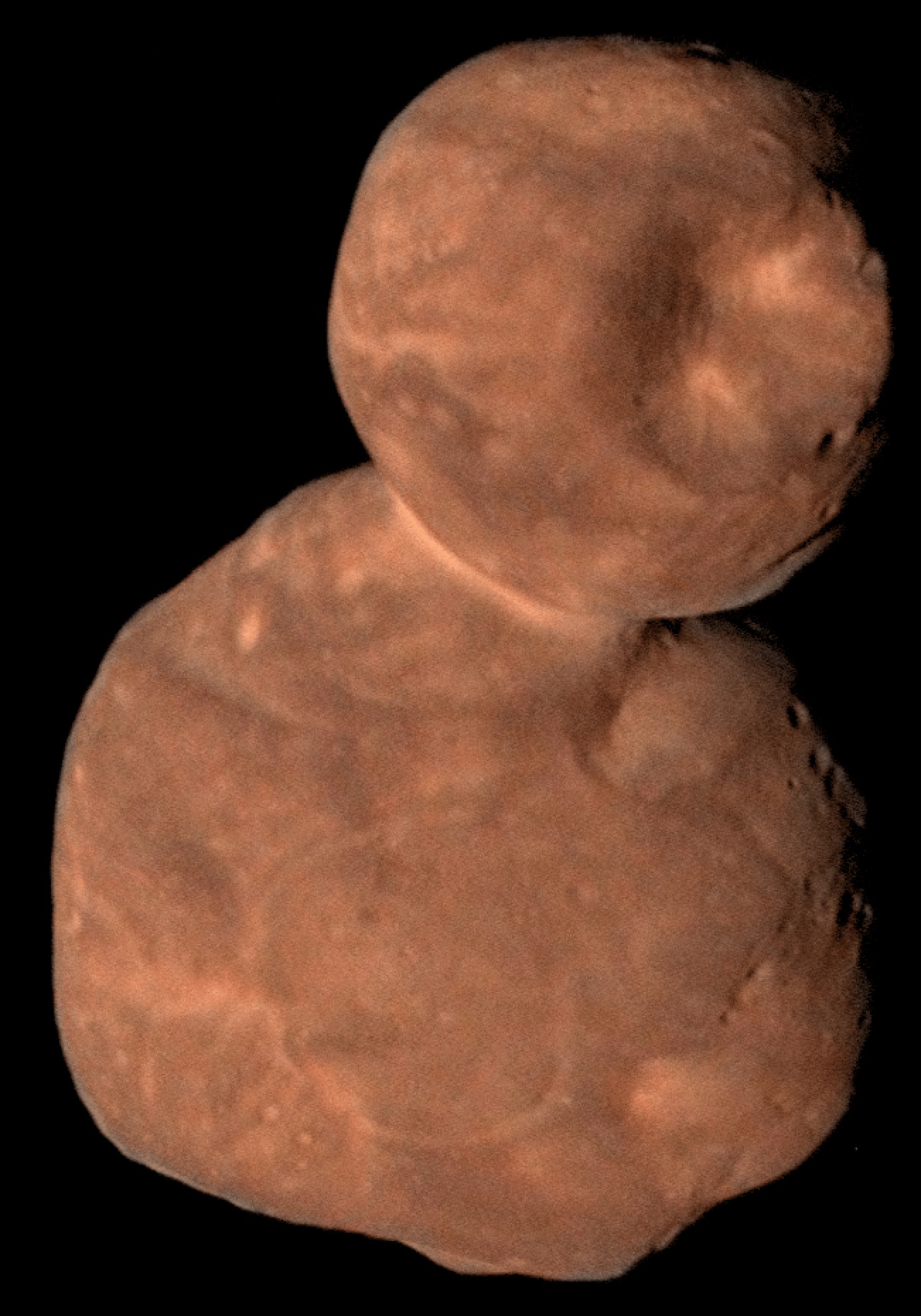
Arrokoth became not only the most distant in history but also the most primitive celestial body studied by a spacecraft at close range. It is a contact object formed by the collision of two bodies at low speed. Its surface has a red color, which is explained by a layer of organic molecules called tholins covering it.
The largest of the Arrokoth components has dimensions of 22×20×7 km and resembles a giant pancake. According to astronomers, this is what planetesimals looked like – ancient embryos that gave rise to all the current planets of the Solar System. The smaller of the Arrokoth components has a more traditional shape, close to spherical. Its dimensions are 14×14×10 km.
After studying New Horizons images, astronomers managed to find only a few craters on the surface of Arrokoth. This suggests that for 4.5 billion years after its formation, it has hardly interacted with other objects, which means that its appearance is close to pristine.
The future of New Horizons
After its visit to Arrokoth, New Horizons no longer made close flybys of other Kuiper Belt objects. Nevertheless, the spacecraft was actively used for remote observations of various celestial bodies, as well as a variety of other studies, from measuring the brightness of the Universe to the interstellar navigation experiment.
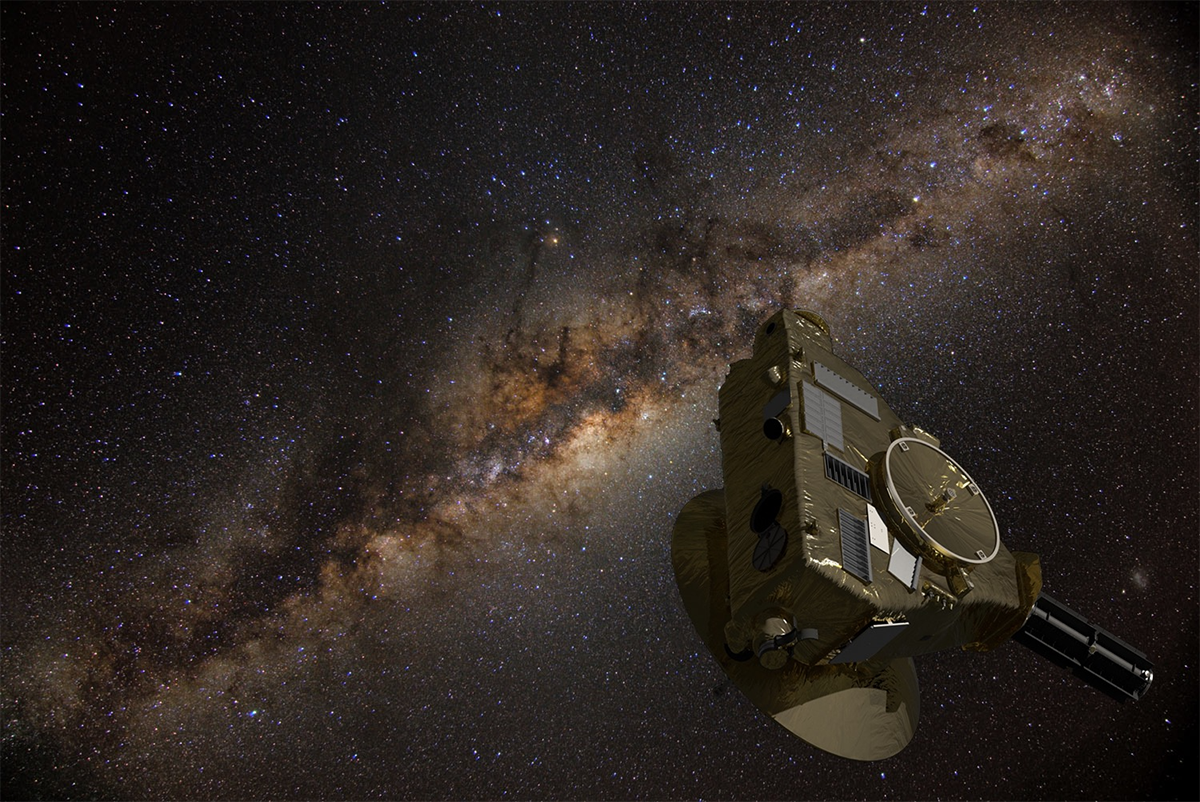
Now the device is at a distance of 9 billion km from the Sun and annually increases this figure by 430 million km. According to experts’ calculations, the New Horizons RITEG will continue to produce enough energy for its work until the 2030s. True, the unique probe can shut down much earlier: the draft of the current NASA budget does not provide for the continuation of funding for its mission. If New Horizons can not be saved, it will be a major blow to science, because mankind will not have a single active spacecraft in the Kuiper belt.
As for the future of New Horizons, the spacecraft has gained enough speed to break free from the gravitational shackles of the Sun and leave the Solar System forever. Its path will lie to the center of the Milky Way, where there are regions of active star formation and the supermassive black hole Sagittarius A*.

