

New scientific data is impressive: about 60% of Pluto’s equatorial zone may be covered with giant spires of methane ice, each as tall as the Eiffel Tower. This area is significantly larger than previously thought. The discovery, published in the Journal of Geophysical Research: Planets, is based on analysis of data from NASA’s New Horizons mission, which first approached this dwarf planet a decade ago.
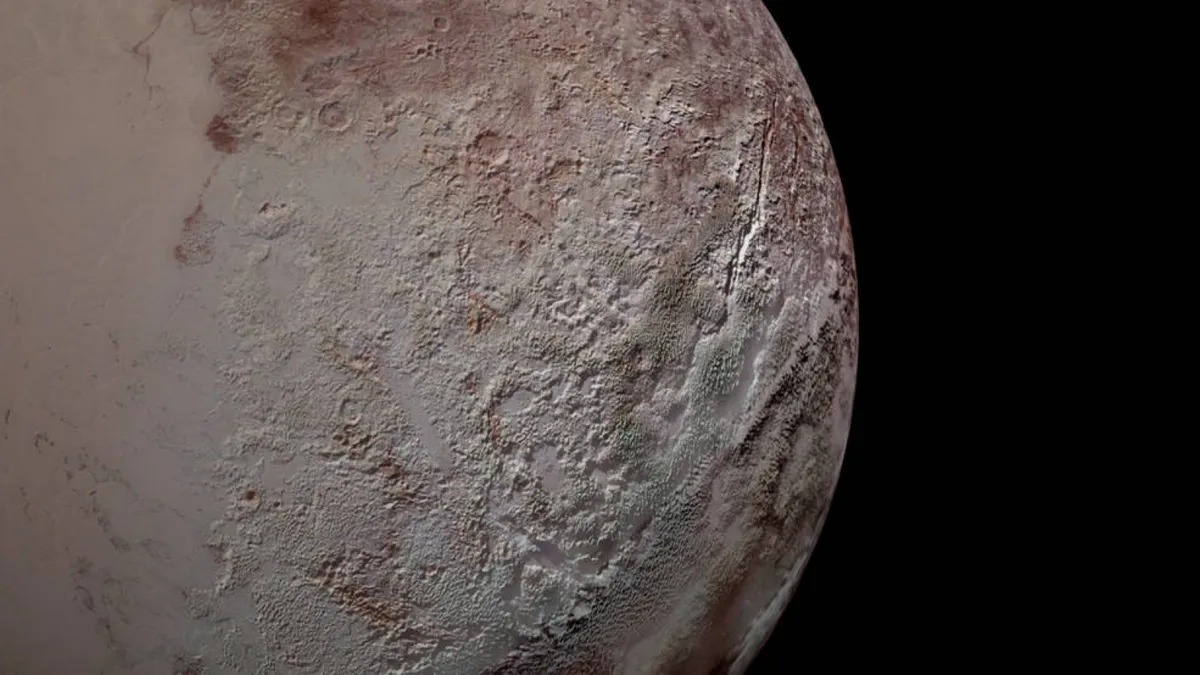
Blade-like spikes made of methane
During its historic flyby on July 14, 2015, New Horizons discovered remarkable structures in the highlands of the equator, in the Tartarus Dorsa region, east of Pluto’s famous “icy heart.” These were spires of methane ice about 300 m high, located up to 7 km apart in parallel rows. This unique relief resembles ice formations in the Andes on Earth, called penitentes. But Pluto’s “towers” are hundreds of times taller than their terrestrial counterparts. Similar structures are also observed on Jupiter’s moon Europa and may exist on Mars.
However, New Horizons only took detailed images of one hemisphere of Pluto, which was facing the probe during the flyby, also known as the encounter hemisphere. The photos of the other side were too blurry to see the spires clearly. But infrared data from the probe showed that the methane-rich surface stretches along the entire equator, even in the unexplored hemisphere. This led to the question: could the spires be there too?
The Mathematics of Light
“We use indirect clues in the images,” explains Ishan Mishra, research manager at the Jet Propulsion Laboratory (JPL). The key was the roughness of the surface. Irregularities such as slopes or ridges create micro-shadows. Under identical lighting conditions, rough areas appear darker than smooth ones. Even if individual spires cannot be distinguished, their presence should cast shadows on the surface.
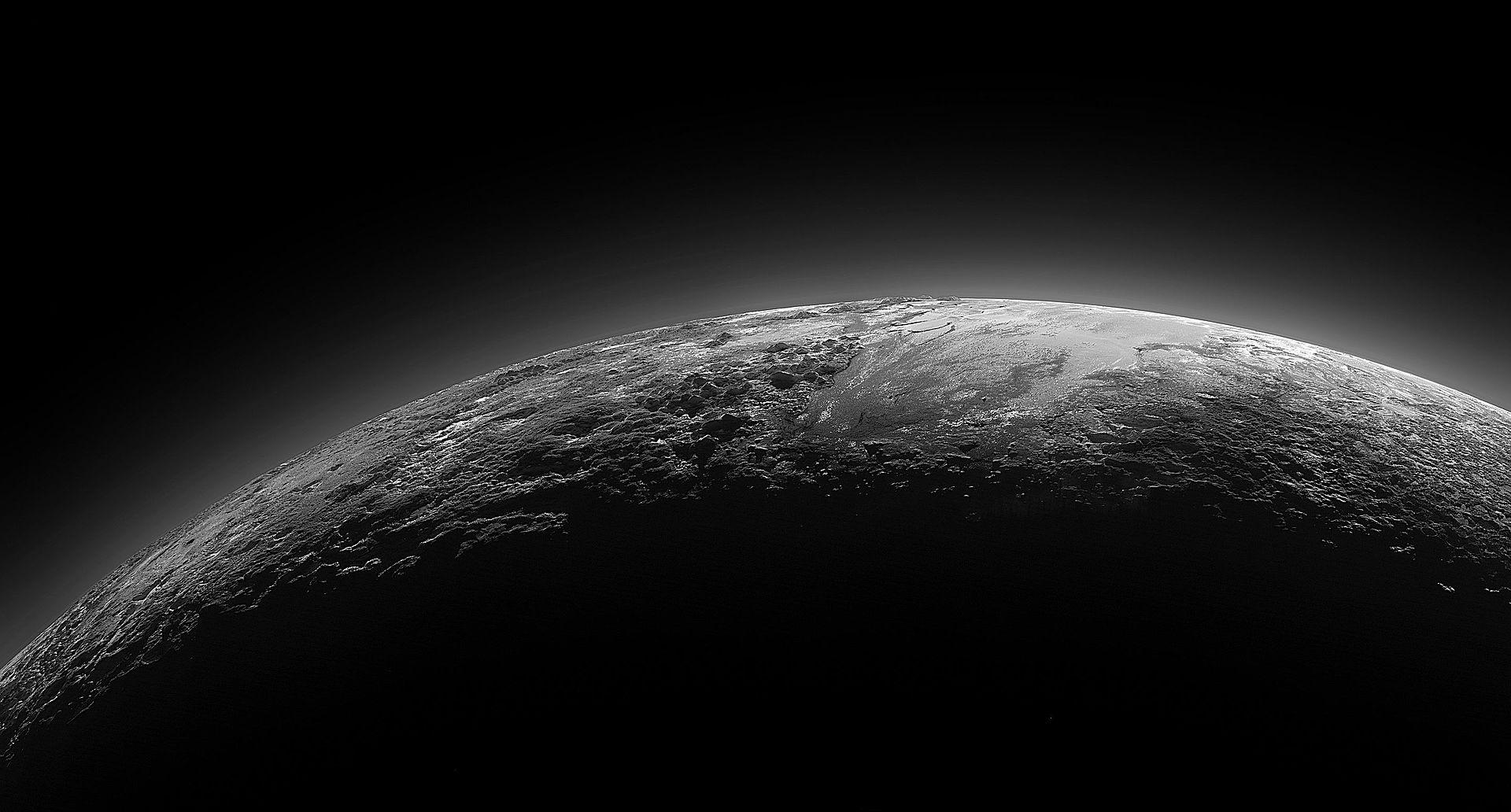
To verify this, scientists analyzed how the brightness of Pluto’s surface changed depending on the angle at which light was reflected. They studied six regions. Using a mathematical model, the team linked changes in brightness to the level of surface roughness.
The results were striking: methane-rich areas on Pluto’s dark side turned out to be twice as rough as the well-known blade-like relief with a “heart.” This extraordinary roughness is strong circumstantial evidence that giant methane plumes not only exist on the other side, but also form massive structures there.
This means that about 60% of Pluto’s equatorial belt may be covered by these amazing ice skyscrapers, forming one of the most unusual landscapes in the Solar System.
Earlier, we explained the reasons for Pluto no longer being considered a planet.
According to livescience.com

