

Starfish Space and Impulse Space announced the successful completion of the Remora mission. As part of the mission, two spacecraft performed a series of maneuvers in Earth orbit.
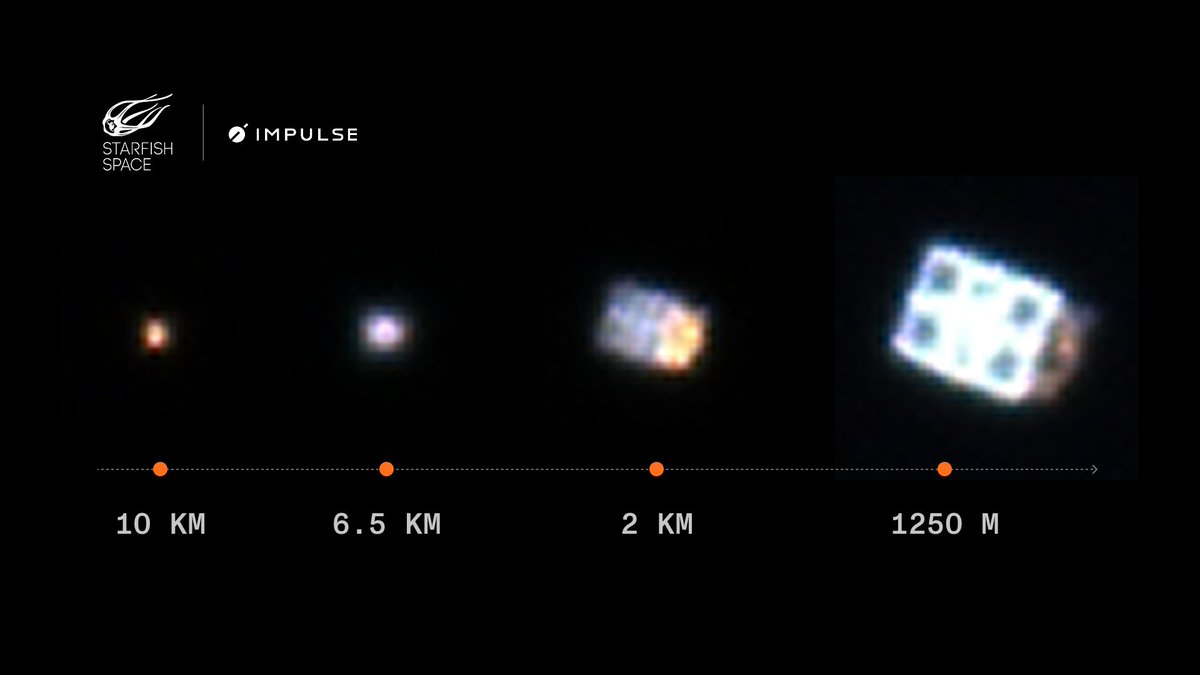
The demonstration involved Mira satellites owned by Impulse Space. Its key difference from a number of similar operations performed by other private companies was that the approaching Mira relied on only one camera. It transmitted images to a computer running Starfish Space software, which generated navigation data and issued commands for maneuvers. As a result, the two spacecraft approached each other at a distance of 1,250 meters.
“Our industry has traditionally relied on more complex equipment” for rendezvous operations, Starfish Space co-founder Trevor Bennett said in an interview. This typically includes advanced cameras and additional sensors such as lidar. In contrast, Remora used an off-the-shelf camera developed by TRL11 for spaceflight.
“I think we were able to show that off-the-shelf cameras are quite sufficient and that you don’t need a lot of additional equipment to perform some missions of this type,” he said.
Both companies described the mission as a success. Starfish Space believes that its technology can support even closer approaches, up to docking. Remora was a one-off demonstration, although the companies do not rule out future collaboration.
Now, Starfish’s immediate plans include the Otter Pup 2 mission. As part of this mission, it will conduct the first-ever commercial docking with an unprepared satellite in low Earth orbit.
According to Starfish Space

