

An international group of researchers has announced an intriguing discovery made during their study of the binary system HD 135344 AB. One of its stars is still surrounded by a protoplanetary disk, while the other is orbited by a large exoplanet.
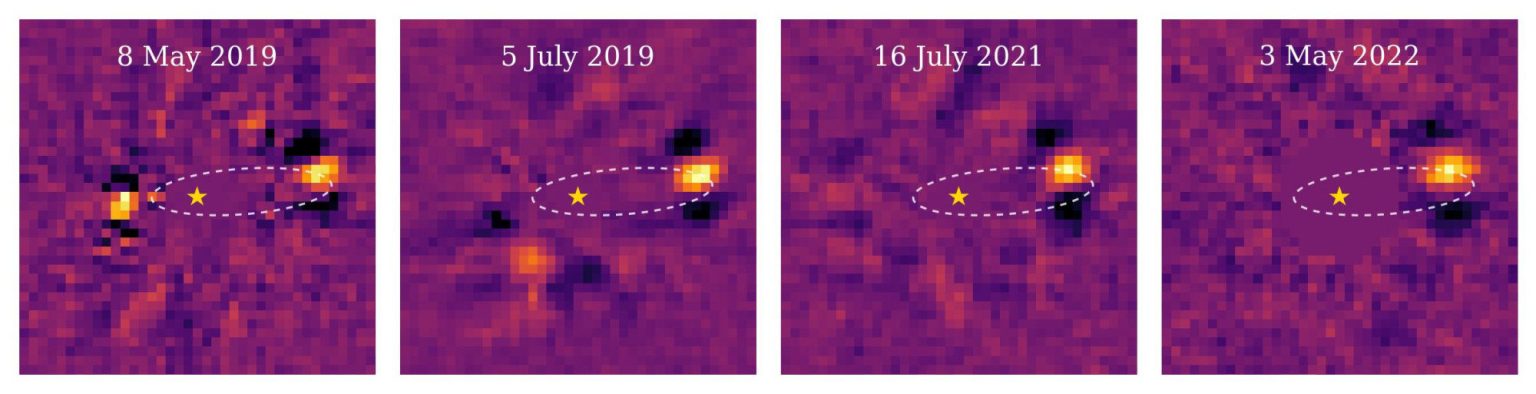
The binary star system HD 135344 AB is located approximately 440 light-years from Earth in the direction of the constellation Lupus. It consists of two young stars, A and B, which orbit each other at a great distance.
From 2013 to 2017, astronomers observed this system using the SPHERE instrument mounted on the European Southern Observatory’s Very Large Telescope (VLT) to capture the faint light of potential exoplanets. They quickly found a candidate orbiting star A, but for a long time it was unclear whether it was really an exoplanet or just a background star.
The answer was provided by the GRAVITY instrument, which combines light from the four main VLT units. It was able to determine the location of the exoplanet with high accuracy and prove that it was part of this system.
The exoplanet discovered has been designated HD 135344 Ab. It is a gas giant that is 12 million years old. Its mass is approximately 10 times greater than that of Jupiter. The distance from the exoplanet to its parent star is comparable to Uranus’ orbit around the Sun.
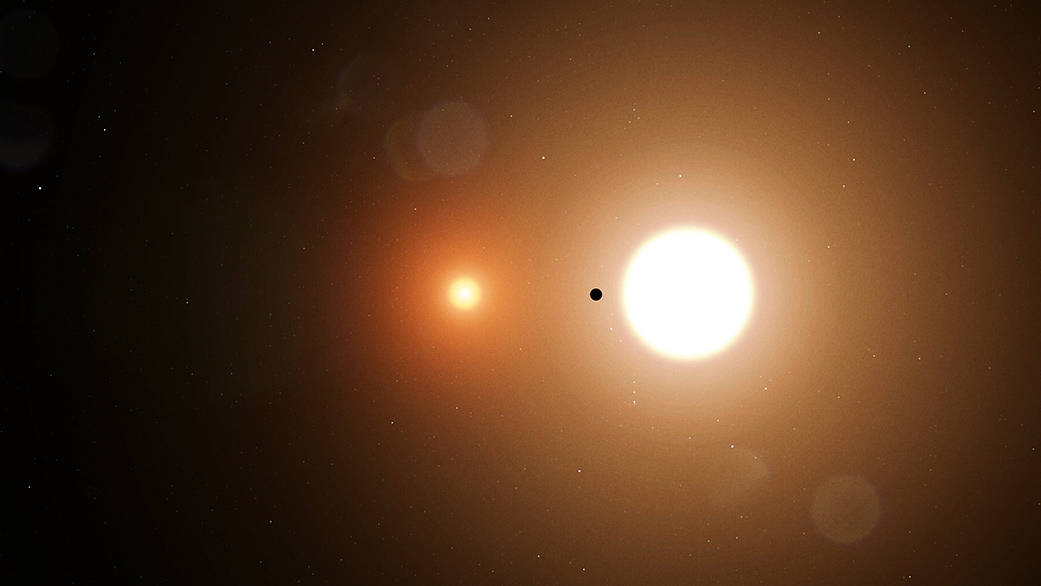
Researchers note that while star A has already completed the formation of exoplanets, star B still has a protoplanetary disk. This demonstrates that planets can form around double stars at different times.
Researchers plan to continue observing the system using GRAVITY. In the future, they also hope to use ESO’s Extremely Large Telescope, which is currently under construction. This will enable them to determine the composition of the exoplanet’s atmosphere and learn more about its evolution.
In addition, scientists plan to search for gas giants near other young stars at distances similar to the orbit of the recently discovered exoplanet. Researchers believe that HD 135344 Ab may be part of a population that has been difficult to detect until now.
According to Phys.org

