

Space is increasingly becoming not only a platform for launches, observation, and navigation, but also a new level of digital infrastructure. Whereas satellites used to mainly transmit signals or images, companies are now trying to launch next-generation cybersecurity services into orbit. This announcement by the Swiss companies SEALSQ and WISeSat fits perfectly into this logic; they have announced the creation of the world’s first commercial quantum orbital cloud—QSOC.
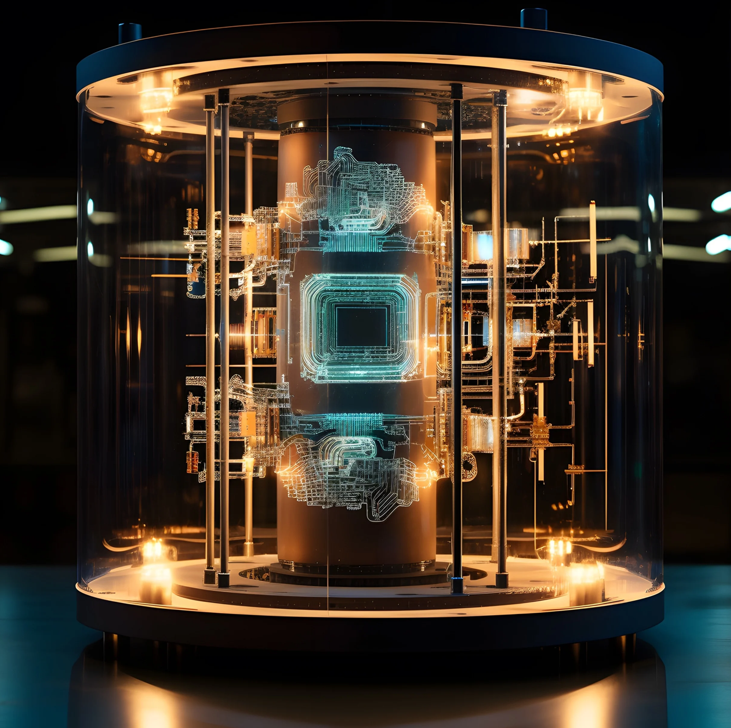
According to the companies’ plans, the system will be based on a constellation of 100 satellites and will provide customers in the banking, government, defense, and corporate sectors with quantum key distribution (QKD) services, quantum random number generation (QRNG), and post-quantum digital identification as a managed cloud service from orbit. Full operational readiness is scheduled for 2033, and a 99.9% SLA has been announced, although the project itself still requires final approval from the SEALSQ board of directors.
It is important to note that the term “cloud” here does not refer to a traditional data center in space used for file storage. Rather, it is an orbital platform for secure communications and cryptographic services, within which WISeSat will be responsible for the satellite infrastructure, while SEALSQ will handle quantum technologies, the software stack, and commercial services for end customers. Companies are explicitly positioning QSOC as a commercial-grade solution for securing communications at a time when advances in quantum computing are threatening traditional encryption methods.

How does it work? Imagine that satellites in space don’t just transmit messages, but also help generate secret digital keys that are virtually impossible to steal without being detected. If someone tries to eavesdrop on such a quantum exchange, the system will detect it due to the laws of physics. Add to that the generation of truly random numbers and new security methods that are resistant to future quantum computers—and you get not just a photo-sharing cloud, but an orbital service for ultra-secure communication. It is precisely these QKD, QRNG, and post-quantum services that are offered by QSOC.
Why is this important? For space science, this technology could prove particularly useful in areas where secure data transmission channels, command authenticity, and resistance to signal interception are critical—for example, in satellite control, the transmission of observational data, the operation of international scientific networks, and future inter-satellite data exchange systems. The fact that ESA, the European Commission, and NASA are already working on the development of quantum-secure satellite communications indicates that this field is not some exotic concept, but is gradually becoming an integral part of future space infrastructure.
According to sealsq

