

Blood behaves differently in zero gravity than it does on Earth—and this could prove critical in the event of cardiac arrest on board a spacecraft. Researchers at Concordia University in Canada have developed a simulator that, for the first time, allows researchers to monitor hemodynamics—the flow of blood within the body—directly during resuscitation in a low-gravity environment.
Limitations of previous methods
Traditional cardiopulmonary resuscitation (CPR) methods were developed for use on land. The researchers note that most previous studies on this topic have focused on external parameters—the depth and frequency of chest compressions—and have failed to answer the key question: whether enough blood is actually reaching the vital organs.
“Most studies on CPR in space focus on the rescuer rather than the patient,” explains Lyes Kadem , a professor in the Department of Mechanical, Industrial, and Aerospace Engineering and director of the Laboratory of Cardiovascular Hydrodynamics.
In-flight testing
At the heart of the system is a modified mannequin with a 3D-printed cardiovascular system: a heart, valves, artificial blood vessels, and a circuit filled with a fluid that simulates blood. The automated simulator is mounted above the mannequin and, during the experiment, compresses the heart’s ventricle, triggering the flow of fluid through the carotid artery to the “brain.” Sensors at key points record changes in pressure in real time.
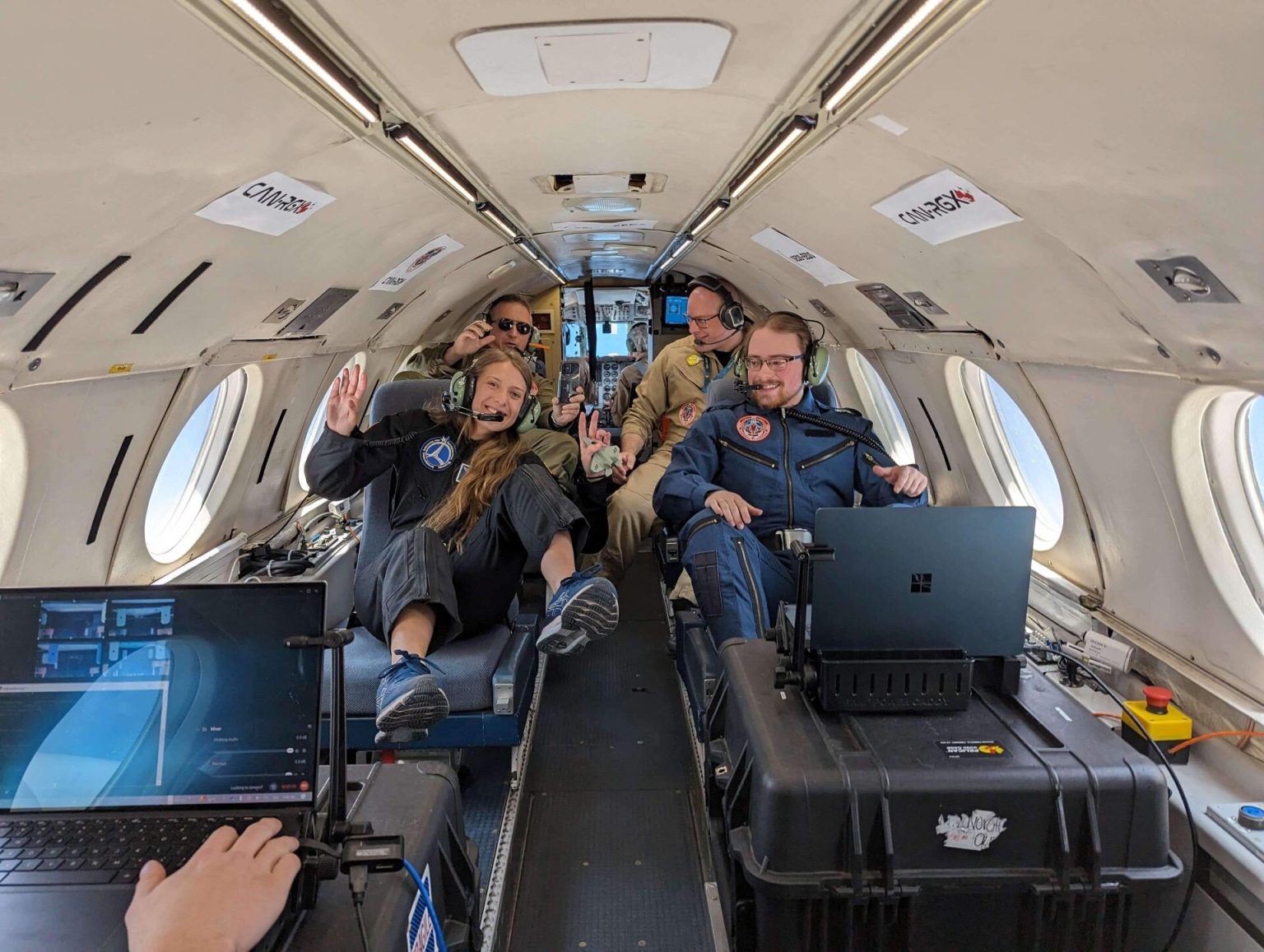
The device was tested in the university’s laboratories and aboard a government Falcon 20 aircraft, which had been specially equipped for scientific experiments in microgravity. During parabolic flights—when the aircraft briefly enters a state of reduced gravity—the team observed significant differences in blood pressure readings compared to conditions on Earth.
Systolic, diastolic, mean arterial pressure, and pulse pressure—all of these parameters were found to be higher under microgravity conditions. According to the study’s lead author, Zoe Lord, this confirmed that the simulator was working correctly.
Next step—the ISS
The current version of the device is only the first iteration. The team plans to improve the model by adding a spine, a rib cage, and a more complex chest cavity, since the heart shrinks in size in space.
The ultimate goal is to send the mannequin to the International Space Station and collect data under actual orbital flight conditions. The study was published in the journal npj Microgravity.
According to doi.org

