

The European Space Agency (ESA) has announced a true “space miracle”: engineers have managed to re-establish contact with the Proba-3 satellite. The spacecraft had been presumed lost for over a month, drifting in silent mode at an altitude of 60,000 kilometers above Earth.
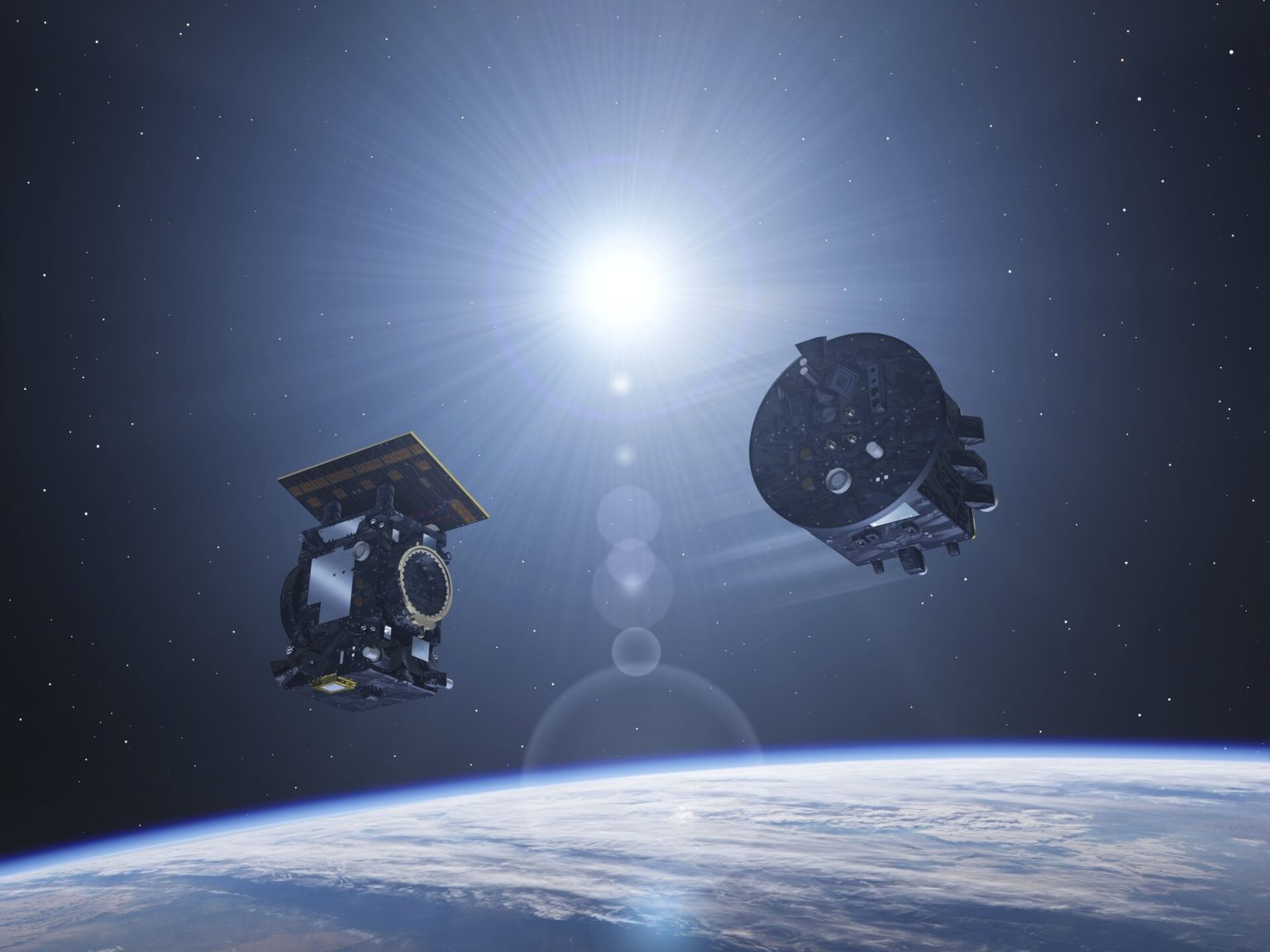
ESA Director Josef Aschbacher officially confirmed that, after several weeks of concern, the ground control team in Spain was able to “revive” the system. This development came as a huge relief to the scientific community, as a unique experiment to study the solar corona was at stake.
How Proba-3 functions
The Proba-3 mission, launched in 2024, is a true technological feat. It consists of two spacecraft that are designed to fly in a highly precise formation:
- The first satellite is equipped with a 1.4-meter protective shield. It acts as an artificial “moon,” blocking direct sunlight.
- The second satellite is equipped with a coronagraph; it hides in the shadow of its twin to observe the faint glow of the Sun’s outer atmosphere (the corona).
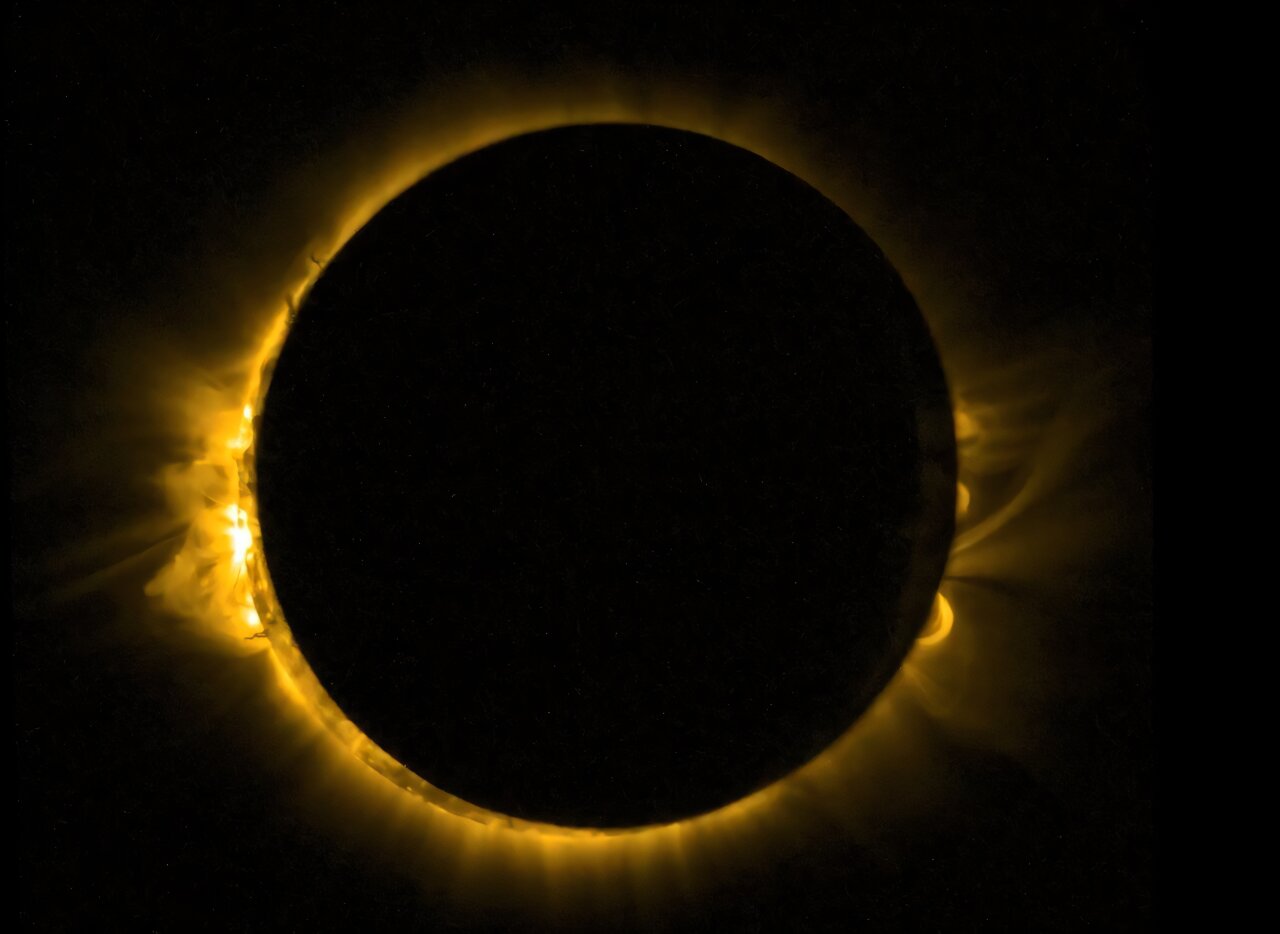
The corona is usually invisible because of the star’s blinding brightness. From Earth, we can only see it during total eclipses, which last just a few minutes. Proba-3, on the other hand, is designed to provide scientists with a “permanent eclipse” lasting 10–12 hours per week.
Crisis of February 14
The disaster occurred on February 14, 2026. Due to a malfunction in the orientation system, the satellite carrying the coronagraph turned away from the Sun. This triggered a disastrous chain reaction: the solar panels stopped receiving power, the batteries ran out, and the spacecraft went into “safe mode.”

The satellite began spinning uncontrollably in the void. Its “twin,” equipped with a protective shield, remained nearby the whole time, helplessly watching its out-of-control companion. However, it was precisely this chaotic spinning that proved to be the key to their salvation.
Late Wednesday night, the Spanish team noticed that, during the spacecraft’s latest rotation, beams of light briefly struck the solar panels of the “dead” spacecraft. That tiny bit of energy was enough to “revive” the transmitter for a split second. The specialists took advantage of this brief window of opportunity to send out stabilization teams.
What’s next?
The satellite’s solar panels are now pointing toward the star again, and the batteries are actively charging. A long process of testing the instruments lies ahead to determine whether the prolonged cold and power loss have damaged the sensitive coronagraph.
“Hearing back from the coronagraph is amazing news, and a great relief!” commented mission leader Damien Galano.
If everything goes well, scientists will be able to continue studying the Sun’s outer atmosphere. The corona remains one of the greatest mysteries of astrophysics, as it is significantly hotter than the Sun’s surface, and powerful solar winds that affect electronics and communications on Earth originate there.
We previously reported on how a defunct satellite suddenly came back to life after 60 years in space.
According to Phys.org

