

Long ago, the hypersaline body of water completely dried up, burying ancient living creatures in salt crystals. Hundreds of millions of years later, scientists cracked them open and studied them, hoping to understand the mysteries of life on our planet.
Rock salt that hides secrets
More than a billion years ago, in a shallow basin in what is now northern Ontario, a subtropical lake, very similar to today’s Death Valley, evaporated under the gentle warmth of the Sun, leaving behind crystals of halite – rock salt.
It was a very different world from the one we know today. Bacteria were the dominant form of life. Red algae had only just appeared on the evolutionary scene. Complex multicellular life, like animals and plants, wouldn’t show up for another 800 million years.
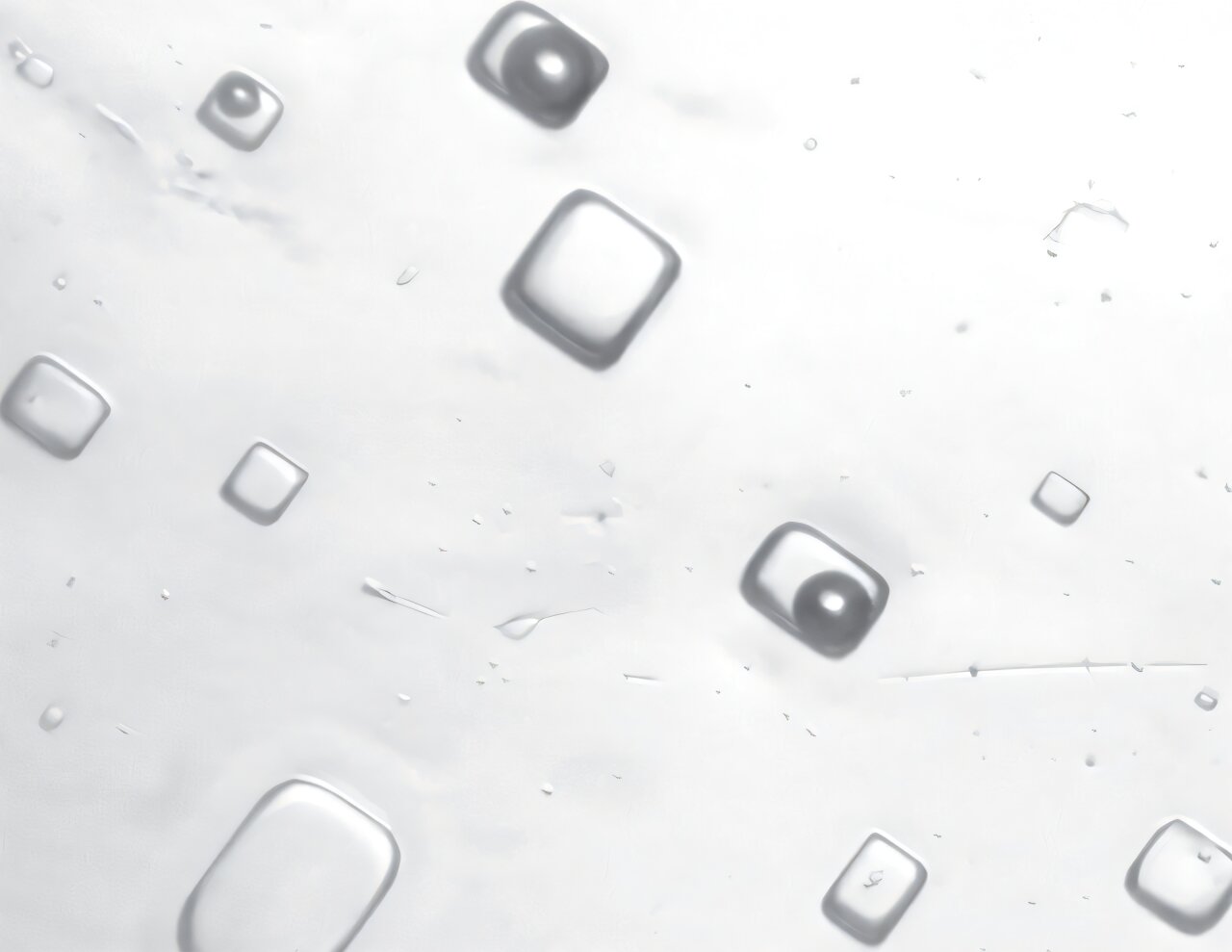
As the water evaporated into brine, some of it became trapped in tiny pockets within the crystals, effectively frozen in time. Those trapped fluid inclusions contained air bubbles, revealing, in fine detail, the composition of early Earth’s atmosphere. The crystals were buried in sediment, effectively sealed off from the rest of the world for 1.4 billion years, their secrets unknown.
Uncovering ancient secrets of the atmosphere
A team of researchers led by Rensselaer Polytechnic Institute (RPI) graduate student Justin Park, and guided by RPI Professor Morgan Schaller, Ph.D., has analyzed the composition of gases and fluids trapped in ancient halite crystals from northern Ontario, effectively extending our record of direct data about Earth’s atmosphere back by roughly 1.4 billion years. Their findings have been published in the Proceedings of the National Academy of Sciences.
Researchers have long known that fluid inclusions in halite crystals contain samples of early Earth’s atmosphere. But teasing accurate measurements out of those inclusions has proven to be a formidable challenge: they contain both air bubbles and brine, and gases like oxygen and carbon dioxide behave differently in water than they do in air.
Researchers have struggled to correct for those differences to obtain accurate readings of the gases as they actually appeared in ancient atmospheres. Park was able to solve the problem, thanks in part to custom equipment built in the lab of Schaller, his advisor. The researchers applied these methods to understand the atmosphere of the Mesoproterozoic era.
Scientists say that such measurements of carbon dioxide have never been taken before. Samples of ancient air allow us to look back at this era of Earth’s history with new accuracy.
New data on the composition of the atmosphere and climate of ancient Earth
The readings show that the Mesoproterozoic atmosphere contained 3.7% as much oxygen as there is today, a surprisingly high number, high enough to support the complex multicellular animal life that wouldn’t arise until hundreds of millions of years later.
Carbon dioxide, meanwhile, was ten times as abundant as it is today – enough to counter the “faint young sun” and create a modern-like climate state.
One question that naturally arises: if there was enough oxygen to support animal life, why did it take so long to finally evolve?
Park emphasizes that the sample captures just a snapshot of geologic time. “It may reflect a brief, transient oxygenation event in this long era that geologists jokingly call the ‘boring billion,'” he said. It was an epoch of Earth’s history marked by low oxygen levels, widespread atmospheric and geologic stability, and scant evolutionary change.
“Despite its name, having direct observational data from this period is incredibly important because it helps us better understand how complex life arose on the planet, and how our atmosphere came to be what it is today,” Park said.
Oxygen and red algae
Previous indirect estimates of carbon dioxide during the period pointed to lower levels incompatible with other observations showing that there were no significant glaciers during the Mesoproterozoic era. The team’s direct measurements of high carbon dioxide levels, combined with temperature estimates from the salt itself, suggest that the Mesoproterozoic climate was milder than previously thought – comparable to today’s.
Schaller notes that red algae arose right around this point in Earth’s history and that they remain a significant contributor to global oxygen production today. The relatively high oxygen levels could be a direct consequence of the increasing abundance and complexity of algal life.
Provided by: phys.org

