

On March 17 at 8:56 a.m. local time (2:56 p.m. in Kyiv), residents of Cleveland and the surrounding area were startled by a loud noise that sounded like a bomb explosion. Social media was instantly flooded with reports of houses shaking and a loud boom that sounded like dynamite exploding.
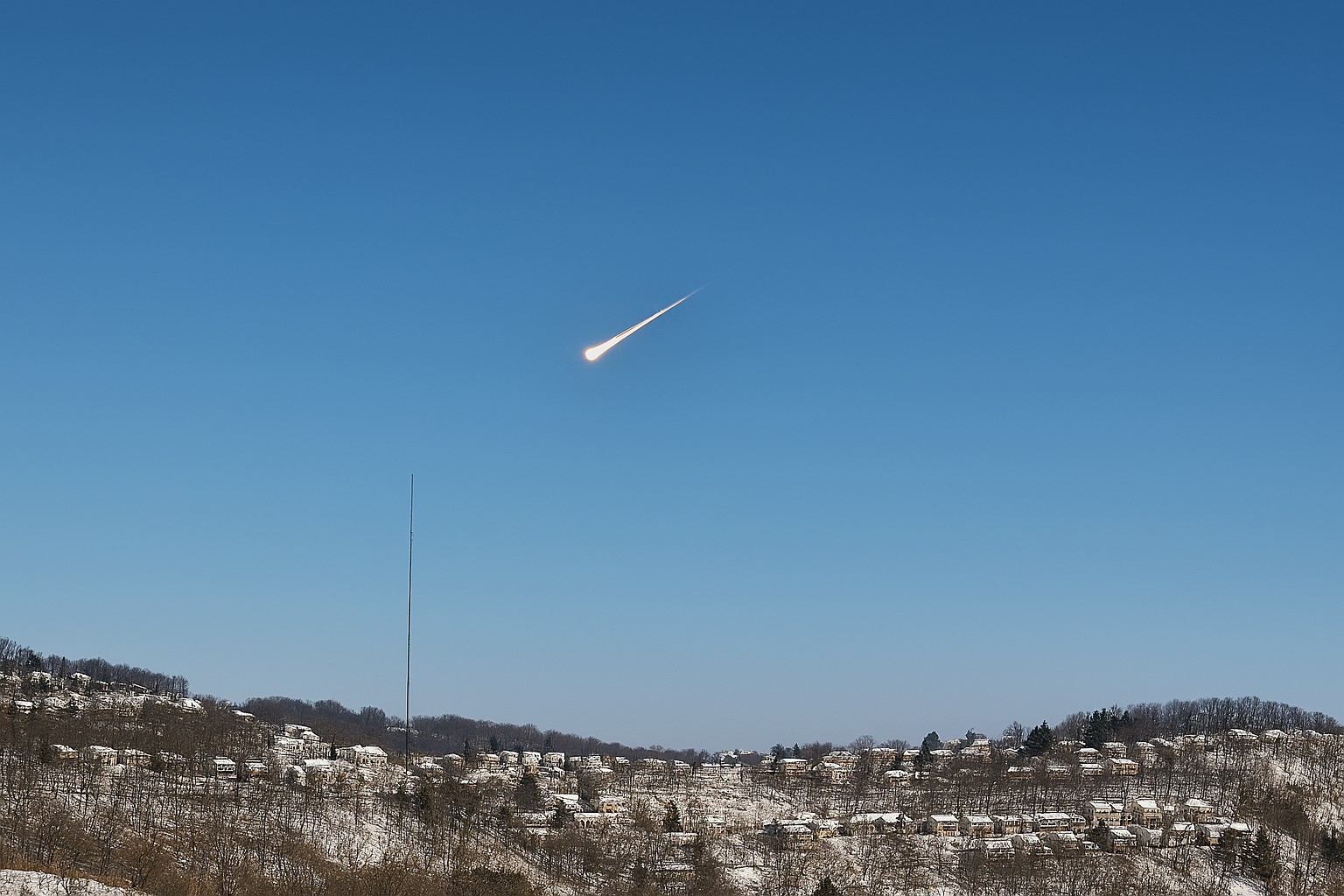
NASA soon confirmed the eyewitnesses’ suspicions: the cause was a meteor about 1.8 meters in diameter and weighing approximately 7 tons, which entered Earth’s atmosphere at tremendous speed and broke apart.
One of our employees, Jared Rackley, caught this morning's meteor on camera from the Pittsburgh area. pic.twitter.com/2LdqOpChti
— NWS Pittsburgh (@NWSPittsburgh) March 17, 2026
The force of the explosion was enormous. According to scientists’ calculations, the asteroid released energy equivalent to 250 tons of TNT when it broke apart. The shockwave was caused by this very event; it reached the Earth’s surface and produced the very “sonic boom” that frightened people.
The scale of the phenomenon is impressive—reports of a bright fireball in the sky have come in from:
- 10 U.S. states: Ohio, Pennsylvania, New York, Michigan, Illinois, Indiana, Kentucky, Maryland, Delaware, and Virginia;
- the District of Columbia;
- the Canadian province of Ontario.
How did meteorologists record the explosion?
Interestingly, it was not only surveillance cameras but also meteorological equipment that helped confirm the nature of the explosion. The National Weather Service (NWS) used data from the GLM (Geostationary Lightning Mapper).
The latest GLM imagery (1301Z) does suggest that the boom was a result of a meteor. pic.twitter.com/CH7oJ4Q1OY
— NWS Cleveland (@NWSCLE) March 17, 2026
Although this device is typically used to monitor thunderstorm activity, it is also capable of detecting meteorites. To satellite sensors, the long, bright flashes of light produced when a fireball breaks up in the atmosphere look very much like continuous lightning strikes. The GLM data clearly identified the epicenter of the event in the northeastern part of Ohio.
Is there anything left of the “guest”?
Despite the intensity of the event, experts believe that the space rock burned up completely or almost completely in the dense layers of the atmosphere.
“We have not heard of anything actually hitting the ground,” NWS meteorologist Brian Mitchell said.
Most likely, the 7-ton chunk had already turned into fine cosmic dust before it collided with the surface. Nevertheless, videos of the fireball captured by bystanders and even meteorological service staff have already gone viral, capturing one of the most spectacular astronomical events of the year.
According to CNN

