

NASA has published a series of images taken by its satellites. They show the consequences of the eruption of the Hayli Gubbi volcano.
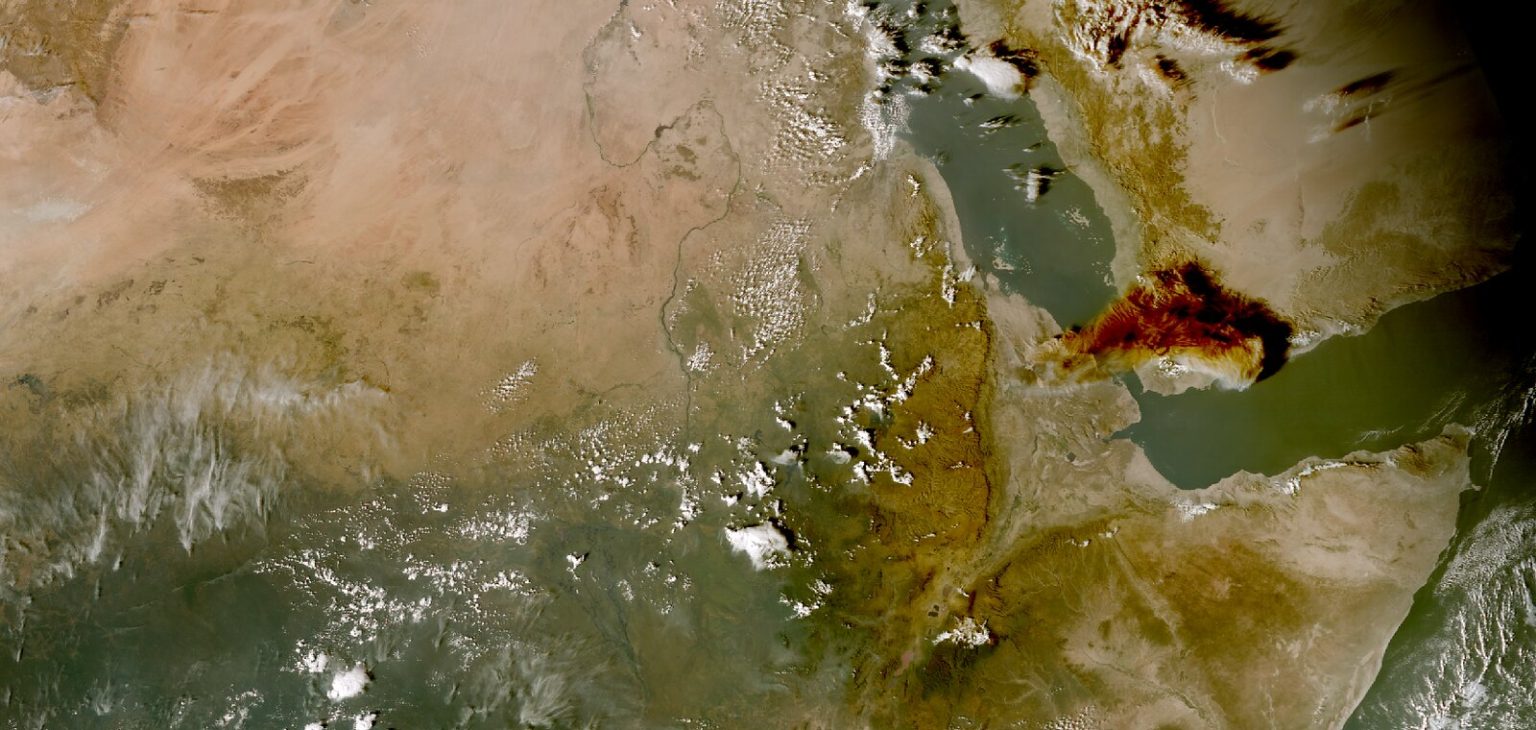
Hayli Gubbi is located in the Afar region in northeastern Ethiopia. In this remote area of East Africa, tectonic plates are moving apart, allowing magma to rise to the surface and feed several active volcanoes. Partly because of the remoteness of Hayli Gubbi, geologists are unsure when it last erupted. Geological evidence suggests it was within the last 8,000 years, although experts speculate it could have been within the last few centuries.
The first eruption of Hayli Gubbi in modern history began on November 23, 2025. It turned out to be explosive. The smoke column reached the upper layers of the troposphere and drifted in a northeasterly direction, eventually crossing northern India and China and disrupting air traffic.
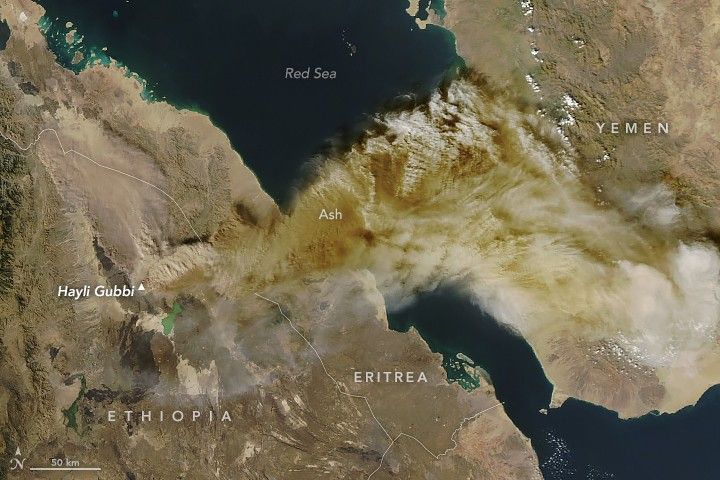
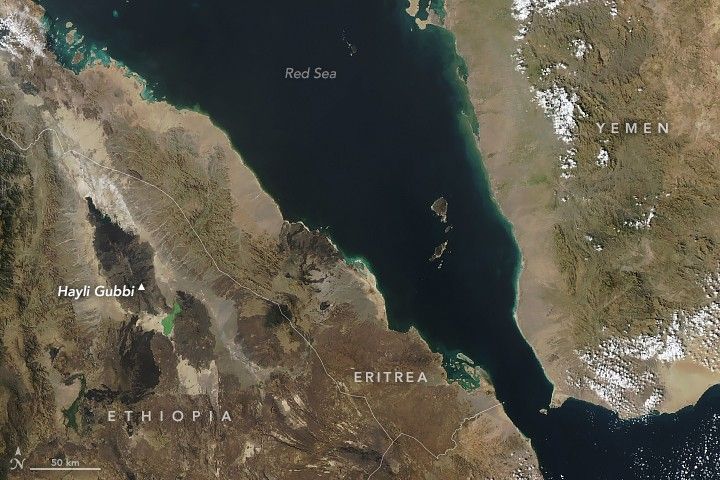
The MODIS instrument aboard NASA’s Aqua spacecraft took an image of the eruption approximately four hours after it began. Satellite data showed that the column of ash and gases reached a height of 15 km above sea level and contained approximately 0.2 teragrams (220,000 tons) of sulfur dioxide. Another bright cloud that spread northward and appeared to be on or near the ground. NASA also published an image of this region taken by the same instrument on November 15, i.e., before the eruption.
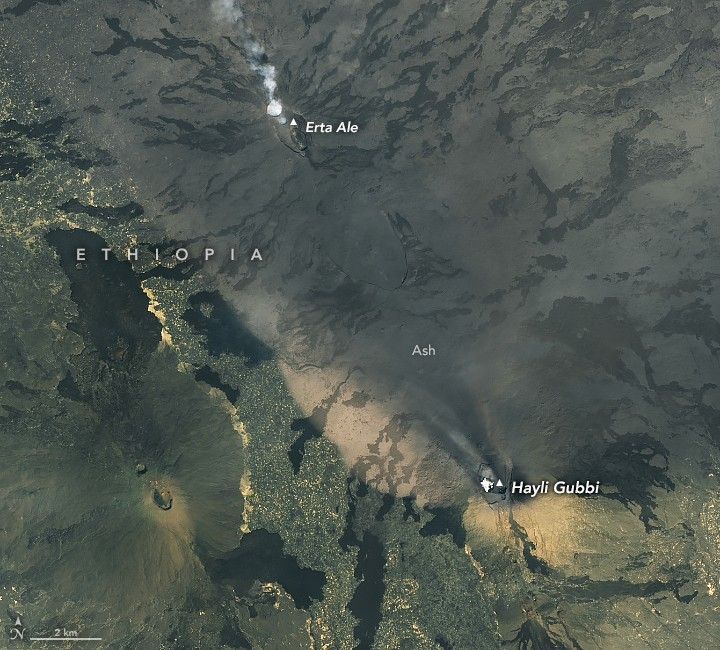
Hayli Gubbi is located approximately 12 kilometers (7 miles) south-southeast of Ethiopia’s most active volcano, Erta Ale, where a lava lake has been boiling for several decades. After Erta Ale’s last eruption in July 2025, scientists tracked the movement of magma beneath the surface using synthetic aperture interferometric radar and other methods. They discovered that magma was spreading south of Erta Ale, passing beneath Hayli Gubbi and beyond.
According to the Centre for Observation and Modelling of Earthquakes, Volcanoes and Tectonics (COMET), low activity was observed in Hayli Gubbi at the end of July, including sulfur dioxide emissions, lingering white clouds in the crater at the summit, and ground displacement of several centimeters upward. This activity was probably caused by the intrusion of magma following the eruption of Erta Ale.
The Hayli Gubbi eruption was of short duration and had subsided by November 25, but it caused noticeable changes on the surface. Ash covered large areas, including nearby villages in Ethiopia’s Afar region. According to news reports, residents suffered from respiratory problems due to ash fallout, and grass and water for livestock were contaminated.
The summit of the volcano has also taken on a new appearance. An image taken by the Landsat 9 satellite shows the craters at the summit of Hayli Gubbi and neighboring Erta Ale as of November 24, 2025. The eruption enlarged the existing Hayli Gubbi crater and created two new craters to the southeast. Ash deposits cover old lava flows on the slopes of the volcano.
According to NASA

