

WISE 1738 is a brown dwarf located 24 light-years from Earth. Recently, scientists used the Hubble and James Webb space telescopes to clarify its mass and radius.
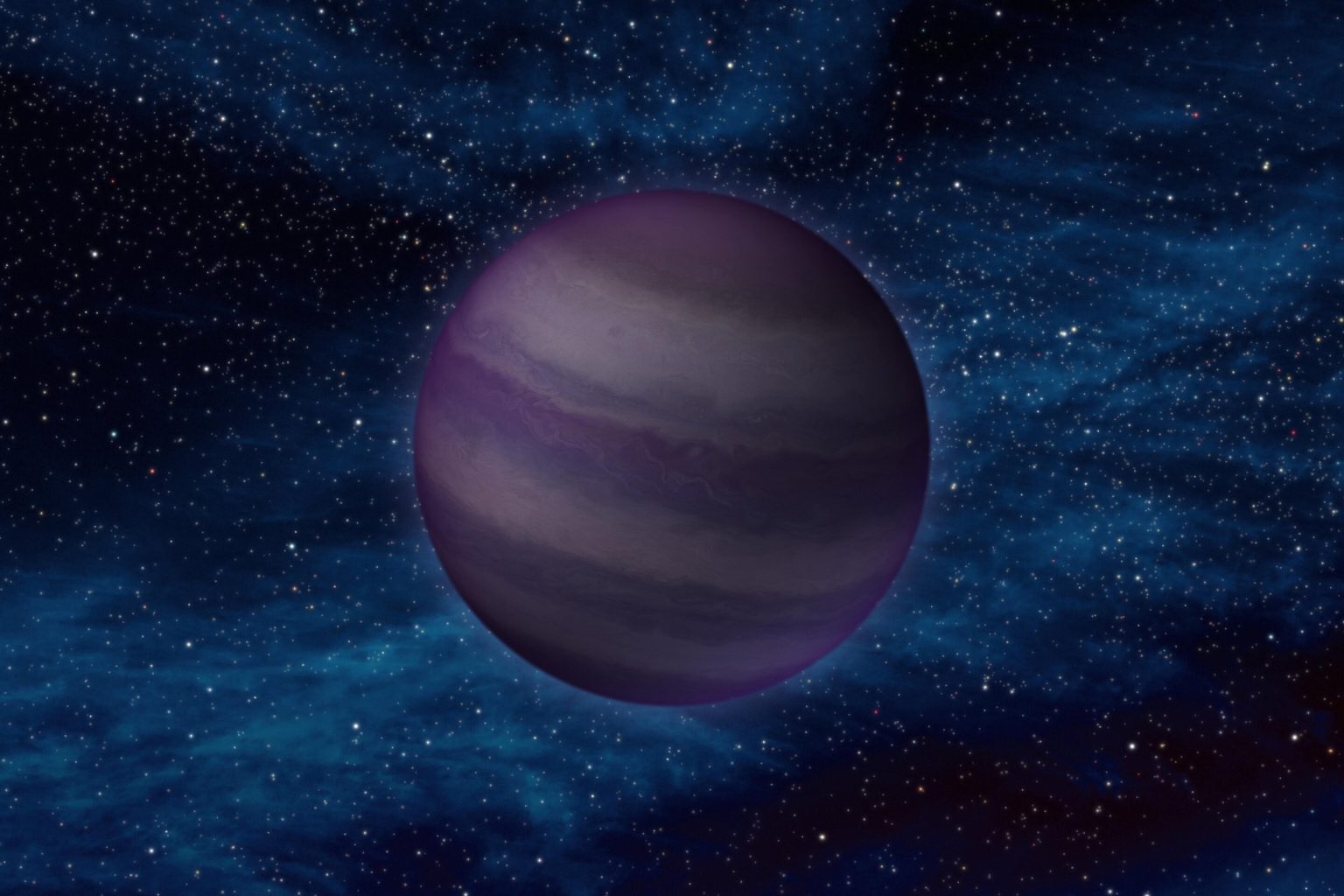
Cold brown dwarf WISE 1738
Using the James Webb Space Telescope (JWST), the Hubble Space Telescope (HST), and the Gemini Observatory, European astronomers observed a nearby cold brown dwarf star known as WISE 1738.
Brown dwarfs (BD) are intermediate substellar objects between planets and stars with a mass below the hydrogen burning threshold — approximately 80 times the mass of Jupiter. Brown dwarfs with effective temperatures below 500 K are known as Y dwarfs, and therefore are the coldest and least luminous substellar objects discovered to date.
WISEP J173835.52+273258.9, or WISE 1738 for short, is a Y-class dwarf discovered in 2011. It is one of the first ultra-cool dwarfs discovered by NASA’s Wide-field Infrared Survey Explorer (WISE). Previous observations of WISE 1738 have shown that its effective temperature is around 350–400 K.
Research using the James Webb Telescope
However, the physical properties of WISE 1738 remain uncertain, as some studies indicate that this object is about half the size of Earth and five times more massive than Jupiter, while others suggest a size of about 1.2 times the radius of Jupiter and a much greater mass, at 59 times that of Jupiter.
To resolve this discrepancy in the results, a group of astronomers led by Malavika Vasist of the University of Liège in Belgium decided to use the JWST’s mid-infrared instrument (MIRI) to conduct medium-resolution spectroscopic observations of WISE 1738. Their observations were supplemented by data from the HST and the Gemini Observatory.
Using the medium-resolution spectrum (5–18 μm) of the Mid-Infrared Instrument (MIRI) in combination with the near-infrared spectrum (0.98–2.2 μm) from the Wide Field Camera 3 (WFC3) of the Hubble Space Telescope (HST) and the Gemini Observatory’s Wide Field Infrared Range (GNIRS), researchers were able to accurately characterize the chemical composition of the atmosphere and the basic physical parameters of WISE 1738.
New data on WISE 1738
New observations have shown that WISE 1738 has a radius of approximately 1.14 times that of Jupiter and a mass of about 13 times that of Jupiter. It turns out that the effective temperature of this Y dwarf is 402 K, and its age is estimated at 1–4 billion years. The orbital period of WISE 1738 was measured to be approximately six hours, and its distance was calculated to be 23.9 light-years.
In addition, observations revealed important information about the atmosphere of WISE 1738. By analyzing the data, astronomers found evidence of chemical imbalance in the atmosphere of this object due to vertical mixing. The study also determined the carbon-to-oxygen ratio, which turned out to be approximately 1.35, and the metallicity at 0.34.
The researchers said that more observations of WISE 1738were needed to explain the high carbon-to-oxygen and metal ratios, focusing on oxygen absorption processes and formation scenarios.
According to phys.org

