

If something large needs to be built on Mars, the materials for it will have to be found right underfoot. Recently, scientists have demonstrated how metals can be extracted from Martian regolith.
Building on Mars
Recently, scientists have demonstrated how metals can be extracted from Martian soil. While you might think they were driven by a desire to exploit another world for their own gain, it’s actually about the challenge of colonizing a planet in general.
So far, people have only sent robots there, but sooner or later we will have to fly and stay there for a long time, because Mars is hundreds of millions of kilometers away from us. This implies that building will be necessary, and a large number of ready-made residential and research modules cannot be launched.
That is why many scientists are already considering that we will have to rely on materials that can be found locally and transformed into something useful. This is a very broad topic, because there are indeed many materials suitable for construction on Mars. But in this case, we are talking about such an important construction material as iron.
Experiments with metal smelting
There is indeed a lot of iron combined with oxygen in Martian soil. It is precisely because of this reason that the fourth planet from the Sun appears so red.
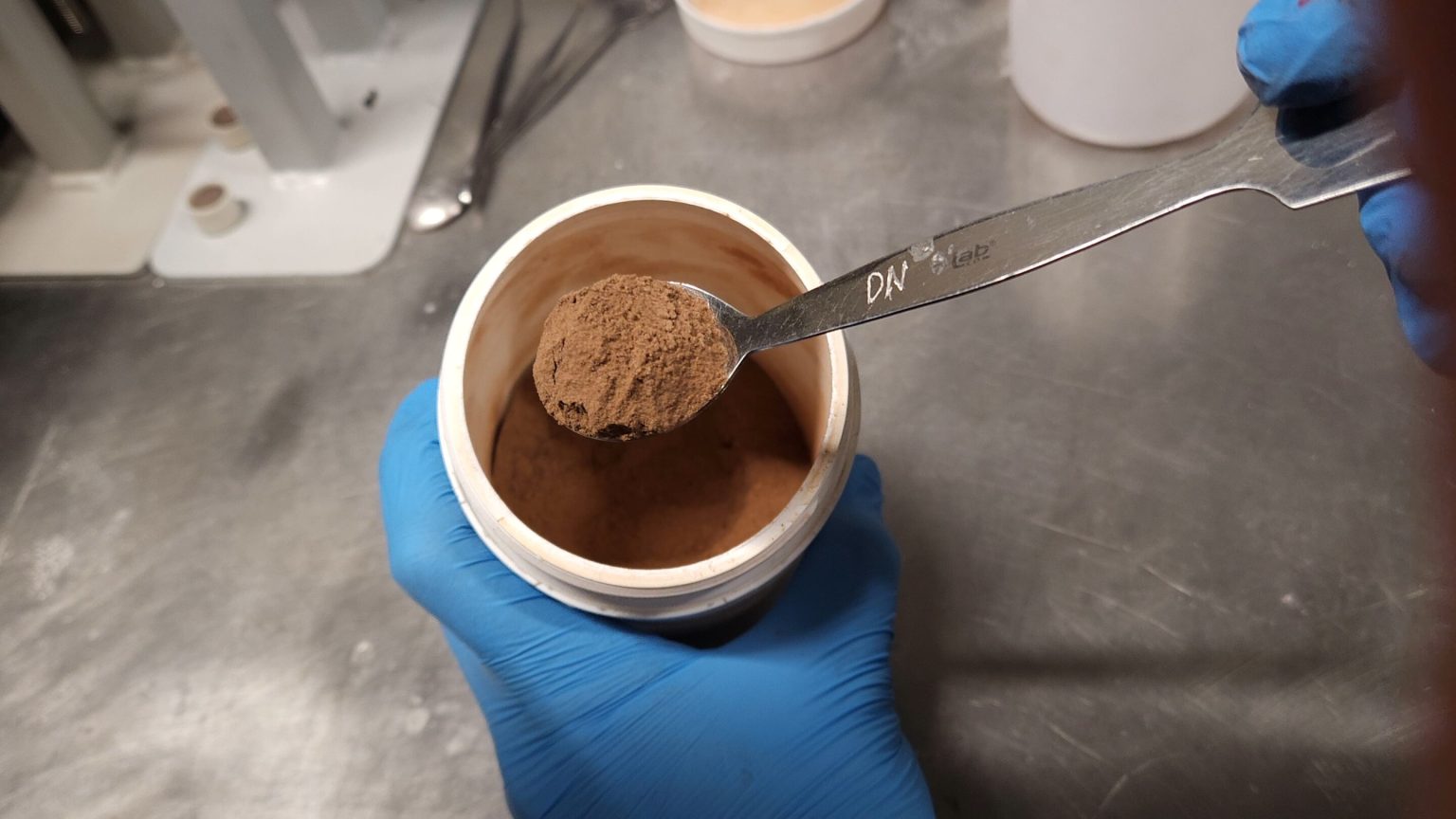
However, Martian soil is indeed quite diverse. Theoretical debates about it could go on forever. However, the authors of the new study did not do so. They simply took the results of chemical and mineralogical analysis of a specific sample from Gale Crater and developed a simulator based on it.
After that, everything turned out to be quite simple. As on Earth, it has to be heated to a high temperature so that the iron melts and forms a liquid mixture with silicates. And then, thanks to the fact that the former has a higher density than the latter, it was possible to separate the slag from the useful metal.
According to phys.org

