

The first generation of stars was massive and had a relatively short lifespan. That is why finding them now is a huge challenge. However, scientists have discovered an entire galaxy consisting of such stars.
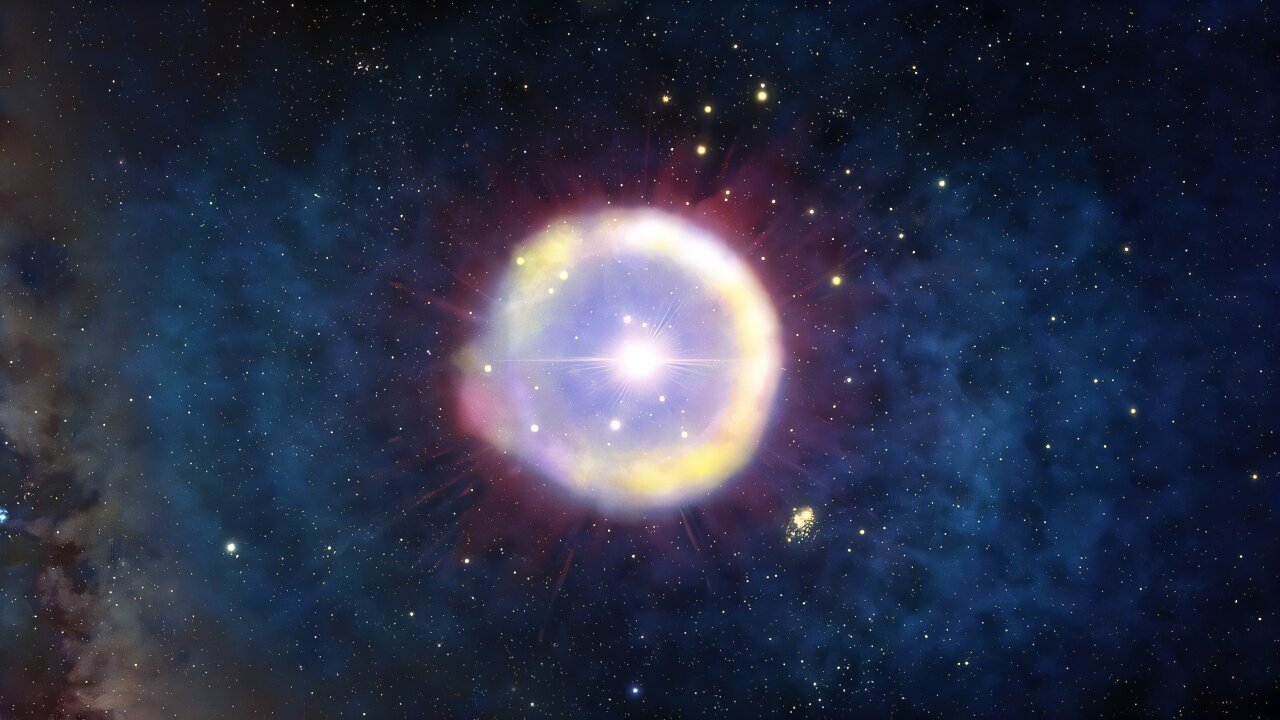
First-generation stars
Recently, Chinese scientists from Tsinghua University discovered the galaxy MPG-CR3, which they believe consists mainly of first-generation stars. An article about this appeared in The Astrophysical Journal Letters.
As we know, initially, there was only hydrogen and a little helium in the universe. Then, during the first billion years of existence, the so-called reionization era, the first stars were born. These were mainly large stars that evolved rapidly and ended their lives with super-powerful explosions. They are called first-generation stars.
However, finding such stars is extremely difficult precisely because they ceased to exist billions of years ago. Each of the stars found is carefully studied to understand whether the course of events in the universe has been correctly reconstructed. And then news emerges about an entire galaxy consisting of them.
Amazing galaxy
There is no doubt that the MPG-CR3 galaxy consists precisely of first-generation stars. The almost complete absence of anything other than hydrogen and helium speaks for itself. However, this is not the most surprising thing that has been discovered in this galaxy.
Scientists have determined that they see it as it was 11 billion years ago. It would seem that this was a very long time ago. But this is almost 2 billion years later than the first star of the first generation should have formed, and they certainly would not have survived that long. Meanwhile, the age of the galaxy itself is estimated to be only a few million years.
In addition, scientists have not been able to detect traces of ionized helium He II in MPG-CR3. And there should be a lot of it in such a young system. There are several assumptions about this, and they all boil down to one thing: in fact, several years have passed since their formation.
As for the main question of how MPG-CR3 could exist at all, scientists believe that the reason it began to form late is that it is located in an area of low-density matter. There are simply no other galaxies around it. Therefore, the processes within it seem to have lagged behind the rest of the universe.
Provided by phys.org

