

Using new technology, a team of researchers from Denmark scanned the Martian meteorite “Black Beauty.” They managed to detect water inside it.
Martian meteorite
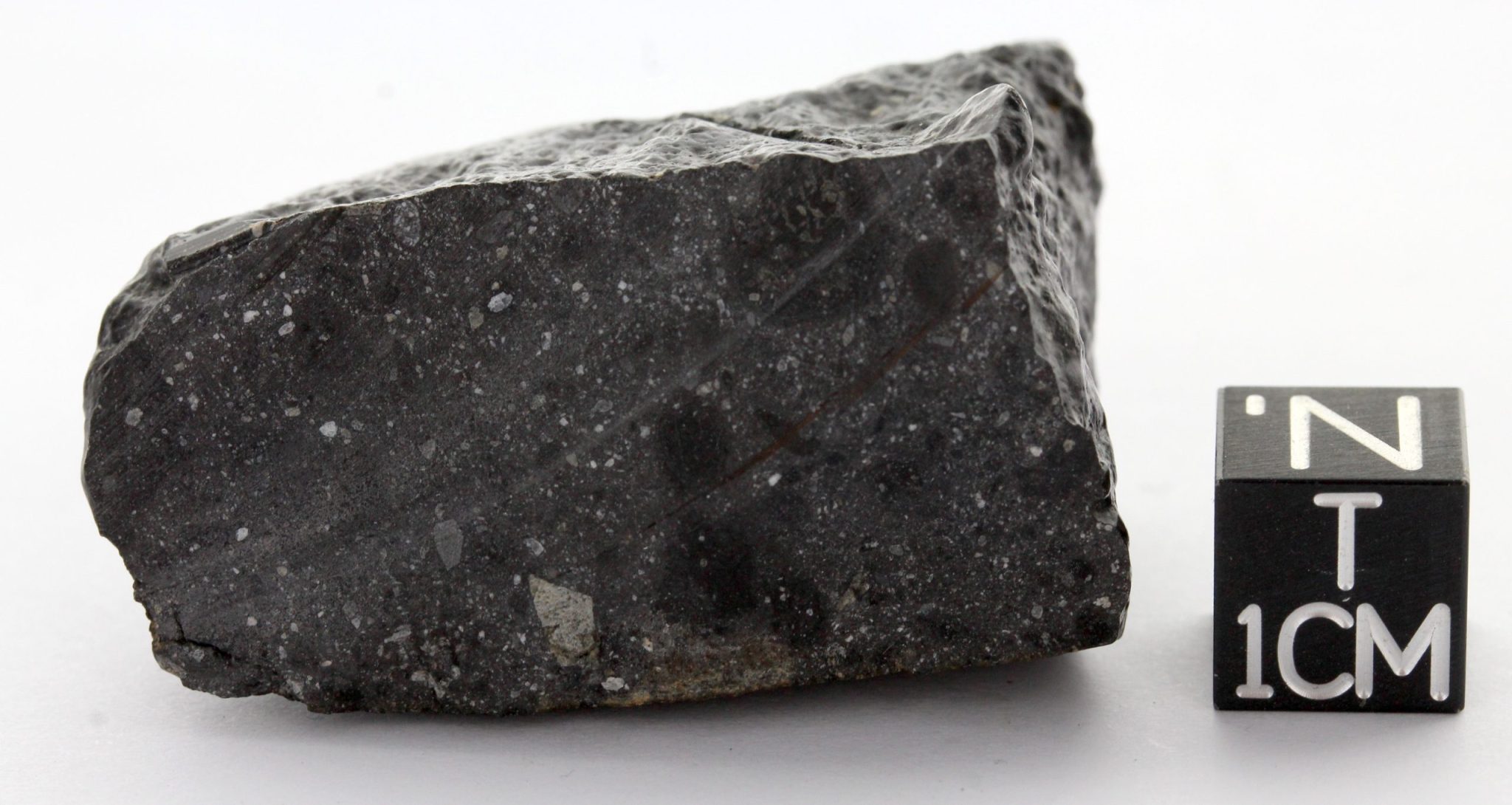
The meteorite, named NWA 7034, was found in Morocco in 2011. Due to its distinctive color and the bright reflection of its relief edges, it was named “Black Beauty.”
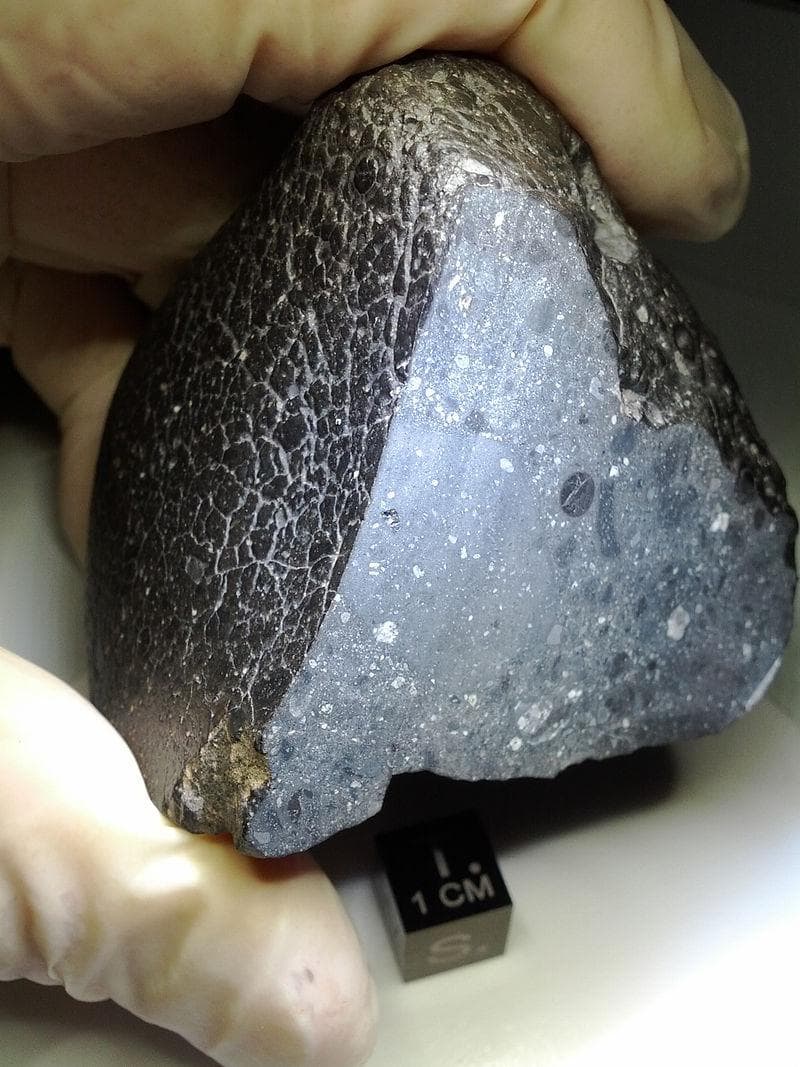
Isotopic analysis showed that the Black Beauty originated on Mars. A study conducted in 2022 showed that it was knocked off the surface of the Red Planet 5–10 million years ago, after which it fell to Earth. The meteorite consists of material that originated approximately 4.48 billion years ago, making it one of the oldest known Martian materials in the Solar System.
Water on Mars
The origin of the Black Beauty makes it an invaluable source of information about Mars. Unfortunately, during previous studies, scientists had to cut off parts of the meteorite. They were then crushed or dissolved to determine the materials that make up the rock. But now scientists have the opportunity to study the Black Beauty without destroying it, using computed tomography (CT) scanners.
There are two types of CT scanners. One type, widely used in hospitals around the world, is X-ray CT. These are exceptionally well suited for detecting heavy, dense materials such as iron or titanium. Another, less common method is neutron CT, which uses neutrons instead of X-rays to pass through the object being examined. The results of this scan vary greatly, but in general, neutrons penetrate denser materials better and, importantly, detect hydrogen, one of the key components of water.
In an article published on the arXiv preprint website, scientists from the Technical University of Denmark reported on the results of applying both techniques to study the Black Beauty sample. During the course of their research, scientists discovered clusters — small fragments of rock found inside larger rocks. These clusters consist of hydrogen-rich iron oxyhydroxide and make up approximately 0.4% of the sample volume. Although this may seem like a small amount, the chemical composition of the meteorite’s interior shows that these small pieces of rock account for up to 11% of the total water content in the Black Beauty. The meteorite itself contains approximately 6,000 parts per million (ppm) of water, which is an extremely high figure for a planet that currently has so little water.
This discovery complements the water samples previously found by the Perseverance rover in the Jezero crater. The fact that Black Beauty comes from a completely different region of Mars proves that billions of years ago, water was widespread on its surface.
According to Phys.org

