

In the scientific world, a lack of results is often considered a failure. However, in astrophysics, even silence can be extremely revealing. A new study published in the Journal of Cosmology and Astroparticle Physics (JCAP) proposes a revolutionary approach to the search for one of the universe’s greatest mysteries: dark matter. Scientists argue that the fact that we do not observe the expected signals in certain regions of space does not disprove the existence of dark matter; on the contrary, it reveals its complex, multi-component structure.
An unusual glow at the heart of the Galaxy
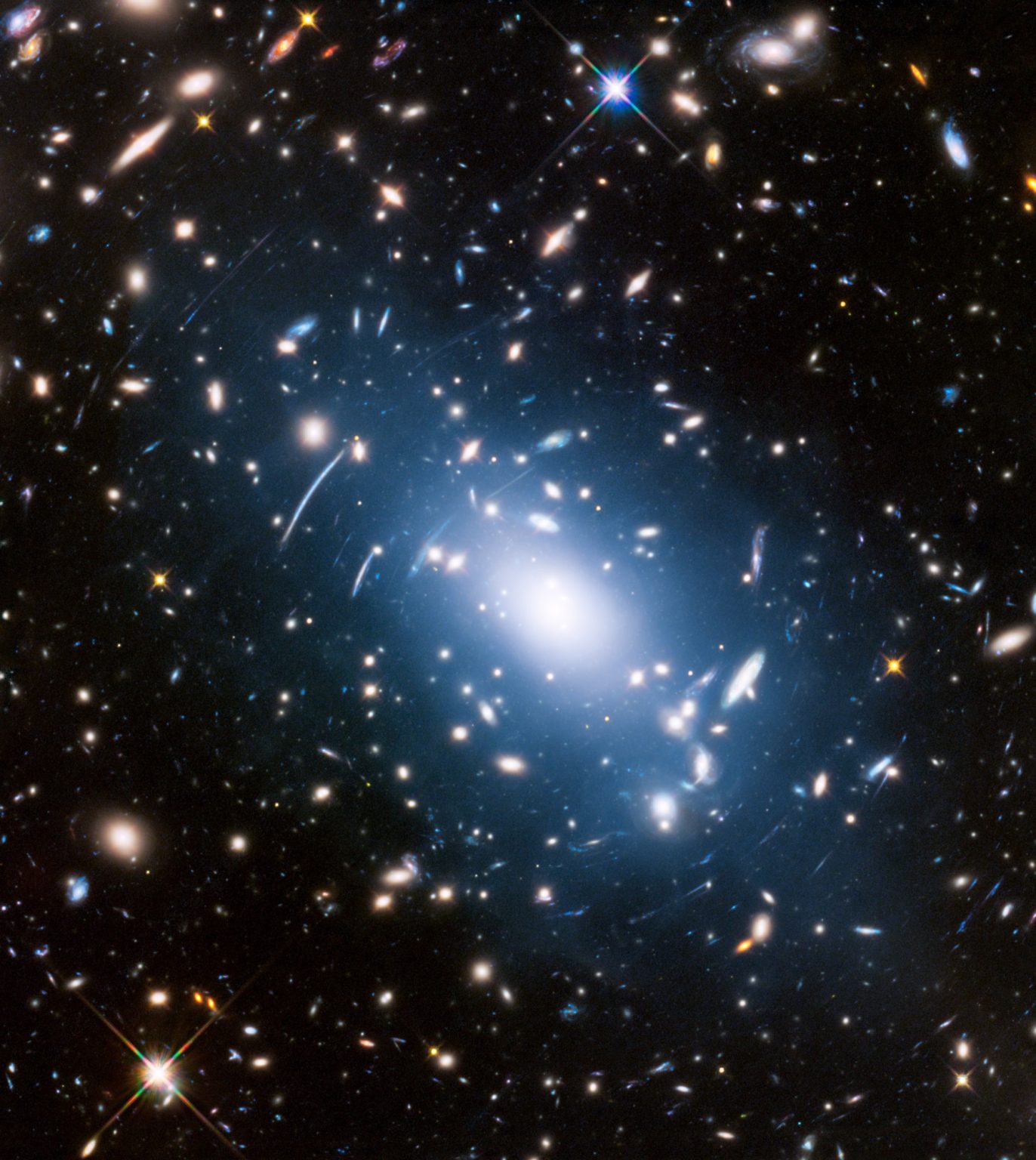
For decades, dark matter has remained the “invisible conductor” of the cosmos. We know it exists, because without its gravitational pull, stars would have scattered in all directions, and galaxies would never have formed. However, it neither emits nor absorbs light, which makes it invisible to our telescopes.
One of the most promising ways to “detect” it is to look for the products of its decay or annihilation. According to many theoretical models, when two particles of dark matter collide, they annihilate each other, producing a burst of high-energy radiation—gamma rays.
That is exactly the signal detected by the Fermi space telescope. At the very center of the Milky Way, there is a strange excess of gamma-ray radiation that cannot be explained solely by the presence of known stars or gas. Many theoretical physicists have seized on this idea: could this be the first direct evidence of dark matter particle annihilation? However, a problem arose that cast doubt on this theory.
Mystery of the Silent Dwarves
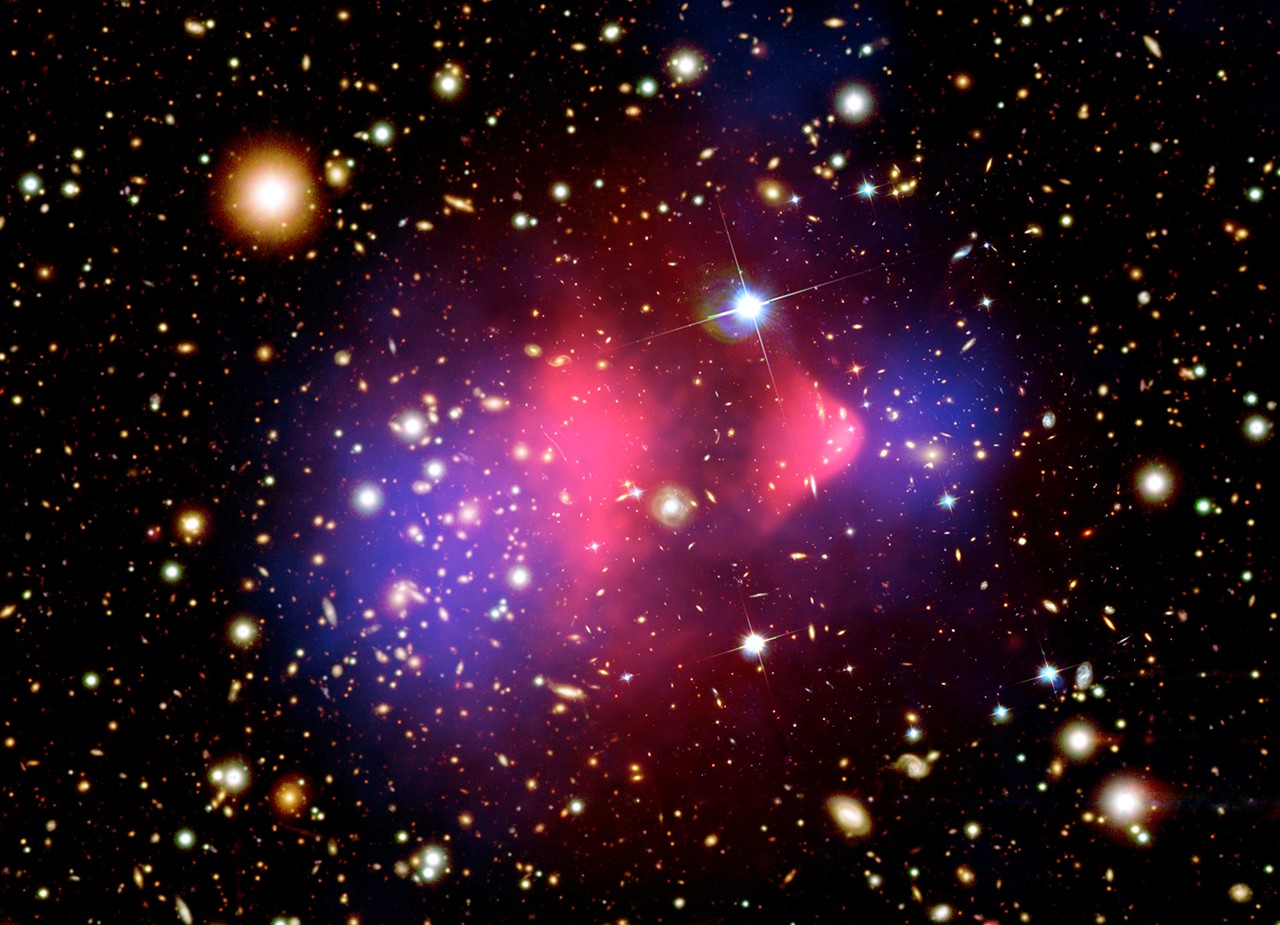
Gordan Krnjaić, a theoretical physicist at Fermilab, explains the nature of the contradiction. If the gamma rays at the center of our galaxy are indeed produced by dark matter, then we should also observe similar emissions in other regions where this substance is highly concentrated.
Dwarf galaxies are the best “laboratories” for testing this hypothesis. These are tiny companions of the Milky Way that contain almost no gas or young stars of their own, but are literally “packed” with dark matter. They provide the perfect background: there are no pulsars or black holes that could mimic the signal. However, despite years of observations using Fermi, dwarf galaxies remain stubbornly silent. No excess gamma-ray radiation has been detected there.
Until recently, this was considered a death knell for the annihilation theory: if there is no signal in “clean” dwarf galaxies, then the signal at the center of the Milky Way must have some other, conventional astrophysical origin (such as dead stars—pulsars).
Two ingredients for a cosmic burst
However, a group of researchers—including Asher Berlin, Joshua Foster, Dan Hooper and Gordan Krnjaic—has proposed an elegant solution to this impasse. They hypothesized that dark matter is not a monolithic substance composed of particles of a single type. Instead, it may be a mixture of two different components.
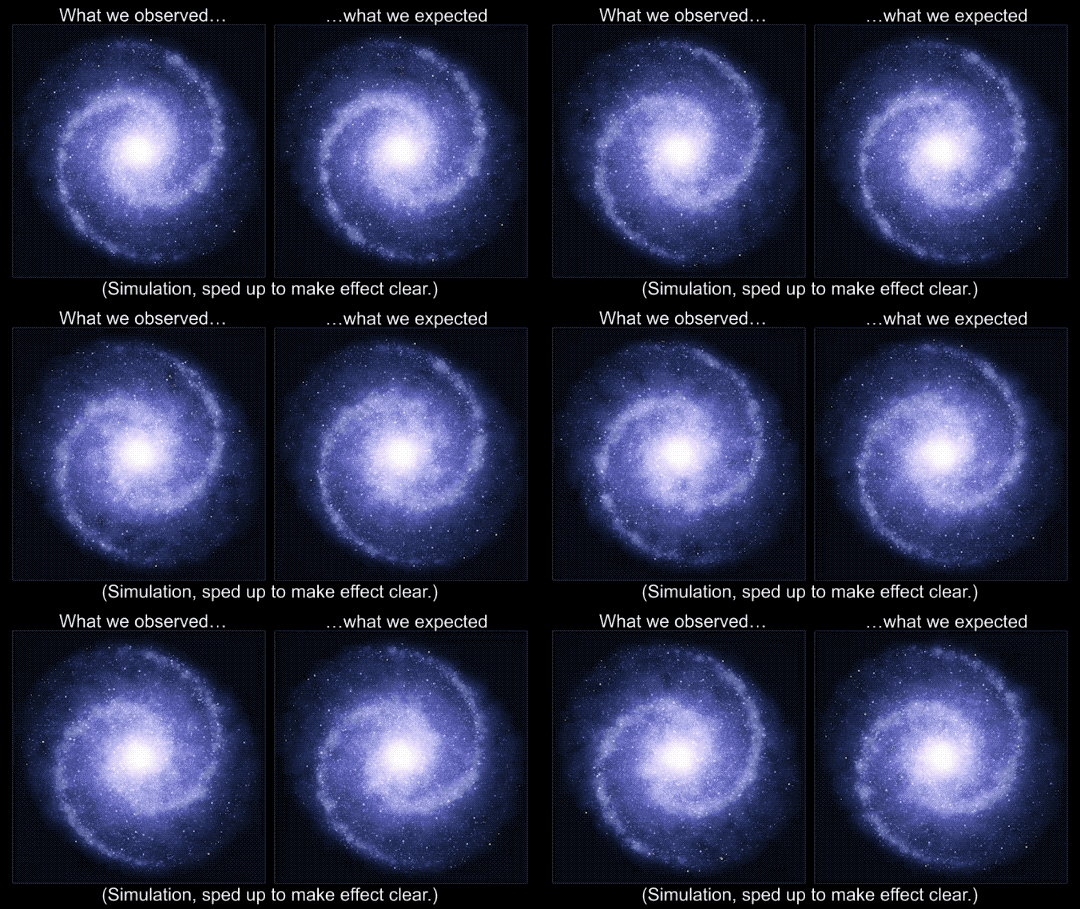
This model is a game-changer. Imagine that annihilation is a chemical reaction that requires two different ingredients. If there is only one type of particle, the reaction will not occur. For a gamma-ray burst to occur, a particle of type “A” must find and collide with a particle of type “B.”
In large and complex systems, such as the Milky Way, these two types of particles may be mixed in equal proportions, leading to intense annihilation and a bright gamma-ray signal at the center. However, in dwarf galaxies, this balance may be disrupted due to the specific characteristics of their formation or evolution. If a dwarf galaxy contains many “A” particles but almost no “B” particles, annihilation simply will not occur. The result is a complete absence of a signal, despite the enormous mass of dark matter.
New flexibility in the search for the invisible
This model, which the authors have dubbed “dSph-obic dark matter” (dark matter that avoids dwarf spheroidal galaxies), makes the interpretation of the data much more flexible. It allows scientists not to dismiss data from the galactic center simply because it does not match the results of observations of companions.
In addition, there are older theories that have attempted to explain this phenomenon. For example, a model in which the probability of annihilation depends on the particles’ velocity. Since particles move more slowly in dwarf galaxies than in the center of a large galaxy, the signal there might be weaker. However, the new “two-component” model appears to be more robust in the face of new data and can account for a much wider range of observations.
The Future in Fermi’s Lens
Does this mean the mystery has been solved? Not yet. It’s merely a theoretical framework that still needs to be thoroughly tested. The next step will be to collect and analyze even more precise data from the Fermi space telescope. Scientists hope that longer exposure times and improved signal processing algorithms will allow them to detect even faint traces of gamma radiation in dwarf star systems.
If, however, the silence persists, physicists will have to delve even deeper into the theory of multi-component dark matter. Perhaps the Universe is much more complex than we are accustomed to thinking, and what we call “dark matter” is an entire invisible world with its own types of particles and interactions.
We previously reported on how Fermi detected a source of extreme cosmic particles in the universe.
According to eurekalert.org

