

Today, the boundaries of our observable Universe extend an astronomical 46.1 billion light-years in all directions. The oldest light we can detect was emitted 13.8 billion years ago and dates back to 280,000 years after the Big Bang. Since the Universe is constantly expanding, it stands to reason that if we were to “rewind” time, it would have been much smaller, denser, and hotter.
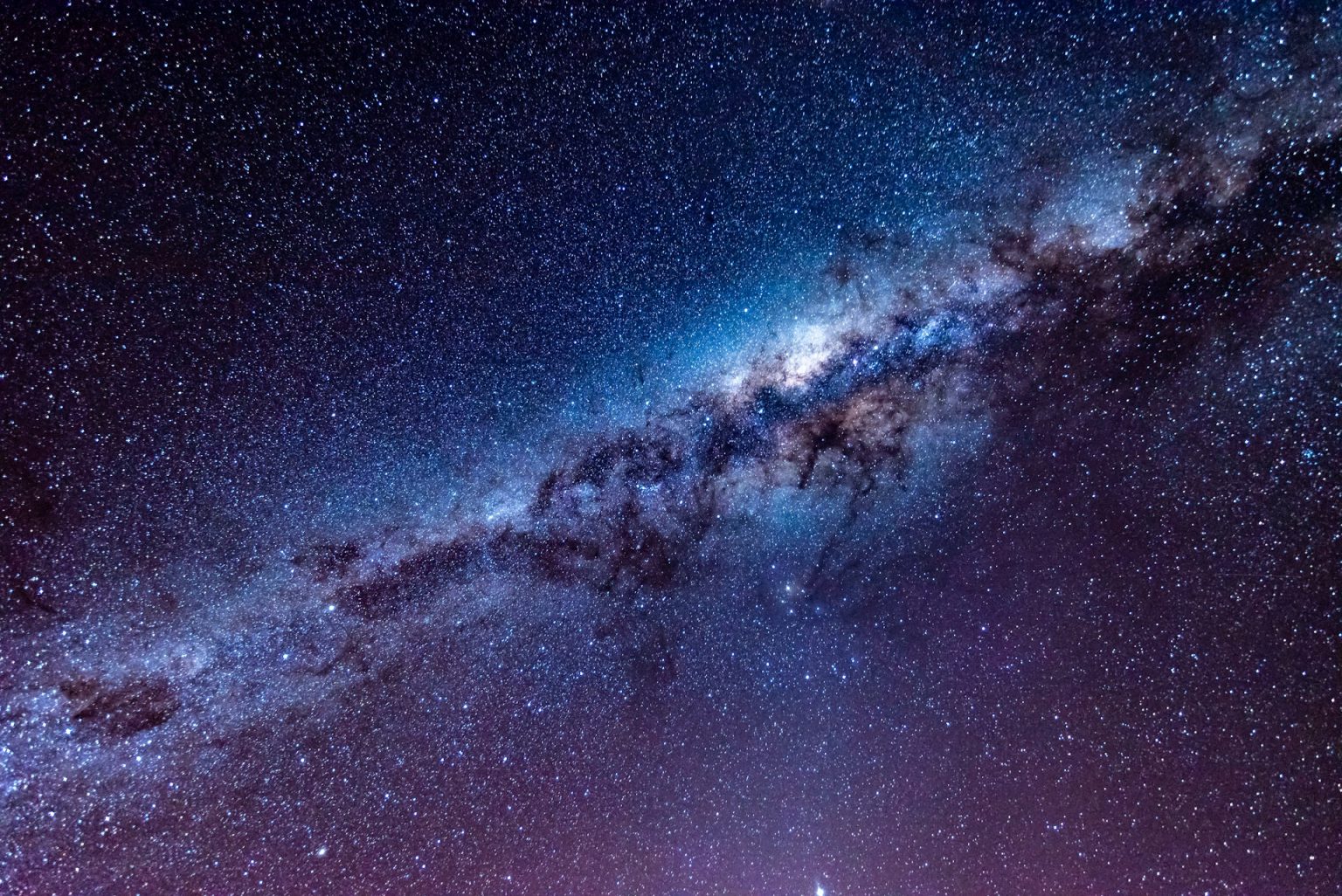
To learn about the history of the cosmos, physicists rely on Einstein’s general theory of relativity. If the universe is homogeneous and isotropic, its evolution is described by the Friedmann-Lemaître-Robertson-Walker (FLRW) metric. The mathematical equations derived by Alexander Friedmann allow us to accurately calculate the scale of the observable universe in the past, provided we know its current composition. Today, it consists of dark energy (68%), dark matter (27%), ordinary matter (4.9%), neutrinos (0.1%), and a tiny fraction of radiation (0.01%). By understanding how each of these components behaves during the expansion, we can glimpse back to the very beginning of time.
Why is the singularity impossible?
Can we extrapolate these data all the way back to the initial moment in time (“t = 0”), when the universe was compressed into an infinitely small point (a singularity) with infinite temperature? Although this idea seems appealing, it contradicts our observations.
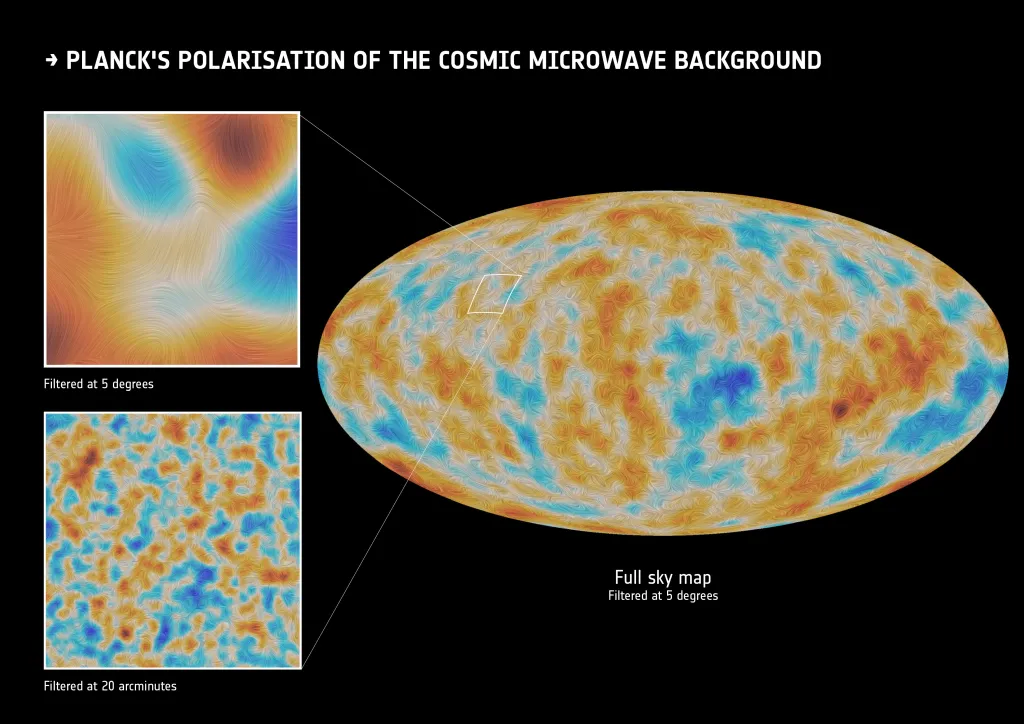
If the universe really originated from such a high-energy state, it would have left visible traces. Huge temperature fluctuations would be reflected in the cosmic microwave background, and ultra-high temperatures would generate powerful gravitational waves. We wouldn’t even need observatories like LIGO to detect them—their effects would be noticeable in the polarization signals of the background light.
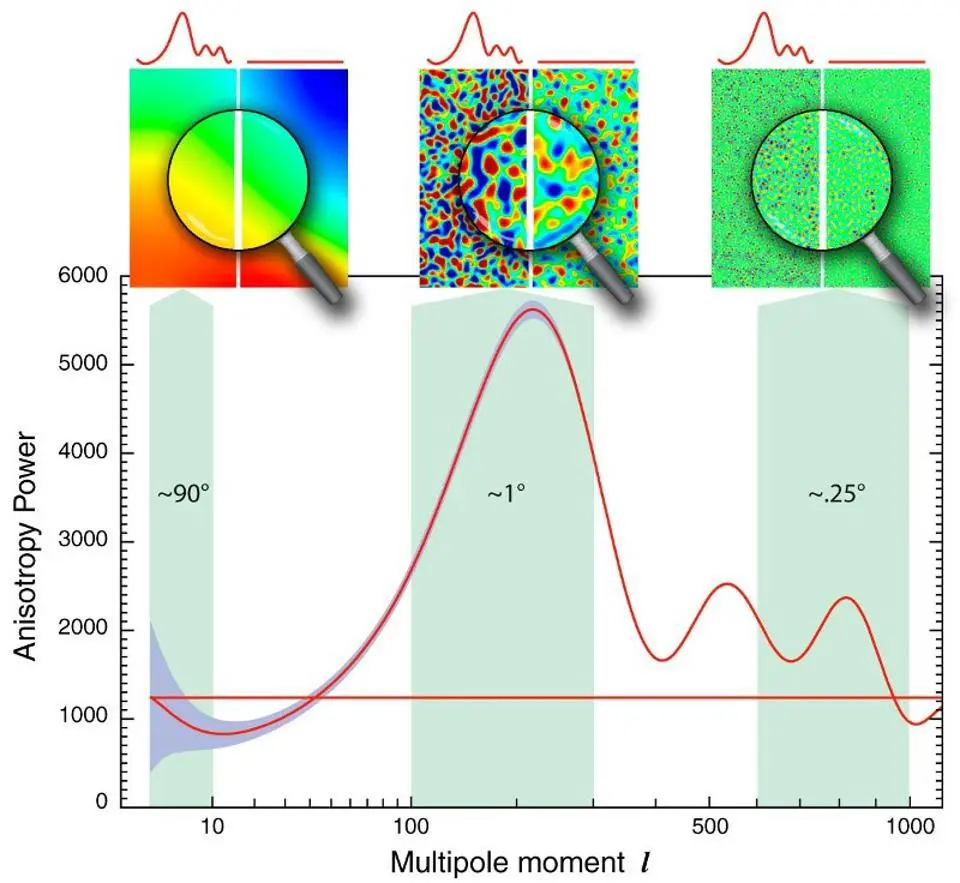
Data from space missions such as WMAP and Planck show that the actual temperature fluctuations are approximately 30,000 times smaller than they would have been if the universe had emerged from a singularity. This sets a hard limit: at the hottest moment of the Big Bang, the universe did not heat up beyond the energy equivalent of 10¹⁵ GeV. Accordingly, it could not physically have been infinitely small.
The Era of Cosmic Inflation
To explain the absence of extremely high temperatures, the theory of cosmic inflation was proposed in the early 1980s. It posits that the hot Big Bang was preceded by an entirely different phase.
At that time, the universe was filled with an enormous amount of energy inherent in the field or space itself, causing it to expand at an exponential rate. Subsequently, the inflationary field decayed, converting its energy into matter and radiation. It is precisely this moment that marks the true beginning of the hot Big Bang. Inflation effectively “erased” any information about what happened before it, leaving us with only signals from the final moments of this rapid expansion.
Computer simulations (such as GiggleZ or WiggleZ) demonstrate how, under the influence of gravity, the modern large-scale web-like structure of the universe gradually formed from this initially homogeneous hot state.
Actual starting point
Given the established upper limit of 1.015 GeV, we can mathematically rewind time only as far back as approximately 10⁻³⁵ seconds. At that point, the entire observable universe was about 1.5 meters in size.
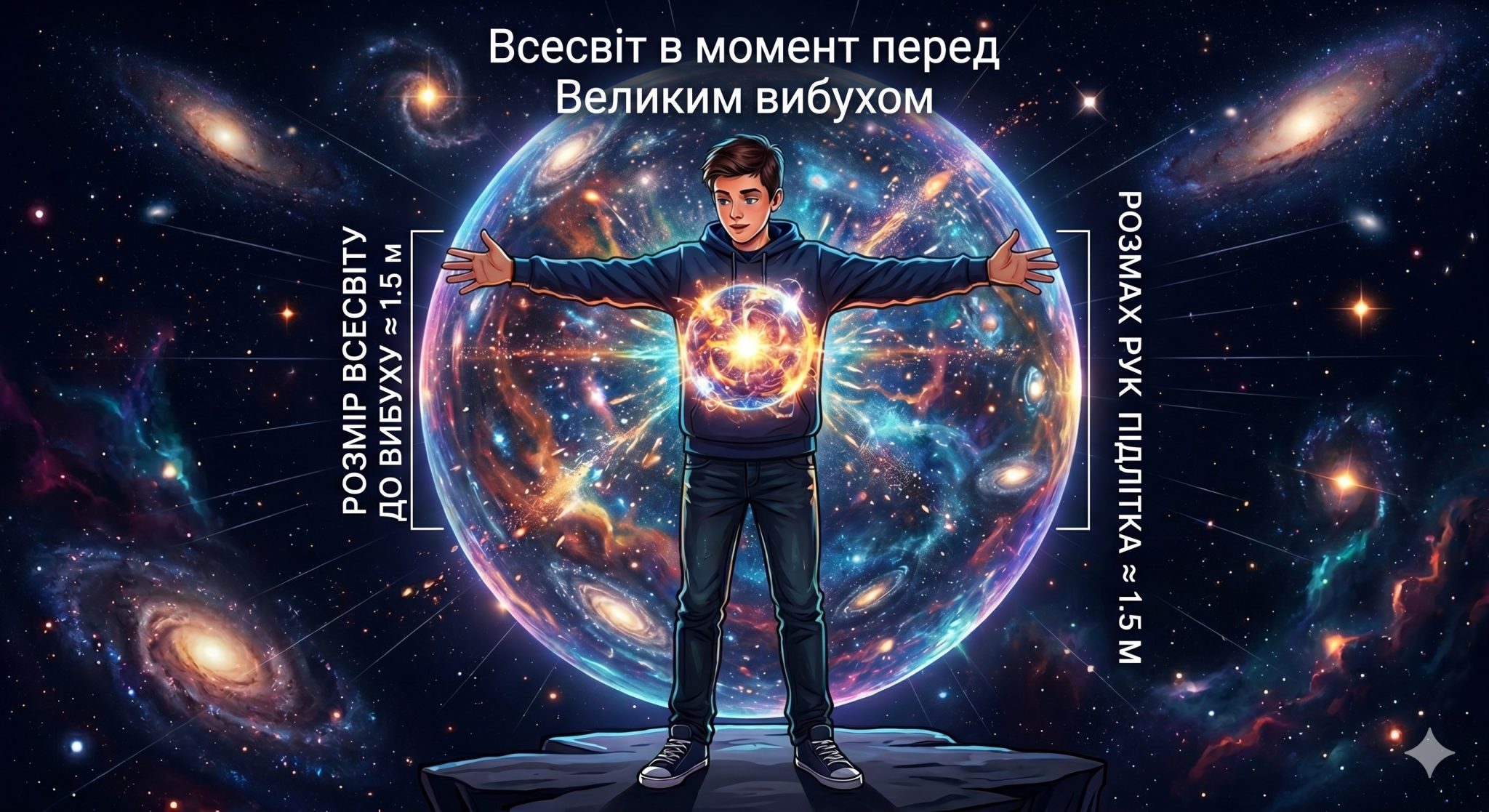
In other words, in the very earliest stages—to which we can objectively assign at least some quantitative measure—our entire modern universe was no larger than the span of an average teenager’s arms. Just ten years ago, scientists considered the “size of a soccer ball” to be the minimum limit, but the latest measurements have significantly refined that figure. It could easily have been larger (for example, the size of a city block), but anything smaller than 1.5 meters would inevitably have caused fluctuations in the microwave background that simply do not exist in reality.
Nature imposes fundamental limits on our understanding, and we will never be able to see what existed before cosmic inflation. However, one thing we know for certain: our universe did not emerge from an infinitely small mathematical abstraction. It had a very real, measurable beginning.
Earlier, we reported on what happened before the Big Bang.
According to Big Think

