There are meteor showers that impress with their quantity. And then there are the Leonids. This meteor shower is not about a dense, monotonous rain. It is about character. About sharp, dazzling flashes that make your heart skip a beat. Each meteor is an event, a swift sweep across the velvet sky of November. If you value quality over quantity when it comes to experiences, then this meteor shower is for you.
November 2025 gives us another opportunity to meet these cosmic guests. And this article is not just a set of instructions. It is a guide that will help you get the most out of one of the most interesting celestial shows.

What is the Leonid meteor shower?
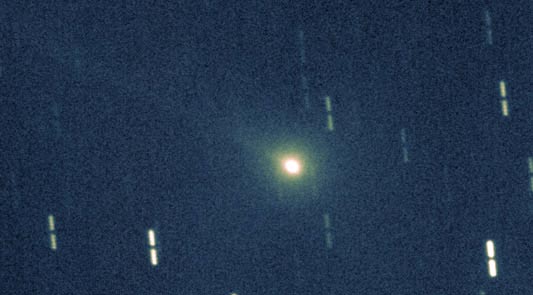
Imagine the comet 55P/Tempel-Tuttle. Once every 33 years, it flies past the Sun and, like a giant bonfire, scatters sparks behind it – a cloud of dust, ice, and pebbles. Every year, our Earth travels along this ancient path, and that is where the magic begins.
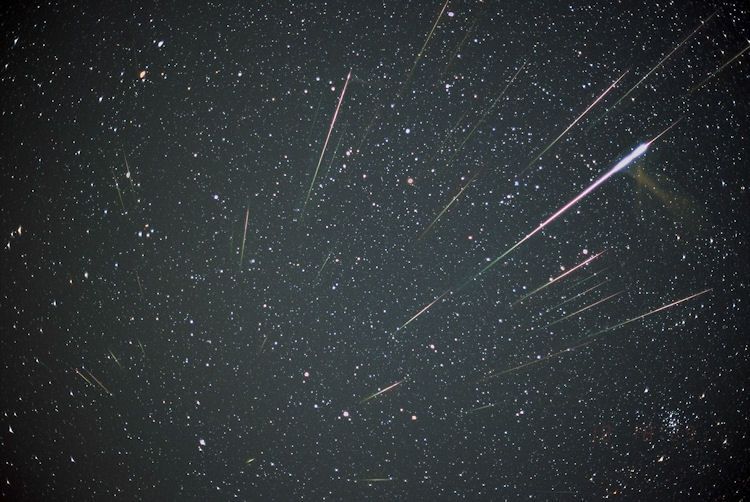
Tiny fragments, often no larger than a grain of sand, plunge into Earth’s atmosphere at breakneck speeds of around 71 kilometers per second. This is so fast that the air in front of them simply does not have time to part, igniting from friction. We see this as a meteor. And since they all fly towards us from the direction of the constellation Leo, the stream itself has been given the proud name of Leonids.
It is precisely this insane speed that is the hallmark of this stream. Thanks to it, Leonids give us such bright flashes and often leave behind “persistent traces” – ghostly trails that continue to glow for several seconds. And the brightest of them, fireballs, are capable of illuminating the earth for a moment, like a camera flash.
But besides their brightness, Leonids have another feature – their variability. The comet’s dust trail is uneven, like a river with deep and shallow sections. Every year, Earth crosses it in a slightly different place, so the number of meteors can vary greatly. This makes each observation unique, because you never know exactly how generous the sky will be that night.
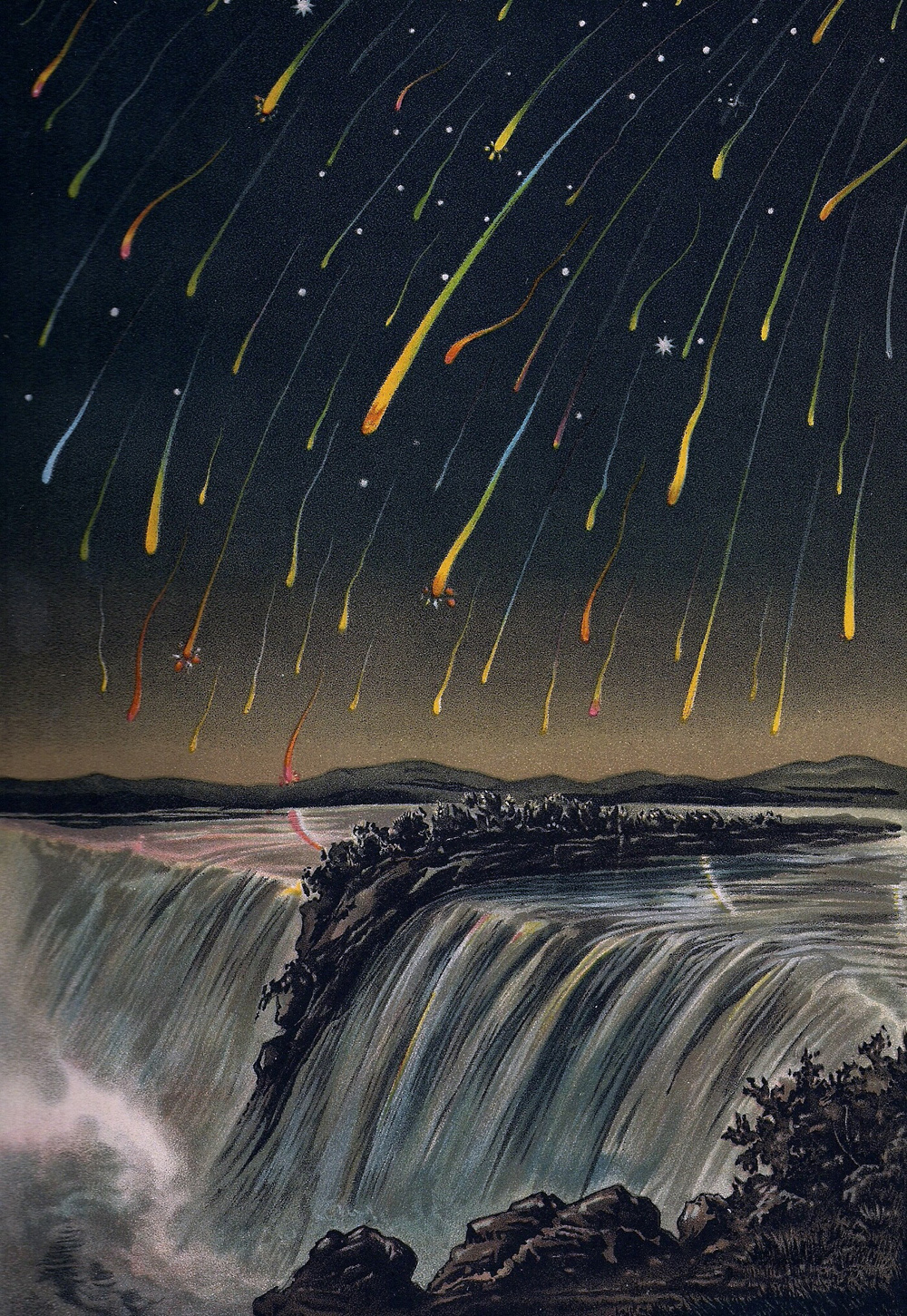
Source: E. Weiß: Bilderatlas der Sternenwelt (Picture Atlas of the Starry World)
When to observe the Leonids
Throughout most of November, from the 6th to the 30th, the sky will give us hints in the form of single fast meteors. But the real show will be put on by the Leonid meteor shower on the night of November 17-18, which will be its climax.
To see the maximum, go outside after midnight. At this time, the constellation Leo will occupy the highest and most convenient position in the sky for viewing. But let’s be honest: conditions in 2025 are not ideal. The bright Moon will interfere a little, hiding faint meteors. But who said we’re hunting for weaklings? We are interested in bright fireballs, and the moonlight will not hide them.
Before heading out, be sure to check the weather forecast, because clouds are an astronomer’s worst enemy. By the way, Jupiter will be shining brightly near Leo this year, so you definitely will not be bored while waiting.
To make your evening a success, here are some tried and tested tips:
- Leave the city. The lights of the metropolis steal the stars from us. The further you are from them, the more you will see.
- Give your eyes time. Your vision needs 20-30 minutes to adjust to the darkness. No smartphones during this time!
- Consider warmth. It is November. A good jacket, a warm blanket, and a thermos of tea are your best friends.
- Forget about technology. Your eyes are the best tool. They have a wide field of view, unlike a telescope or binoculars.
The main thing to remember is that watching meteors is not so much a hunt as it is meditation. The more you relax and allow yourself to simply be part of the night sky, the more it will show you. Your main weapons are patience and warm tea.
How to take photos of Leonids?
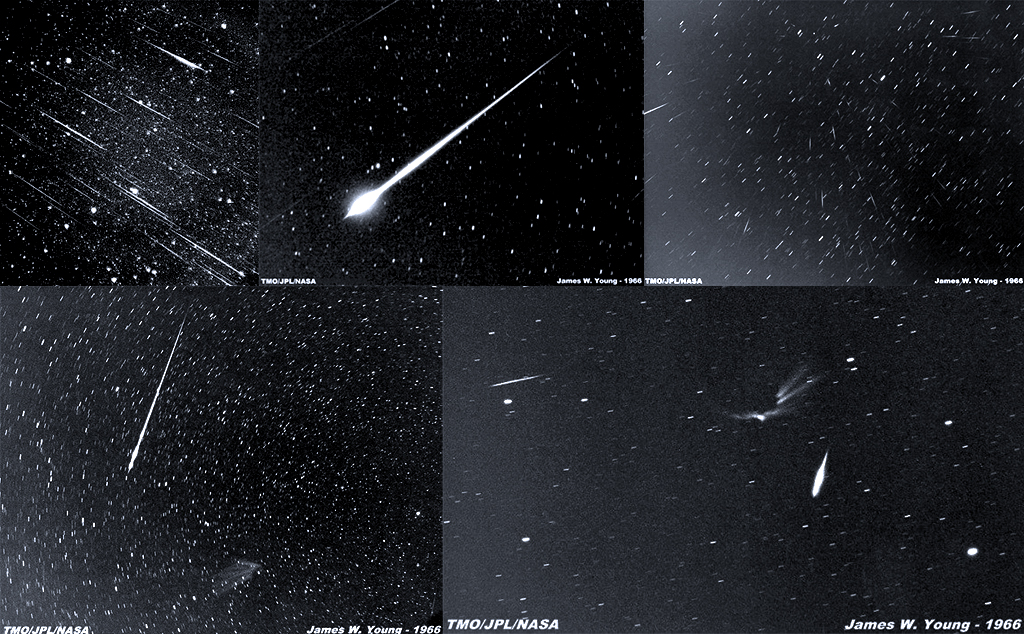
Catching a meteor is a challenge, but it is worth it. You will need a camera with manual settings, a sturdy tripod, and a wide-angle lens. Then it’s time to get creative: manually focus on a distant bright star, open the aperture to the maximum (for example, f/2.8), and set the ISO to 1600 or higher. Experiment with exposure times between 15 and 25 seconds. To ensure a sharp image, use a shutter timer and then simply shoot in bursts. Sooner or later, one of the shots is bound to be your trophy.
History of research
Now that we know how to observe the Leonids, it is time to understand why this meteor shower is truly legendary. On November 13, 1833, it caused an event that went down in history as the “Great Meteor Storm.” Imagine: tens of thousands of meteors per hour! Eyewitnesses were convinced that the end of the world had begun. The sky was literally falling to the ground.
This event had not only a scientific but also an enormous cultural influence. It inspired poets, artists, and even religious figures. But for science, it was a cold shower that forced it to abandon old theories about “atmospheric vapors.” The work of scientists who proved the cosmic origin of meteors opened humanity’s eyes to the fact that interplanetary space is not empty. The most powerful storms generated by the Leonid meteor shower recur every 33 years, the last time being at the turn of the millennium.
Why should you see it?
Yes, there will be no storm in 2025. We can expect a calm, classic show with 15-20 meteors per hour. But it is not about the quantity. Each flash in the sky is the culmination of a long journey of a comet particle that has been flying through the void for millions of years.
Going out of town and simply looking up is an event in itself. It is also a wonderful opportunity to remind ourselves that we live on a small planet in a vast and amazing universe. And sometimes it sends us fiery greetings like these. In November, they are called Leonids.